


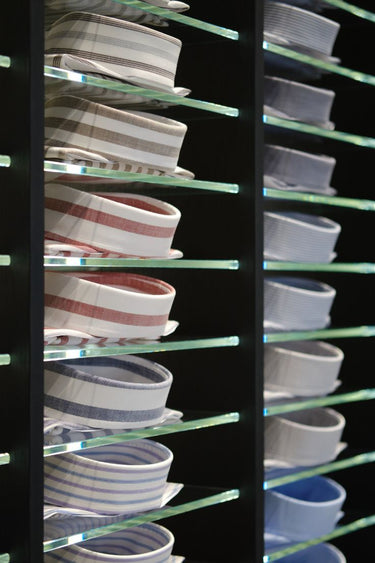
If you’ve ever tried on two similar shirts and wondered why one feels cool and weightless while the other looks sharper and resists creasing, you’ve already met the power of weave. This guide breaks down poplin vs twill vs zephyr in plain language so you can select the right shirt for your climate, calendar and personal style—without guesswork.
We’ll translate weave patterns into real-world comfort, show how yarn count and finishing affect breathability, and share quick rules for pairing each fabric with tailoring, denim and summer jackets. You’ll also see a summer shirt fabric comparison, learn the difference (poplin, twill, oxford) at a glance, and get zephyr weave explained in a way you’ll remember the next time you shop.
The quick answer: when to choose each fabric
-
Poplin (a fine, plain weave) is your crisp, clean everyday performer for offices, events and travel. Cool hand, smooth surface, fast to iron.
-
Twill (angled diagonal lines) drapes luxuriously, resists wrinkles better and feels slightly denser—great for long days, cooler rooms and between seasons.
-
Zephyr (very light, open plain weave) is the airy specialist—maximum airflow and barely-there feel for hot, humid days when you still want a collar.
If you’re building a rotation, start with poplin for formal clarity, add twill for long wear and crease resistance, and bring in zephyr as your heatwave secret weapon.
What each weave really is (and how it feels)
Poplin: smooth, crisp, precise
Poplin (also known historically as broadcloth) is a plain weave: one yarn over, one under, repeated tightly with fine yarns. The result is a smooth, flat surface that reflects light evenly and shows colour and pattern with razor clarity. On the body, poplin feels cool and brisk. Because it has little natural stretch, fit accuracy matters; get the shoulder and chest right and poplin looks razor-clean.
Twill: subtle sheen, natural stretch, easy drape
Twill weaves step the weft yarn over two or more warp yarns before going under one, shifting the pattern each row. Those diagonal ribs are more than decoration: twill bends and recovers more readily, so it creases less and drapes closer to the body. Expect a slightly plusher hand than poplin and a gentle, elegant fall that suits business travel, long meetings, and evenings when you want a smoother silhouette.
Zephyr: open, ultralight, astonishingly breathable
Zephyr is a lightweight plain weave engineered with very fine yarns and a deliberately airier sett. Think of it as poplin’s summer cousin: the same over-under logic, but with micro air channels that keep the fabric away from the skin and move heat off your body. Zephyr won’t hide texture; it celebrates it. Expect a dry, featherlight hand and a shirt that feels like a cool draft in motion.
The physics you can feel: airflow, weight and drape
-
Airflow (breathability): Open constructions and high twist yarns move moisture away faster. Zephyr leads; poplin follows; twill is more protective in wind-cooled rooms or flights.
-
Weight: Yarn count and density decide the grammage. You’ll find zephyr at the lightest end, poplin spanning lightweight to midweight, and twill in midweight that “hangs” beautifully.
-
Drape and crease resistance: Twill’s diagonal structure flexes, so creases relax as you move. Poplin holds a crisp crease; zephyr can wrinkle, but light steaming brings it back instantly.
-
Opacity: Twill is typically the most opaque; poplin is clean and respectable; zephyr—by design—can read semi-sheer in the lightest colours, which looks great under an unstructured blazer or overshirt.
Poplin vs Twill vs Zephyr: side-by-side comparison
|
Attribute |
Poplin |
Twill |
Zephyr |
|
Weave type |
Plain, tight |
Twill, diagonal rib |
Plain, open/light |
|
Hand feel |
Smooth, cool, crisp |
Soft, supple, fluid |
Dry, featherlight, airy |
|
Breathability |
High |
Medium |
Very high (maximum) |
|
Wrinkle behavior |
Creases crisply; irons fast |
Resists creasing; drape hides lines |
Can crease lightly; steam disappears them |
|
Opacity |
Medium to high |
High |
Light to medium (colour-dependent) |
|
Formality |
Business-smart to formal |
Business-smart, relaxed luxury |
Smart-casual to resort-smart |
|
Best seasons |
Year-round, especially spring/summer |
Year-round, excels in shoulder seasons |
Summer/heatwaves, humid travel |
|
Ideal use |
Suits, interviews, sharp office days |
Long workdays, travel, dinners |
Hot-weather shirts, casual tailoring, layering under airy jackets |
Summer shirt fabric comparison: what to wear when it’s hot
If your climate swings warm-to-hot for months, a breathable shirt fabrics strategy pays off:
-
Zephyr when humidity climbs and you need airflow more than structure. An open weave plus fine yarns gives you the best lightweight cotton weaves for peak heat.
-
Poplin on hot but drier days or when you need more polish for meetings—smooth, cool and easy to press after commuting.
-
Twill when interiors are aggressively air-conditioned, on long flights, or when you want a shirt that still looks composed at midnight.
Bonus tip: in real life, collar and interlining matter as much as fabric. A softer band and lighter fusing amplify what zephyr and poplin do in summer; a firmer band gives twill its clean, composed line under a blazer.
Zephyr weave explained: how “open” becomes elegant
“Open weave” doesn’t mean fragile. Zephyr uses tighter, higher-twist yarns arranged with slightly more space between interlacings, so tiny air pockets form without compromising stability. Those pockets are why zephyr feels cool even at rest. Because the yarns are fine, the surface looks matte and dry—no glare under harsh sun, just a refined texture that pairs beautifully with linen suits, cotton-silk unstructured blazers, and light denim.
Styling note: if you want more opacity in zephyr, choose mid-tones (sky, stone, pale olive) or subtle stripes; the pattern noise naturally reduces show-through while keeping the airflow high.
The difference: poplin, twill, oxford (and where zephyr fits)
Many shoppers compare difference poplin twill oxford and then wonder where zephyr sits:
-
Oxford is a basket variant of plain weave (two-by-two or similar). It’s beefier, with visible texture and a casual spirit—great for button-down collars, weekends, and smart denim.
-
Poplin is sleeker and more formal than Oxford, with a flatter surface that reads dressy even without a tie.
-
Twill is softer and more luxurious to the eye, with that tell-tale diagonal and a touch more weight.
-
Zephyr is the lightest plain-weave cousin—think “poplin built for heat.” It shares poplin’s clarity with much greater airflow.
If you own Oxford for off-duty and poplin for desk days, zephyr fills the true-summer gap and twill covers the long-day, crease-resistant need.
Matching fabric to occasion: easy outfit formulas
-
Poplin + suit (or sharp blazer): classic spread collar, single barrel cuffs, Four-in-Hand tie. Clean and dependable for boards, interviews, or ceremonies.
-
Twill + soft tailoring: semi-spread collar, two-button barrel (for watch clearance), knit or grenadine tie. The drape keeps you polished through late dinners.
-
Zephyr + unstructured blazer: soft band, open neck or knitted tie, rounded cuffs. Air moves, the collar stands, and you look relaxed—not underdressed.
-
Weekend warm-weather: zephyr or lightweight poplin with chinos or linen trousers; roll sleeves once, add suede loafers or refined sneakers.
Fit and construction that boost comfort
Breathability isn’t only about the weave. Small build decisions elevate comfort across lightweight cotton weaves:
-
Collar band: 3.5–4.0 cm supports the neck without heat buildup; lighter fusing breathes better in zephyr/poplin.
-
Back pleats vs darts: box or side pleats add mobility and airflow; darts slim the waist for a sharper line—pick based on how you move.
-
Seams and thread: fine single-needle seams keep bulk down and improve drape in open weaves.
-
Hem shape: a balanced curve tucks neatly yet looks intentional when worn open with trousers on muggy evenings.
Care and longevity: keep the fabric doing its job
-
Wash cool, spin gentle. Heat sets creases into poplin and can relax twill’s diagonal too much; zephyr appreciates mild cycles that preserve yarn tension.
-
Shake and hang. After the wash, shake the shirt to align fibers, shape the collar by hand and hang to dry; much of the ironing work disappears.
-
Steam over scorch. Steam restores twill drape and zephyr openness without flattening the surface; press poplin lightly for crisp plackets and cuffs.
-
Storage matters. Give space between shirts so collars can breathe; crowding crushes bands and invites unwanted shine.
-
Travel trick. Roll the torso around the folded collar and sleeves; unpack and steam for 60 seconds—zephyr and twill bounce back instantly.
Choosing patterns and colours by weave
-
Poplin loves micro-checks, fine stripes and solids—the smooth surface keeps pattern crisp.
-
Twill deepens colour; solids and wide bengal stripes read rich and evening-ready.
-
Zephyr excels in light solids, end-on-end effects and subtle shadow stripes that add opacity without weight.
For best fabric for hot weather shirts, choose mid-tones over bright white in zephyr; they photograph better in direct sun and resist show-through.
Build a smart three-shirt capsule for any week
-
White poplin, spread collar, single cuff: the workhorse for suits, presentations, interviews.
-
Light blue twill, semi-spread, two-button cuff: the long-day traveler—wrinkle-calm and dinner-ready.
-
Sky or stone zephyr, soft band, rounded cuff: the heat specialist for commutes, terraces and summer offices.
From there, add seasonal colours and textures, then rotate so each shirt rests a day between wears—interlinings last longer and collars stay crisp.
Where to start at Sartale
Ready to test the difference in real light? Explore Sartale’s curation of refined shirting and compare weaves side by side. Find your poplin, twill and zephyr staples in men’s shirts at Sartale and build a rotation that keeps you cool, sharp and comfortable all week.
Conclusion: let weave work for you
Great style is about choosing tools that solve real problems. Poplin vs twill vs zephyr isn’t a quiz—it’s a practical menu. Poplin for clarity, twill for long days and drape, zephyr for true heat. Match interlining to fabric, keep the collar honest, and let airflow and silhouette do the rest. When your shirts suit your climate and calendar, getting dressed becomes effortless.
FAQ
Is poplin always cooler than twill?
Generally yes, because poplin’s plain weave is tighter and smoother, which feels cool to the touch. Twill is still breathable but reads plusher and is better when you want drape and crease resistance.
What exactly is zephyr—cotton voile?
Zephyr is a very light, open plain weave built for airflow. It shares some spirit with voile but is typically a touch sturdier for everyday shirts—think maximum breathability with a clean collar line.
Which weave resists wrinkles best on long days?
Twill. The diagonal structure flexes and hides creases, so you look composed longer. Poplin irons fastest; zephyr steams back quickly after wear.
What’s the difference between poplin, twill and oxford?
Oxford is a basket-style plain weave with visible texture and a casual vibe. Poplin is smooth and formal; twill has diagonal ribs and drapes more; zephyr is poplin’s ultralight, open-air cousin.
Best fabric for hot weather shirts if I still wear a blazer?
Zephyr with a soft collar band under an unstructured jacket. If you need more polish, a lightweight poplin with light interlining keeps you cool and sharp.
Will a white zephyr shirt be see-through?
In the lightest constructions, it can be slightly sheer. Choose mid-tones or subtle stripes for more opacity, or wear a well-fitting undershirt in a tone close to your skin.
Does twill feel too warm in summer?
Not necessarily. Midweight twill breathes, but compared to zephyr it’s less airy. It’s ideal for air-conditioned offices, evenings, and shoulder seasons.
How should I iron each weave?
Steam twill; light press for poplin (focus on collar, placket, cuffs); gentle steam and hand-shaping for zephyr. Always avoid scorching—heat flattens the very texture that keeps shirts comfortable.
What collar and cuff pairings suit each fabric?
Poplin: spread or semi-spread with single cuffs for clarity. Twill: semi-spread with two-button barrel or French cuff for elegant drape. Zephyr: soft band, rounded barrel cuffs—open neck or a knitted tie for breathable structure.