


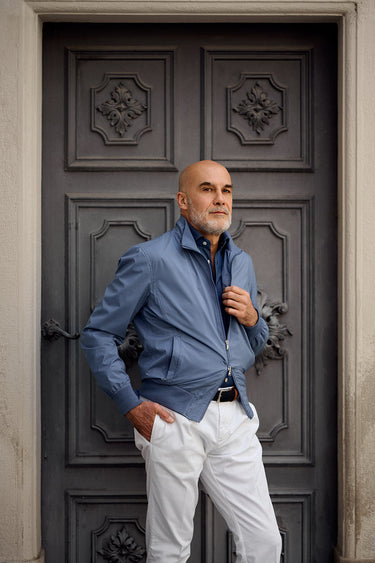
A tailored jacket becomes easier to wear when it has more than one place in your week. Instead of saving it for a complete formal outfit, try building three combinations around it: a working day, an evening and a relaxed weekend. The jacket remains the starting point, while the shirt, trousers and shoes change its character.
Choose the jacket for your actual routine
Within the Kiton collection, compare the individual garment's composition, lining and cut. Kiton describes fabric selection and textile research as central to its work. That does not make every material equally suitable for every season or occasion: read the specification of the piece you are considering.
Before styling, make sure the jacket works with your posture and intended base layer. Sleeves crowded by a thick sweater or a chest pulled tight over a shirt make even a thoughtful colour combination less comfortable. Our suit and jacket fitting checklist is a useful starting point.
Outfit one: a working day with tailored trousers
Use a plain or discreetly patterned shirt and trousers that sit comfortably at the waist. A dark-blue jacket can work with grey trousers; a lighter jacket may suit a darker lower half. These are combinations to test in daylight, not fixed colour rules.
If your workplace expects a tie, choose one that works with the shirt collar and jacket proportions. Let one element lead: a patterned jacket can sit more comfortably beside a quiet shirt and tie than beside several competing patterns.
Finish with leather shoes appropriate to the dress code. Check the hem with those shoes, since the same trousers may look different over a loafer and a lace-up model.
Outfit two: dinner with a fine knitted layer
For a setting that does not require a tie, replace the business shirt with a fine knitted polo or another suitable knit. Keep enough room through the jacket's sleeves and chest. A dark trouser can make the combination feel composed without repeating a full office uniform.
Choose the knit for its surface and neckline as well as its colour. A thick rib and a fine smooth knit can change the jacket's outline very differently. Compare options in the knitwear collection and try the layers together before deciding.
Outfit three: a relaxed weekend with denim
A jacket can work with jeans when the levels of formality feel balanced. Start with a clean, uncomplicated pair and a shirt or polo that belongs in the same relaxed setting. The contrast should look like a choice you would comfortably wear, not an attempt to force a formal garment into every occasion.
Loafers may keep the outfit closer to tailoring. Simple leather sneakers can make it more casual where the venue allows. Our guide to sneakers with a blazer explains the balance in more detail.
Keep the proportions consistent
- Check the shirt or knit hem beneath the jacket rather than judging each layer separately.
- Choose trousers with enough room to sit comfortably and a hem suited to the footwear.
- Make sure the jacket can be fastened as intended without strong pulling.
- Try the combination in movement before deciding that it works.
Small adjustments to the trouser length or choice of shirt often help more than adding another accessory. Keep the outfit useful for its setting.
Build from what you already own
Lay out the three proposed outfits before buying the jacket. If it only works with items you would also have to purchase, reconsider whether it fills the gap you intended. A clear role and comfortable fit are stronger reasons to choose it than the idea that one label automatically makes an outfit successful.
Questions about wearing a tailored jacket
Can I wear a suit jacket as a separate?
Some work well; others look clearly like one half of a suit. Consider the fabric, pattern, details and wear rotation. A jacket designed as a separate is an easier starting point.
Do I need to match every brand?
No. Match the formality, colours, texture and proportions. The rest of the outfit can come from pieces you already enjoy wearing.