


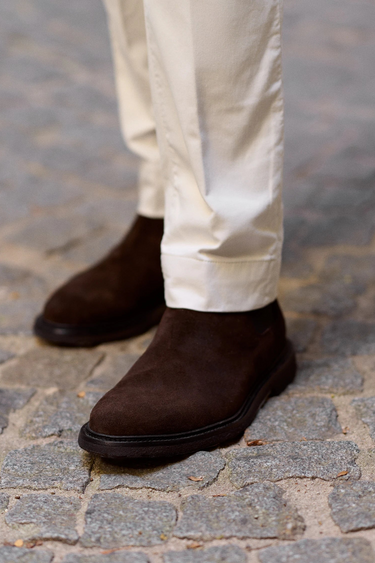
The first snowy morning always looks romantic – until you glance down at your boots. White salt rings, dull patches, nap flattened into shiny streaks… suede can go from “luxury” to “ruined” after just a few careless walks on salted pavements.
The good news: suede boots winter care does not have to be complicated. With a simple routine and a bit of discipline, you can protect suede from salt and slush, waterproof it sensibly, brush it back to life and rescue salt stains before they become permanent. Your favourite pair can stay rich and velvety for years, not just one season.
Why suede boots are still worth it in winter
If pure practicality were the only goal, everyone would wear rubber or technical hiking boots from November to March. But style matters, and few things look as good with winter tailoring, denim or flannel trousers as a dark brown suede Chelsea or lace-up boot.
Well-made suede boots are designed for real life, not just dry showroom floors. They offer three big advantages in winter:
- They absorb light instead of reflecting it, so dark colours look deeper and more refined.
- The soft nap adds texture and visual interest to simple outfits – perfect with knitwear and wool coats.
- High-quality suede is tougher than it looks when you treat it properly: regular brushing, protection spray and sensible drying go a very long way.
In other words: suede is not the fragile, “do not touch” material many men imagine. It simply punishes neglect. Give it five to ten minutes of care at the right moments, and it will repay you with years of easy elegance.
Suede vs nubuck in winter: what you are really walking on
Before talking about waterproofing suede boots or how to remove salt stains, it helps to understand what is actually on your feet – and how suede compares with nubuck in winter.
Suede vs nubuck winter: key differences
Both suede and nubuck are leathers with a soft, textured surface, but they are cut and finished differently:
- Suede is made from the inner side of the hide (split leather). It is sanded more deeply, which creates that familiar, fluffy nap.
- Nubuck is made from the outer, top-grain side of the hide and then lightly sanded. The nap is shorter, and the surface feels smoother and more “velvety”.
What this means in practice:
- Durability
- Nubuck keeps more of the hide’s grain structure and is generally a little tougher and more resistant to abrasion.
- Suede feels softer and more luxurious but needs a touch more care.
- Look and texture
- Suede has a fuller, more dramatic nap and reads slightly dressier, especially in dark browns and deep snuff tones.
- Nubuck looks more rugged and outdoorsy, making it great for casual winter boots.
For winter, both can work:
- Choose nubuck if you expect heavy slush, constant salt and very rough conditions.
- Choose suede if you mostly walk on cleared pavements, move between office and city streets, and are willing to follow a basic suede boots winter care routine.
Either way, the fundamentals are the same: waterproofing, brushing, salt protection and calm, methodical drying.
Step 1: waterproofing suede boots before winter
You cannot win against winter if your boots go into battle unprotected. The first step in suede boots winter care happens before the first snow: waterproofing suede boots properly.
Waterproof sprays will not turn suede into rubber, but they do create an invisible barrier that slows down water and salt. This gives you precious time to wipe away slush before it soaks in and stains.
How to waterproof suede boots correctly
- Start with clean, dry boots
- Brush off dust from the factory or the shop.
- Make sure there is no lingering moisture from trying them on or previous wear.
- Choose the right product
- Use a dedicated suede and nubuck protector, not a random all-purpose shoe spray.
- Look for a fine mist that protects without leaving a sticky film or dark, plasticky look.
- Apply in light, even coats
- Hold the can about a forearm’s length away.
- Move in smooth, overlapping passes so the suede looks slightly dampened, never soaked.
- Cover seams and welt edges as well; these are weak spots for moisture.
- Let the boots dry naturally
- Leave them at room temperature for several hours or overnight.
- Avoid radiators, hairdryers and underfloor heating.
- Revive the nap on suede afterwards
- Once fully dry, give the boots a gentle brush to lift the fibres back up.
- This helps them look fresh and ensures the nap does not dry flat.
Reapply waterproofing every few weeks in heavy winter weather, or whenever you notice water stopping beading on the surface and soaking in more quickly. Think of it like re-applying sunscreen: little and often beats panicked overuse.
Step 2: your daily suede brush routine
If waterproofing is insurance, your suede brush routine is daily hygiene. A few seconds with a proper brush can prevent dirt and salt from becoming permanent scars.
How often should you brush suede boots?
- Office wear and short commutes: a quick brush every two to three wears is enough.
- Long walks on salted streets and slushy pavements: a quick brush after each day outside.
The basic suede brush routine
- Let the boots dry completely
- Never brush wet suede. Brushing while damp pushes moisture and grime deeper into the leather.
- Brush in one direction first
- Use a suede brush with rubber, crepe or soft brass bristles.
- Pick one direction and gently brush the entire boot to remove surface dust.
- Lift the nap where it has flattened
- On toes, sides and heels the fibres often lie down and become shiny.
- Use short, slightly firmer strokes in different directions to revive the nap on suede.
- Tackle stubborn areas with an eraser block
- A dedicated suede eraser (or a special cleaning block) can rub away shiny patches and ground-in spots.
- After using it, always finish with the brush again to even out the surface.
Done regularly, this routine keeps suede lively, removes grit before it cuts into the fibres and makes any later salt stain rescue easier and gentler.
Step 3: protect suede from salt in daily life
Road salt is suede’s biggest winter enemy. It draws water into the leather, then dries into pale, crusty rings that seem to appear overnight.
You cannot control how much salt the city throws on the streets, but you can change how much of it reaches your boots – and how long it stays there.
Habits that protect suede from salt
- Choose your path wisely
- Walk on cleared pavements instead of wading through grey slush at the kerb.
- Avoid deep puddles where melted snow, mud and salt gather.
- Blot, don’t ignore
- As soon as you get inside, gently blot off visible moisture with a soft cloth.
- Remove slush lines before they dry into hard, white marks.
- Use a mat or tray at home
- Do not leave suede boots standing in a wet halo on the floor.
- A simple boot tray or thick mat stops salty water wicking back up into the leather.
- Rotate your footwear
- On the worst days, consider wearing a more rugged pair and saving your smartest suede for cleaner conditions.
- Giving boots a full day to dry between wears dramatically extends their life.
Combine these habits with regular waterproofing, and you will have far fewer serious salt stains to deal with.
Step 4: how to remove salt stains from suede boots
Even with good habits, winter is winter. When white edges and patches appear, you need a calm, clear plan to remove salt stains from suede without panic scrubbing or harsh chemicals.
Here is a simple home method that works for most everyday salt marks.
Salt stain rescue: step-by-step
|
Step |
What to do |
Why it helps |
|
1 |
Let the boots dry fully |
Working on wet suede only pushes dirt and salt deeper. |
|
2 |
Brush off loose salt and dirt |
Removes crystals sitting on the surface before you add moisture. |
|
3 |
Mix a mild solution |
Combine equal parts cool water and white vinegar in a small bowl. |
|
4 |
Gently blot the stain |
Dip a clean, white cloth in the solution, squeeze out excess, then dab the stain. Do not soak. |
|
5 |
Blend the edges |
Lightly wipe around the border so you do not create a new, sharp water ring. |
|
6 |
Stuff and air-dry |
Fill the boots with paper to hold their shape and let them dry at room temperature. |
|
7 |
Brush and revive the nap |
Once dry, brush first in one direction, then lift flattened areas with short strokes. |
Most light to moderate salt marks will fade significantly after one round of this routine. For very heavy staining, you may need to repeat it or, for particularly expensive or delicate suede, hand the boots to a professional cleaner.
Drying, storing and rotating: the quiet side of suede care
Not all damage happens outside. Plenty of suede is ruined in hallways and wardrobes by bad drying and storage. Building good habits here is just as important as any cleaner or spray.
How to dry suede boots safely
- Keep them away from direct heat
- Radiators, fireplaces and very hot underfloor heating can shrink or crack leather and stiffen the nap.
- Support the shape from the inside
- Use cedar shoe trees or stuff the boots with plain paper to keep the last’s shape and absorb moisture.
- Give them space
- Let air circulate around the boots; do not wedge them tightly against other shoes while they are drying.
Slow, gentle drying may not be glamorous, but it prevents warped soles, collapsed heels and that stiff, cardboard feel badly dried suede can develop.
Off-season storage
When winter is over and you are ready to put suede boots away for a while:
- Brush them thoroughly, including the welt and tongue.
- Make sure they are completely dry – no residual dampness in the lining.
- Insert shoe trees to keep the silhouette crisp.
- Store them in a breathable cotton bag or the original box, in a cool, dark place.
Taking ten minutes to do this at the end of the season can add years to your boots’ life.
Styling confidence: suede boots that stay sharp all season
Once you trust your suede boots winter care routine, you stop treating your boots like museum pieces and start enjoying them. That is when suede really earns its place in your wardrobe.
Think about how many winter outfits they effortlessly improve:
- Dark brown suede chukkas with grey flannel trousers and a navy overcoat.
- Snuff suede hiking boots with selvedge denim and a chunky roll-neck.
- Slim black suede Chelsea boots with tailored wool trousers and a cashmere turtleneck.
When the nap is rich, the colour is even and there are no messy salt rings, suede boots whisper “put together” even with very simple clothes. Explore suede boots for men in Sartale’s curated selection of winter footwear to build a small rotation that works from office to weekend.
A simple suede boots winter care routine to remember
If you forget the details, remember this structure:
- Before winter
- Waterproofing suede boots in two light coats.
- Gentle brush once dry to lift the nap.
- During winter
- Short suede brush routine after heavy days on salted streets.
- Blot away slush immediately when you get inside.
- Remove salt stains on suede early with a mild water and vinegar solution.
- After winter
- Deep brush, full natural dry and careful storage with shoe trees.
Follow this, and your suede will stop feeling fragile and start feeling dependable – the pair you instinctively reach for on cold mornings because you know you can handle whatever the weather throws at them.
FAQ: suede boots winter care
Can you really wear suede boots in snow?
Yes, but with some common sense. Light, fresh snow on cleared pavements is usually fine if your boots are protected and you follow a regular suede brush routine. Deep, dirty slush and heavy rain are better handled by more rugged winter boots or smooth leather.
How often should I re-apply waterproofing on suede boots?
During heavy winter use, plan to re-apply every few weeks, or whenever water stops forming little beads and starts soaking in immediately. Always apply in thin, even layers rather than one heavy, wet coat.
Is suede or nubuck better for winter boots?
Nubuck is slightly tougher and more forgiving in harsh conditions thanks to its top-grain origin and shorter nap. Suede looks a touch dressier and richer. If you want versatility and are willing to care for your boots, high-quality suede is perfectly winter-ready.
Can I use regular leather cream or wax on suede boots?
No. Creams and waxes are made for smooth leather and will clog the nap, leaving suede dark, shiny and stiff. Stick to sprays formulated for suede and nubuck, dedicated cleaners and suede eraser blocks.
How do I revive nap on suede that has gone shiny?
First, let the boots dry completely. Then brush them thoroughly in one direction. Focus on shiny patches with a suede eraser, rubbing gently until the surface feels slightly rougher, and finish by brushing with short, firm strokes in different directions. In many cases the nap comes back surprisingly well.
What is the safest way to remove heavy salt stains at home?
Dry the boots, brush away loose salt, then dab the stained areas with a cloth dipped in a weak solution of cool water and white vinegar. Work slowly, avoid soaking the suede and blend the edges of the stain so there is no new tide mark. Stuff the boots with paper, let them air-dry and brush again to restore the nap.
Are all suede protector sprays the same?
No. Cheaper sprays can leave a sticky or plasticky finish and may darken the leather permanently. It is worth choosing a high-quality suede and nubuck protector that leaves the material soft, allows it to breathe and keeps the colour as close to the original as possible.
How many pairs of suede boots does a winter wardrobe need?
You can go far with two or three pairs: for example, a dark brown suede chukka for smart-casual outfits, a rugged nubuck or suede hiking-inspired boot for bad-weather days and a slim black or dark chocolate Chelsea boot for evenings and tailoring. With proper care, that small rotation will easily handle many winters.