


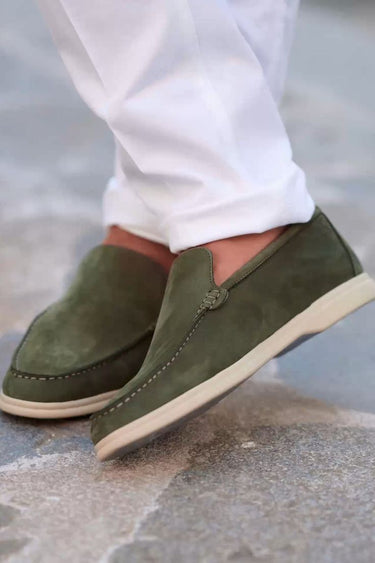
A great pair of loafers deserves a hem that meets it halfway—clean, intentional, and comfortable on real streets. Too long, and the fabric puddles over the vamp. Too short, and the trousers read juvenile instead of modern. This guide turns shop-floor know-how into a simple system for the ideal trouser hem for loafers, whether you live in boardrooms, creative studios, or sunny sidewalk cafés.
We’ll cover no-break vs slight break, the sweet spot for sockless loafers hem length, when cropped trousers with loafers look sharp (and when they don’t), how to tailor pants for loafers without guessing, and the eternal cuffed vs plain hem trousers debate. Expect clear measurements, easy drills you can do at home, and one handy table you can hand to your tailor with confidence.
The one rule that fixes most hems
Think in three touch points: front, back, and width.
-
Front: the fabric should just graze the top of the loafer’s vamp—no collapse, no floating gap.
-
Back: the hem should meet the top edge of the heel cup or sit 5–10 mm above it for a lighter, modern read.
-
Width: a gentle taper that lets the hem sit on the shoe, not flare around it.
Nail those three and you can dress up or down without changing trousers.
No-break vs slight break (and when each wins)
In tailoring, “break” is the little crease where the trouser meets the shoe.
-
No-break: the front edge kisses the vamp and falls clean with zero crease. It reads sharp and contemporary—perfect for penny, tassel, or horsebit loafers. Great for dry days, travel, and unstructured blazers.
-
Slight break: adds a tiny, single line at the front—useful with heavier flannel, roomier cuts, or conservative office cultures. It also hides minor shrinkage after cleaning and gives winter cloth more gravity.
Most wardrobes thrive with both. Hot months and casual offices love no-break; cooler seasons and stricter rooms appreciate a slight break.
Cropped trousers with loafers: style or stunt?
Cropped trousers with loafers can be elegant when the crop is considered, not extreme. Aim for a hem that sits 2–3 cm above the malleolus (ankle bone), paired with a subtle taper that prevents flaring. Anything higher risks a capri effect; anything lower simply reads no-break. Cropped works best with breathable fabrics (high-twist wool, cotton twill, linen blends) and loafers with a slim profile. In winter, swap bare ankle for fine socks in a tone close to the trouser so the line stays continuous.
Sockless loafers hem length: the summer setting
The cleanest sockless loafers hem length sits where the trouser kisses the vamp and clears the heel top by a few millimeters. This keeps air moving and avoids sunscreen or sweat marks at the hem. If you favor invisible liners, they add a touch of volume over the heel; compensate with a hair more back length to keep the line tidy. Remember: sunlight shortens trousers visually—what looks perfect in a mirror can appear higher outdoors. Always check the hem in natural light.
Tailoring pants for loafers: taper and opening that flatter
Hem length is half the story; leg taper and opening decide whether the cloth pools or floats.
-
Rise: a true mid-rise keeps the break predictable and avoids front pull.
-
Thigh: comfortable, not baggy—excess volume here travels straight to the ankle.
-
Knee-to-hem taper: steady, not aggressive; shape the silhouette without hugging the calf.
-
Leg opening: for most modern loafers, a flat width of ~17–19 cm (measured across the hem laid flat) creates a clean seat on the shoe. Narrower risks “sticking” on the calf; wider invites puddling.
Ask your tailor to pin both legs while you stand naturally and then while you walk a few steps; hems behave differently in motion than at attention.
Hem shape: straight vs dress slant
Dress trousers are often finished with a subtle back-long slant—the rear hem sits 5–10 mm longer than the front. That tiny differential:
-
covers the heel counter without swallowing the shoe
-
keeps the front line crisp for no-break looks
-
prevents the back from flipping up when you walk stairs
If you live in sneakers and loafers equally, a soft slant is the most forgiving finish.
Cuffed vs plain hem trousers: which speaks your language?
The cuffed vs plain hem trousers choice changes weight, drape, and message.
-
Cuffed (turn-ups): a 4–4.5 cm cuff adds ballast so the hem drops straighter and resists wind. It pairs beautifully with loafers because the visual weight at the ankle balances the low vamp. Best with flannel, cavalry twill, and robust tropical wool.
-
Plain hem: sleek, lighter, and a touch dressier in smooth fabrics like fine worsted or cotton twill. Ideal for summer suits and minimal loafers.
If you commute on breezy streets or prefer a slight break, cuffs are your friend; if your style leans razor-clean, go plain.
Taper for ankle exposure: how much is enough?
Taper for ankle exposure should feel intentional, not trend-chasing. As a guide:
-
Straight builds or muscular calves: keep more opening (18–19 cm flat) so the hem doesn’t ride up.
-
Slender frames: 17–18 cm flat keeps the line neat without going skinny.
-
Cropped variants: match the opening to the hem height—higher hems tolerate slightly wider openings without flaring because less fabric stacks.
Taper should flow from knee to hem; sudden pinches create stiff folds above the ankle.
Fabric, season, and shoe build: details that change the hem
Cloth weight and memory
-
High-twist wool & tropical blends: spring back after sitting; they love no-break.
-
Flannel & winter twills: prefer a slight break or cuffs so the fabric hangs with quiet weight.
-
Cotton chinos: pre-wash shrinkage can steal hem length—finish slightly longer if you launder at home.
-
Linen: embrace movement; set a no-break crop and steam, don’t press, for a natural line.
Sole thickness
-
Leather soles vs city rubber can change your apparent height 2–3 mm. Always fit hems wearing the exact loafers you’ll use most.
Loafer anatomy
-
Vamp height: higher vamps (some horsebits) can visually shorten hems; allow a touch more back length.
-
Heel stack: a taller heel lifts you; compensate if you switch between styles.
-
Last shape: long, sleek lasts (penny or tassel) invite a cleaner, shorter front line; rounder lasts can forgive a fraction more length.
The five-minute home fitting (mirror + phone)
-
Put on the loafers you’ll actually wear.
-
Pin one leg to your “ideal”; leave the other untouched.
-
Walk, sit, climb a step; video yourself from the side.
-
Try no-break, then add 5 mm for slight break; compare stills in daylight.
-
Decide on cuffed vs plain, then re-pin with that choice (cuffs eat length).
-
Repeat in the socks you’ll wear—or barefoot liners—so heel volume is realistic.
Bring the photos to your tailor; they answer half the questions before the first chalk mark.
Quick reference: hem outcomes at a glance
|
Style goal |
Front length |
Back length |
Break |
Cuff |
Opening (flat) |
Notes |
|
Clean modern (office) |
Touches vamp |
Near top of heel |
No-break |
Plain or 4 cm cuff |
17–18.5 cm |
Works with penny/horsebit; sharp with high-twist wool |
|
Classic conservative |
Touches vamp |
Covers heel top by ~5 mm |
Slight break |
4–4.5 cm cuff |
18–19 cm |
Great with flannel; hides minor shrinkage |
|
Summer sockless |
Kisses vamp |
0–5 mm above heel |
No-break |
Plain |
17–18 cm |
Add invisible liners; check in sunlight |
|
Cropped casual |
2–3 cm above ankle bone |
Same as front |
None |
Plain or 4 cm cuff |
17.5–19 cm |
Needs steady taper; avoid extremes |
Mistakes that ruin a clean line (and how to fix them)
-
Puddling over the vamp: length too long or opening too wide. Shorten 5–10 mm and taper 0.5 cm at the hem.
-
Hovering hem: length too short for the shoe height. Add a touch of back length or stick to no-break only.
-
Flared ankle: taper stops too high; continue shaping from mid-calf to hem.
-
Cuffs flipping up: not enough weight or hem too short—add slight break or press with more steam.
-
Sockless stains: hem picks up sunscreen/sweat; launder promptly and consider a hairline longer back length.
-
Shiny press lines: ironed too hot from the outside; press from the inside with steam and a cloth.
The tailor’s script you can read out loud
-
“I wear loafers 80% of the time. Please finish with a light back-long slant—about 5–7 mm.”
-
“Let’s set the front to just touch the vamp. If the cloth is flannel, add 3–5 mm for a slight break.”
-
“Opening target: 18 cm flat. If the calf grabs when I walk, widen by 0.5 cm.”
-
“I want 4 cm cuffs on winter trousers; plain hems on summer weights.”
-
“Pin both legs and let me walk and sit before chalking; I want to see movement, not just a standstill pose.”
A clear brief saves two fittings and a week of second-guessing.
Body type and posture: the honest adjustments
-
Long femur/short calves: hems look shorter on you. Favor slight break or cuffs for visual balance.
-
Short femur/long calves: you can run cleaner no-break lines without looking cropped.
-
High right hip/tilted pelvis: ask for leg lengths measured independently; many men need a 5–10 mm difference.
-
Strong seat or deep seat crease: extra back length helps the hem drop straight after sitting.
Fit is a three-dimensional problem; small asymmetries deserve small, precise tweaks.
Socks that extend the line
-
No-show liners keep ankles clean in heat; choose low profiles with silicone heel grips so they don’t peek.
-
Fine rib merino in shoe-or-trouser tones keeps the eye moving; charcoal, tobacco, and navy solve most outfits.
-
Patterned socks? If your hem is cropped, keep patterns subtle so the ankle doesn’t become the star.
When in doubt, match sock value (light/dark) to the trouser rather than the shoe.
Pressing and care: keep the hem alive
-
Steam, don’t scorch. Press from the inside with steam so the crease stays sharp without adding shine.
-
Hang by the cuff. Gravity helps the leg drop and relax micro-creases.
-
Rotate pairs. Alternating trousers gives the hem a day to recover and keeps breaks consistent.
-
Check after cleaning. Dry cleaning can nibble 3–5 mm; measure and adjust before big events.
-
Edge tape? Skip stiff hemming tapes on fine wool—they fight the drape. A clean blind stitch looks better and ages better.
Case studies: four rooms, four hems
Corporate Monday
Grey high-twist suit, black penny loafers. Front kisses the vamp, back meets heel top, plain hem, no-break. You look fast, not loud.
Creative studio
Unstructured navy blazer, olive cotton trousers, chestnut tassel loafers. 4 cm cuffs, slight back-long slant, no-break. Movement and texture carry the room.
City summer
Stone linen trousers, espresso horsebit loafers, open-neck shirt. Sockless, plain hem, front kisses vamp, back 5 mm above heel. Breeze in, heat out.
Winter dinner
Charcoal flannel, dark brown loafers. Slight break and 4.5 cm cuffs. The extra weight at the ankle keeps the silhouette composed through the evening.
Sustainability through fit
Hems are small, but they decide how often you reach for a pair. A trouser that drops clean over your loafers earns more wears, avoids “buy another just for the length,” and stretches your wardrobe further. Good finishing is one of the easiest, least resource-intensive upgrades you can make—no new fabric, just smarter use of what you own.
Before-you-hem checklist (print this)
-
Try trousers after one home wash if they’re cotton.
-
Fit with the actual loafers and socks you’ll wear.
-
Decide cuffed vs plain before measuring.
-
Record a daylight video walking, sitting, and taking stairs.
-
Note opening width target and any calf grab points.
-
Approve the chalk mark standing and moving.
Where to start at Sartale
Ready to set your baseline and build up from there? Test your hem choices with a refined pair of loafers and watch how the line changes in real light. The right shoe profile plus a clean, intentional hem will make every jacket and shirt in your wardrobe read sharper.
Conclusion: meet the shoe, respect the line
The ideal trouser hem for loafers is a conversation between fabric, length, and opening. Decide your break for the day, match taper to your frame, pick cuffs for ballast or go plain for razor-clean lines, and set the back to greet the shoe without swallowing it. Once those choices are deliberate, you’ll stop second-guessing and start enjoying how easy dressing can be—rain, meetings, terraces and all.
FAQ
What’s safer for the office: no-break or slight break?
Slight break is the conservative default, especially with heavier fabrics. In modern or creative environments, a no-break hem looks crisp and current.
How high can I go with cropped trousers and loafers?
Keep it within 2–3 cm above the ankle bone. Higher than that reads fashion-forward and becomes harder to style across different rooms.
Do cuffs make hems look shorter?
Visually yes. A 4 cm cuff adds weight but also shortens perceived length. If you add cuffs, extend the finished length by 5–10 mm to keep the same break.
What’s the best sockless loafers hem length in summer?
Front just kissing the vamp, back level with or 5 mm above the heel. This avoids puddling and keeps the silhouette cool and clean.
How wide should the leg opening be for loafers?
For most men and most loafers, a flat opening around 17–19 cm balances clean drape with easy movement. Stronger calves prefer the wider end.
Are cuffs wrong on lightweight summer trousers?
Not at all—cuffs can add welcome ballast in breezy weather. For maximum lightness, plain hems on high-twist or zephyr-weight wools also look excellent.
Can I keep one hem length for sneakers and loafers?
You can, but sneaker soles often sit higher and broader. If you share a pair, finish to slight break on loafers and accept a hair more crop on sneakers.
Why do my hems look shorter after dry cleaning?
Heat and handling can eat a few millimeters. Build in a slight-break safety margin on new trousers and re-press to shape immediately after pickup.
Is taper or length more important?
Both matter, but taper decides whether the hem sits gracefully on the shoe. A perfect length with a wide opening still puddles; a good taper makes minor length shifts forgiving.
What if I switch between tassel and horsebit loafers?
Horsebits often have a higher vamp and slightly taller heel. Keep the front the same and add 2–3 mm of back length if the line starts to hover.
Do pleats change the hem decision?
Pleats add ease through the thigh, which can travel to the ankle. With pleats, consider a fraction more opening (by 0.5 cm) so the hem doesn’t grab the calf in motion.
How do I brief a new tailor quickly?
State your shoe type (“loafers most days”), your break (“no-break front, slight back-long”), cuff preference, and opening target. Ask to be pinned standing and walking before chalking.