


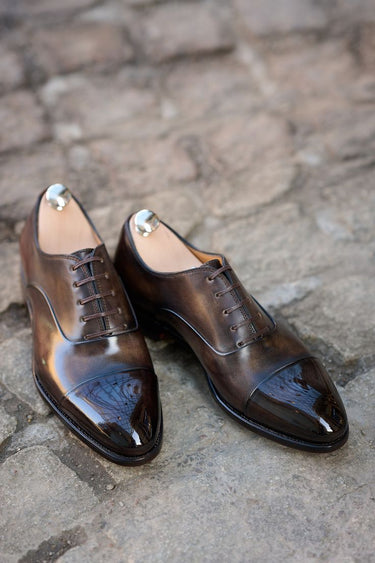
Some shoes ask for attention; great loafers earn it. If you’re weighing Bontoni vs Edward Green loafers, you’re comparing two apex approaches to elegance: the expressive, hand-tinted warmth of Italian craft and the measured, architectural calm of English shoemaking. This guide keeps the conversation grounded—what you actually feel on foot, how the leather ages, and which pair carries you from desk to dinner without a second thought.
We’ll translate the showroom language into real-world decisions: handmade Italian vs English loafers, a concise Edward Green quality comparison, honest notes from a Bontoni loafers review, clear loafer sizing differences, and whether to pick calf vs suede loafers for your routine. By the end, you’ll know which dress loafers for smart casual slot into your wardrobe with zero friction—and how to size them right the first time.
Handmade Italian vs English loafers: what this really means
“Handmade” isn’t a halo—it's a set of choices. Italian ateliers like Bontoni lean into hand-patina, supple lining selections, and a last that prioritizes fluid movement. English houses such as Edward Green channel discipline: meticulously skived seams, firm heel counters, and midsoles tuned for long-term shape retention. On foot, Italian construction often feels alive from day one, while English construction can start a touch formal and then settle into an unmistakably tailored hold.
Under the hood, both traditions meet at the same mile markers—full-grain leathers, cork filling, leather outsoles, hand-set heels. The divergence is temperament: Italy paints with light and shadow; England drafts with ruler and compass. Neither is “better”; each changes how your clothes read.
Edward Green quality comparison vs Bontoni finishing
If you’re after an Edward Green quality comparison, think of edge discipline and long-term silhouette. Uppers are clicked tightly to avoid weak fiber lines, the welt sits neat, and the waist shaping is crisp without theatrics. Break-in is purposeful; the shoe relaxes into you, not around you.
Bontoni’s finish is about nuance. The hand-dyed patina introduces warmth, the topline feels silkier, and the forepart often flexes earlier. On the bench, you’ll see subtle fudging on the welt and hand-inked channels that read artisanal up close, refined at a distance. In movement, the Italian pair glides; the English pair plants. Ask yourself what your jackets and trousers need more of—flow or structure.
Loafer sizing differences you actually feel
Last design is destiny. Loafer sizing differences come down to three measurements you notice instantly:
-
Instep height: higher insteps favor lasts with more throat clearance; too low and you’ll feel pinched at the vamp.
-
Heel grip: English counters tend to hold firm; Italians often hug softly but securely once warm.
-
Forefoot shape: an almond-toed Italian last will feel roomier at the big toe than a sleeker English round.
General rule of thumb: in many English lasts you’ll take your “true” size for dress; in many Italian loafers you may consider a half size down if your foot is narrow or low-volume. Wide feet? Stay true in Italy, consider wider letters in England where available. Always try both with the socks you’ll actually wear.
Calf vs suede loafers: where each leather shines
Calf vs suede loafers is not about seasons; it’s about mood and mileage. Calfskin projects clarity—edge gloss, mirrored toe, crisp lines beneath tailored trousers. It’s your presentation day ally. Suede broadcasts ease; it absorbs light, pairs with textured sport coats, and reads refined even with denim. In wet climates, a well-brushed, treated suede shrugs off drizzle better than old myths suggest, while calf rewards consistent cream and a quick buff after city dust.
Italian calf from Bontoni often arrives with a hand-toned depth that softens formality without losing sharpness. English calf from Edward Green leans sober and impeccably cut; the polish “pops” when the rest of your outfit is quiet. If you only own one, start with dark brown calf; if you own two, add tobacco or snuff suede for unbeatable versatility.
Dress loafers for smart casual: the new office uniform
The most useful test is simple: does the loafer make your blazer feel intentional and your knitwear feel considered? That’s the brief for dress loafers for smart casual. Italian pairs excel under airy tailoring and softly structured jackets. English pairs anchor crisp chinos and worsted separates when you want a cleaner, straighter line. With denim, suede wins; with flannel, calf sings.
The best outfits don’t force agreement—they encourage conversation. Let the loafer’s accent complement your clothes: hand-patina with brushed wool, dark brown calf with navy hopsack, nutty suede with ecru denim, black calf with charcoal twill. That balance keeps you out of costume territory and squarely in “knows exactly what he’s doing.”
Bontoni loafers review: what we notice in hand and on foot
A Bontoni loafers review starts with color. The workshop’s patina work pulls unexpected shades from the leather—subtle highs at the toe, gentle lows along the quarters. Stitch density stays fine without looking clinical, and the lining feels notably kind at the heel, which shortens the break-in arc. Underfoot, forepart flexibility arrives earlier than you’d expect from a fully leather-soled shoe, and the waist shaping reads athletic without being flashy.
Styling-wise, Bontoni thrives where Italian tailoring thrives: open-weave jackets, textured trousers, merino polos, linen shirts. If your wardrobe leans soft, these loafers slide in like they’ve always been there. If you’re building a rotation, anchoring with one pair of dark brown calf and one pair of mid-brown or tobacco suede covers nine months of the year with elegance.
Bontoni vs Edward Green loafers: a side-by-side snapshot
Use the matrix below as a sanity check. It’s not a verdict; it’s a mood board in table form.
|
Focus area |
Bontoni (Italy) |
Edward Green (England) |
|
First impression |
Warm, hand-toned, supple |
Clean, architectural, composed |
|
Break-in feel |
Early comfort, quick flex |
Purposeful hold, settles precisely |
|
Heel counter |
Plush hug that firms with wear |
Firm grasp from day one |
|
Leather story |
Expressive patina depth |
Sober clarity, immaculate cut |
|
Outfit chemistry |
Soft tailoring, texture, knitwear |
Crisp tailoring, chinos, worsteds |
|
Long-term read |
Lived-in elegance |
Tailored permanence |
Treat this as your compass. If your closet leans airy and tactile, you’ll feel at home in the Italian column. If you crave a sharper outline and disciplined lines, England is calling.
How to choose your pair: a 3-step decision that never fails
Step 1—Define your week. List your three most common outfits. If you see soft jackets, knit polos, and brushed fabrics, pick an Italian last first. If you see pressed chinos, OCBDs, and trim blazers, an English last may serve you better.
Step 2—Pick your leather. First pair: dark brown calf for maximum range. Second pair: suede in snuff/tobacco for texture days. Third pair (if needed): black calf for evening minimalism.
Step 3—Lock the size. Try both brands with your real socks late in the day. Prioritize heel hold and vamp comfort; a cobbler can add a thin pad, but he can’t fix a heel that slips or a vamp that bites.
Care, comfort, and longevity: small habits, big payoff
Rotate shoes—24 hours off gives the footbed time to dry and rebound. Use cedar trees that fill the vamp but don’t distort the throat. Brush suede with a crepe brush weekly; apply a light protector seasonally. For calf, cream first (nutrition), then wax sparingly at toe and heel (clarity). Leather outsoles love a day to rest; if your commute is wet, consider thin rubber toppies fitted by a competent cobbler. None of this is fussy; it’s the minimum that keeps premium loafers aging elegantly instead of just aging.
The comfort myth: flexibility vs support
Many men assume the softest shoe is the most comfortable. Real comfort is alignment—how the last supports your arch, how the heel counter stabilizes your stride, how the vamp negotiates your instep. Italian pairs can feel kinder out of the box because the forepart flexes early; English pairs can feel kinder at month three because the structure now mirrors your gait. Your foot shape decides which story you prefer.
The value lens: cost per wear you actually achieve
Price tags matter, but so do miles. A loafer that you reach for three times a week beats a lower-priced pair you avoid. That’s where the Bontoni vs Edward Green loafers question becomes personal: which will you actually wear? If your clothes are already soft, the Italian pair will earn more outings. If you wear crisp, minimal tailoring, the English pair will. Either way, buy once, care lightly, and the cost per wear dives.
Frequently asked questions
Are handmade Italian vs English loafers really that different on foot?
Yes—Italian lasts usually offer earlier flex and a softer topline, while English lasts give firmer heel hold and a cleaner, straighter outline once broken in.
What’s the safest first purchase: calf vs suede loafers?
Dark brown calf. It reads appropriate with tailoring, casual suits, and smart denim. Add snuff or tobacco suede second for texture-driven looks.
Any quick Edward Green quality comparison takeaways?
Expect immaculate clicking, disciplined welting, and a tailored stance that becomes more “yours” over time rather than melting immediately.
Bottom line from a Bontoni loafers review?
Early comfort, nuanced patina, and a forepart that moves with you. Ideal for textured outfits and soft tailoring days.
How do I navigate loafer sizing differences between brands?
Try late in the day with your real socks. Favor heel grip and vamp comfort. Consider true-to-size in English lasts; in some Italian lasts a half size down can suit narrow, low-volume feet.
Which dress loafers for smart casual work year-round?
Dark brown calf penny or tassel loafers. In spring to early fall, add mid-brown suede; in winter, black calf under charcoal or navy separates.
Do I need rubber soles to protect leather outsoles?
Not always. Rotate and rest. If streets are consistently wet, thin toppies from a skilled cobbler help without killing the shoe’s voice.
Can premium loafers handle commuting?
Yes—carry a shoe bag and switch at the office if weather is rough. Your uppers will thank you; your stride will, too.
How often should I shine calf loafers?
Light cream monthly, quick buff as needed. Save high-wax shines for occasions; daily wax leads to build-up and cracking.
Conclusion: pick the accent your wardrobe is already speaking
If your style leans tactile, expressive, and relaxed, Bontoni will feel inevitable. If it leans clean, architectural, and quietly formal, Edward Green will feel inevitable. That’s the real answer to Bontoni vs Edward Green loafers—let your clothes choose the accent. When you’re ready to compare lasts, patinas, and leathers in person, start with Sartale’s Italian selection here: Bontoni. One great pair won’t change who you are—it will make your best outfits sound like you meant them.