


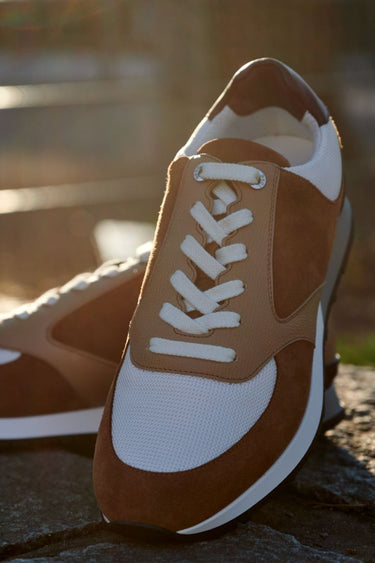
A blazer adds structure; leather sneakers add ease. Put them together well and you get the sharp, unforced energy that modern offices and after-hours spaces actually expect. Get them wrong and the outfit reads unfinished—like you grabbed the nearest jacket on your way out. This guide shows how to make leather sneakers with blazer feel deliberate, from fit and fabric to color, care, and the subtle dress-code cues that matter.
We’ll break down smart casual sneakers outfits, show unstructured blazer styling that breathes, explain what makes dress sneakers for office appropriate, and map colors and materials for minimalist sneakers with tailoring. We’ll even tackle the tricky “Common Projects with suit” question and outline a simple sneaker dress code men can follow without overthinking.
Why leather sneakers with blazer work now
The new suit isn’t always a suit. Many men spend more time in separates—soft jackets, tailored trousers, fine-gauge knits—than in a full two-piece. Leather sneakers slot into that uniform because they keep the look modern, comfortable, and quietly polished. The key is alignment: refined sneakers meet a blazer that’s equally relaxed (think unstructured shoulders, open weaves, and breathable linings). When structure and softness match, the silhouette looks intentional rather than improvised.
Modern dress codes judge the story your clothes tell, not the number of eyelets. Crisp grooming, balanced proportions, and quality materials signal respect far better than stiff shoes that don’t fit the setting.
Smart casual sneakers outfits that actually work
Start with a silhouette plan: clean lines up top, ease below the knee, and sneakers that read refined before sporty.
-
Office-ready: unstructured navy blazer, light poplin shirt or knit polo, mid-grey tailored trousers, white or dark brown leather sneakers.
-
Client coffee: textured blazer (hopsack or wool-silk-linen), button-down, ecru chinos, tan or taupe suede sneakers.
-
Desk-to-dinner: dark blazer, black knit, charcoal trousers, black leather sneakers with a low profile.
-
Weekend sharp: soft jersey blazer, tee, dark denim with a gentle taper, minimalist white sneakers.
Keep accessories muted: a slim leather belt in the same color family as your sneakers, a discreet watch, and clean socks (or invisible socks if your trousers are cropped).
Unstructured blazer styling: fabrics that flatter sneakers
A stiff, heavily padded jacket fights sneakers. An unstructured blazer—soft shoulder, light canvas, half lining—creates the relaxed frame your sneakers expect. Fabrics do the heavy lifting:
-
Open-weave wool/hopsack: breathable, matte, and naturally at home with leather or suede uppers.
-
Wool-silk-linen blends: subtle texture that echoes sneaker grain.
-
Cotton with a touch of stretch: casual but crisp enough for the office when the cut is clean.
-
Jersey and pique: great for travel and creative settings; pair with ultra-minimal sneakers.
Aim for a jacket length that covers the seat and a sleeve that shows a whisper of shirt cuff. That honest tailoring keeps casual footwear from dragging the outfit down.
Dress sneakers for office: what makes a pair appropriate
Not every sneaker is “dress.” The more athletic the tooling, the less office-friendly the shoe. Look for:
-
Low, slim profile: a narrow last and clean sidewalls.
-
Quality leather: full-grain calf or smooth nubuck; suede works when the rest is sharp.
-
Minimal branding: if you can read the logo from across the room, it’s too loud.
-
Stitch discipline: tidy rows and aligned edges read like tailoring for your feet.
-
Quiet color: white, black, chocolate, espresso, tan, or deep navy.
Polish matters. Clean laces, conditioned leather, and crisp edges tell a professional story even before you speak.
Minimalist sneakers with tailoring: the color and material playbook
Color is communication. So is texture. Use both to tune formality without losing personality.
-
White calf: brightest, most versatile; pairs with navy, grey, beige, and olive. Keep immaculate for office days.
-
Black calf: the sharpest line; works with charcoal, black, and deep navy—especially at night.
-
Dark brown calf: the “suit” of sneaker colors—excellent with blues, greys, and earth tones.
-
Taupe/tan suede: relaxed and sophisticated; great with ecru, stone, tobacco, and washed denim.
-
Navy leather: underused and elegant; acts like a softer black with blue tailoring.
Materials change the mood: smooth calf says polished; suede says creative and warm. Mix them to match your calendar.
Common Projects with suit: when it works—and when it doesn’t
The minimalist court silhouette can pair with a suit, but context decides. It works when the suit is soft (unstructured shoulder, breathable cloth, natural drape) and the sneakers are spotless. It falters with a hard, boardroom suit that demands leather soles and a heel. As a rule: pair Common Projects with suit in creative offices, travel days, and smart dinners—skip it for high-stakes presentations or conservative clients.
The fit triangle: jacket, trousers, sneakers
Outfits fail when one angle is off. Use this quick matrix to dial the balance in seconds.
|
Element |
What to check |
Why it matters |
|
Jacket (shoulder & length) |
Soft shoulder, length covering seat |
Keeps silhouette tailored so sneakers feel elevated |
|
Trousers (rise & taper) |
Mid rise; gentle, clean taper to 17–19 cm hem |
Avoids puddling and “gym” vibes at the shoe |
|
Sneakers (profile & color) |
Low profile; color echoes belt/outerwear |
Unifies the look and reads considered, not accidental |
One adjustment at any corner—hemming trousers, softening the jacket, streamlining the sneaker—often fixes the whole picture.
Sneaker dress code for men: a simple checklist
Think of this as your “leave-home” audit for sneaker dress code men can trust:
-
Condition: uppers clean, edges wiped, laces fresh.
-
Color match: belt and watch strap in the same family as your sneakers, or no belt with a tidy waistband.
-
Sock plan: fine cotton or wool socks; invisible socks only if hems are cropped and grooming is immaculate.
-
Trouser break: a light kiss on the sneaker—no stacking.
-
Jacket texture: at least as textured as the shoes (never shinier than your sneakers).
If all five read “yes,” your sneakers belong in the room.
Seasonal plays: spring, summer, autumn, winter
-
Spring: hopsack blazer, sky-blue OCBD, mid-grey high-twist trousers, white leather sneakers.
-
Summer: unlined wool-silk-linen jacket, knit polo, ecru chinos, tan suede sneakers.
-
Autumn: flannel blazer, merino crew, tobacco chinos, dark brown calf sneakers.
-
Winter: soft tweed jacket, rollneck, charcoal wool trousers, black leather sneakers.
Texture rises as temperatures fall. Match your sneaker grain to the season: suede when light is soft, smooth leather when nights are crisp.
Building smart casual sneakers outfits: a capsule you’ll actually wear
You don’t need twenty pairs. You need a small rotation that covers your week.
-
Core two: white leather + dark brown leather.
-
Texture add-on: taupe or tobacco suede.
-
After-dark: black leather with slim profile.
-
Travel: a pair with removable insoles and slightly cushioned lining for long days.
For jackets, keep one navy hopsack, one textured neutral (tobacco or stone), and one dark winter cloth. Trousers: grey wool, ecru cotton, dark denim. Every sneaker above finds a clean partner in that set.
Trouser hems and socks: where many looks fail
Most “sneakers with blazer” outfits fall apart at the hem. Too long and sneakers look sloppy; too short and they read trend-chasing. Aim for a subtle break: the front hem just touches the upper, the back is clean. If your sneakers have a higher collar, hedge 0.5 cm longer. Socks should be fine-gauge and color-matched to trousers, not shoes; it elongates the leg and keeps attention on texture, not ankles.
Care, comfort, longevity: the rituals that pay you back
-
Rotate: give leather 24 hours off to dry and bounce back.
-
Tree: cedar shoe trees keep shape and absorb moisture.
-
Brush: suede wants a gentle crepe brush weekly; calf likes a soft cloth wipe and monthly cream.
-
Edge work: a quick pass on the midsole edge erases street scuffs—tiny effort, big visual payoff.
-
Laces: swap when they grey; fresh laces read like a fresh haircut.
Good care turns “casual” into “considered”—and lowers your cost per wear.
Real-world examples: three men, three weeks
-
The consultant: two on-site days, three remote. He leans black leather sneakers under charcoal trousers and a navy blazer on client days; switches to white leather with denim and a wool-silk-linen jacket from Wednesday on.
-
The founder: lives in knit polos and unlined jackets. Dark brown calf sneakers are his anchor; tan suede handles investor coffees and late dinners.
-
The creative lead: jersey blazer, tees, and tapered chinos. White leather is the daily driver, with navy leather for night events.
None of them own more than four pairs—and none of them misses brogues.
Where to start on Sartale
Ready to test silhouettes in your own mirror? Start with a refined pair that plays well with tailoring and builds your rotation from there. Explore Sartale’s curated selection of leather sneakers—then pair them with breathable jackets and trousers for a week’s worth of looks that feel effortless and read professional.
Conclusion: polish the frame, then add ease at the ground
The smartest outfits keep the frame tailored and add comfort at the ground. Choose a blazer that moves, trousers that finish clean, and leather sneakers that whisper quality instead of shouting brand. Master those three and leather sneakers with blazer stops being a gamble—and becomes your most reliable uniform.
FAQ
Are leather sneakers with blazer acceptable in a corporate office?
In most modern settings, yes—if the sneakers are minimal, clean, and in sober colors, and the rest of the outfit stays tailored. For conservative clients or board meetings, switch to loafers or oxfords.
What’s the safest first pair for the office: white or dark?
Dark brown or black leather is the safest starting point. Add immaculate white once you’re comfortable maintaining the shoes and balancing the contrast.
How do I stop trousers from bunching over sneakers?
Ask your tailor for a gentle taper and a light break—front hem touching the upper, back hem clean. A 17–19 cm opening (measured flat at hem) works for most.
Do suede sneakers work with a blazer?
Absolutely. Suede brings warmth and texture, especially with wool-silk-linen jackets or flannel. Keep the nap brushed and the color muted.
Can I wear Common Projects with a suit?
Yes—with soft, unstructured suits in breathable cloths and spotless sneakers. Avoid with very formal, heavily padded suits.
What socks should I wear?
Fine cotton or wool socks that match your trousers. Invisible socks are fine with cropped hems, but grooming must be impeccable.
How do I keep white leather sneakers looking sharp?
Wipe after each wear, use a mild cleaner weekly, condition monthly, and replace laces as soon as they dull. Store with shoe trees to prevent creasing.
Are chunky soles a dealbreaker?
Chunky soles skew casual. For offices and dinners, choose low-profile soles. Save statement tooling for weekends.