


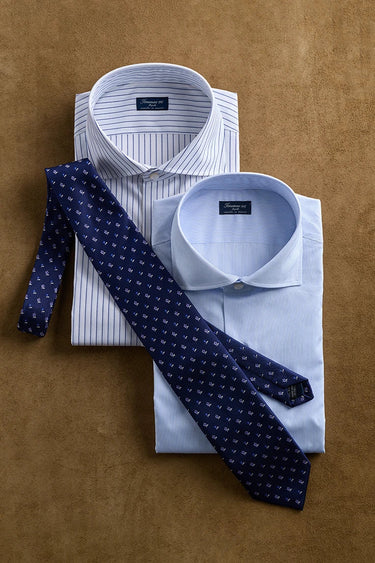
Think of the last time you saw a man who was simply, quietly well-dressed. Chances are, it wasn't the suit that caught your eye first. It wasn't the shoes. It was the small details—the way everything worked together. And at the center of it all, right under his chin, was a tie that looked like it belonged exactly where it was.
A tie is a small piece of fabric, but it carries a lot of weight. It signals intention. It frames your face. It's the exclamation point at the end of a sentence. But here's the thing that style guides often forget: a great tie isn't great on its own. It's great because it works with everything around it. It complements the spread of your collar. It harmonizes with the width of your lapels. It hits your belt buckle at exactly the right spot.
This isn't about rigid rules that stifle your personality. It's about understanding the relationships between these elements. Once you see how a collar, a lapel, and a tie speak to each other, you stop guessing and start knowing. You build a classic tie selection men can rely on for years. Let's decode that language together.
The Foundation: It Starts with the Collar
Your shirt collar is the frame for your tie. Get this relationship right, and everything else falls into place. Different collars have different personalities, and they ask for different kinds of knots and tie proportions. Here’s how to navigate the most common styles.
1. The Point Collar: The Reliable Classic
This is the most common and versatile collar. The points are close together, angled slightly downward. It's the default for a reason.
- The Goal: To create a clean, classic look.
- Best Tie Knot: The Four-in-Hand is the perfect partner. Its slightly asymmetrical, smaller profile sits neatly within the narrow spread, filling the space without distorting the collar.
- Tie Width: A standard width (around 3 to 3.5 inches) works perfectly. It's proportionate to the collar's scale.
2. The Spread Collar: The Confident Choice
Here, the collar points angle outward, creating more space between them. It's a modern, assertive look that frames the face and allows for a larger, more impressive knot. Choosing the right tie for spread collar is about filling that space with confidence.
- The Goal: To create a balanced, powerful triangle.
- Best Tie Knot: This is the time for a Windsor (full or half) or a Pratt knot. These symmetrical, substantial knots fill the wider space beautifully and anchor the look.
- Tie Width: You have more freedom. A slightly wider tie (3.25 to 3.75 inches) often looks best, matching the bolder proportions of the collar.
3. The Cutaway Collar: The Bold Statement
The tie for cutaway collar is for the man who isn't afraid of a little sprezzatura. The points are spread even wider than a standard spread, almost horizontal. It's a dramatic, fashion-forward look.
- The Goal: To make a statement with the empty space itself.
- Best Tie Knot: A substantial, well-structured knot is non-negotiable. A full Windsor is the classic choice, creating a wide, triangular shape that perfectly echoes the collar's lines.
- Tie Width: Pair it with a tie that has a good amount of heft. A slim tie will look lost. Aim for at least 3.5 inches.
4. The Button-Down Collar: The Ivy League Icon
This collar, with its small buttons holding the points in place, is inherently casual and preppy. It has a soft, slightly rolled appearance. The rules for a tie for button down collar are a bit different.
- The Goal: To enhance the relaxed, textured feel.
- Best Tie Knot: A Four-in-Hand is practically the only choice here. Its casual, slightly off-kilter look perfectly matches the collar's easy attitude. Avoid any large, stiff knots.
- Tie Material & Texture: This is a great place for a silk tie vs wool tie exploration. A knitted silk tie, a wool tie, or even a repp cotton tie all feel right at home with a button-down.
The Partner in Crime: Lapels and Tie Width
Now, look down at your jacket. The lapels—those folded flaps of fabric on either side of your chest—have a direct conversation with your tie. The golden rule is simple: proportion is everything. The width of your tie should generally mirror the width of your lapels at their widest point.
Think of it as a visual echo. If you're wearing a slim-lapelled jacket, a wide tie will look like it's wearing you. If you're sporting a '70s-style wide lapel, a skinny tie will look lost and out of place. This relationship is a cornerstone of any tie width guide.
|
Lapel Style |
Lapel Width (at widest point) |
Ideal Tie Width |
Overall Vibe |
|
Notch Lapel (Classic) |
3 – 3.5 inches |
3 – 3.5 inches |
Balanced, timeless, safe for any occasion. |
|
Peak Lapel (Bold) |
3.5 – 4+ inches |
3.5 – 4 inches |
Powerful, formal, confident. The wider tie anchors the broader lapel. |
|
Shawl Lapel |
Varies (on tuxedos) |
Standard width (3–3.25") |
The tie is not the star here; keep it classic and simple. |
|
Slim/Notch (Modern) |
2.5 – 3 inches |
2.5 – 3 inches |
Sleek, contemporary, works well for leaner builds and modern suits. |
The Long and Short of It: Tie Length Rules
You've chosen the right width and knot for your collar and lapels. Now, let's talk length. This is the most common, and most easily fixable, mistake men make. The tie length rules are mercifully simple.
Your tie should end at the middle of your belt buckle. Not above it, not below it. Right in the center. This creates a clean visual line from your face down to your waist.
- Too Short: A tie that hovers above the waistband makes the torso look short and the whole outfit feel off-balance.
- Too Long: A tie that falls past the belt buckle looks sloppy and can make your legs seem shorter.
- The Exception: If you're wearing high-waisted trousers, the same rule applies—the tip should hit the middle of the waistband, where your buckle would be.
When shopping, the back blade of the tie should be slightly shorter than the front blade, tucking neatly into the loop on the back.
Material World: Silk, Wool, and Beyond
The material of your tie affects not only how it looks but how it knots and how it feels. The classic silk tie vs wool tie debate is a great place to start understanding texture.
- Silk: The gold standard. A silk tie is versatile, works for almost any occasion, and has a beautiful sheen. A matte or "foulard" silk is more understated and easier to pair than a high-gloss "satin" weave.
- Wool: Perfect for autumn and winter. A wool tie (or a silk-wool blend) adds wonderful texture and warmth. It knots beautifully and pairs exceptionally well with tweed, flannel, and heavier worsted wool suits. Its matte finish is inherently more casual.
- Linen & Cotton: Ideal for spring and summer. They're lightweight, breathable, and have a casual, textured look. They knot easily but can wrinkle—embrace it as part of their charm.
- Knitted Silk: A unique category. These ties have a distinct, textured surface and a bit of stretch. They're inherently casual and perfect for adding a relaxed, modern touch to a button-down shirt or a casual blazer.
Building Your Core Collection
What ties should every man own? Building a classic tie selection men can rely on is about choosing versatile pieces that work for multiple occasions. Start with these five, and you'll be covered for almost everything.
- The Navy Solid: In a matte silk or wool, this is the most versatile tie you can own. It pairs with everything from a charcoal suit to a grey blazer to a simple navy suit. Finding the best tie for navy suit is easy: it's a navy tie. The slight tonal difference creates a sophisticated, monochromatic look.
- The Burgundy Solid: The other half of the power couple. A burgundy tie (in a shade like "oxblood" or "bordeaux") adds a rich pop of color to navy, grey, and brown suits. It's classic, confident, and always appropriate.
- The Dark Grey Solid: A quiet workhorse. A charcoal or heather grey silk tie is subtle, elegant, and perfect for when you don't want the tie to be the focus. It's ideal for weddings and important meetings.
- The Repp Stripe: A classic pattern. A tie with diagonal stripes in a traditional color combination (like navy and burgundy, or navy and gold) adds visual interest and a touch of heritage. It's a staple of the Ivy League look.
- The Discreet Pattern: A tie with a small, all-over pattern—like a "pindot," "foulard," or small geometric print—adds depth without shouting. It's a great way to introduce pattern to your wardrobe in a safe, versatile way.
Explore a collection like Sartale's men's classic ties to find these foundational pieces in premium materials.
Conclusion: Trust the Proportions
Choosing the right tie isn't about memorizing a hundred rules. It's about understanding a few key relationships. Look at your collar—is it asking for a small, neat knot or a wide, powerful one? Look at your lapels—does the width of your tie echo their line? Check the length—is it hitting your belt buckle?
When these elements are in harmony, the effect is subtle but powerful. You look put-together without looking like you tried too hard. The tie isn't just an accessory; it's the finishing touch that proves you understand the whole picture. So next time you suit up, take an extra moment to consider the conversation between your collar, your lapels, and your tie. Get it right, and you'll speak volumes without saying a word.
Frequently Asked Questions
1. What's the most common mistake men make with tie length?
Without a doubt, wearing a tie that's too long or too short. The tip should always hit the middle of your belt buckle. This simple fix instantly makes any outfit look more intentional and polished.
2. How do I choose a tie for a navy suit?
You have fantastic options. A navy tie creates a sophisticated, tonal look. A burgundy tie is the classic, confident choice. A grey tie is subtle and elegant. For a patterned tie, look for ones that incorporate navy, burgundy, or gold.
3. What knot is best for a skinny tie?
A skinny tie calls for a small, neat knot. The Four-in-Hand or the Oriental knot (a very simple, small knot) are your best friends. A large Windsor knot will look completely out of proportion.
4. Should my tie be the same width as my lapels?
Yes, that's the golden rule of proportion. The width of your tie should roughly match the width of your jacket's lapels at their widest point. This creates a balanced, harmonious silhouette.
5. Can I wear a wool tie in the summer?
While wool is traditionally associated with cooler months, a lightweight, finely woven wool tie can work in milder summer weather, especially in the evening. For hot, sunny days, linen or cotton are more comfortable choices.
6. What's the difference between a silk tie and a knitted silk tie?
A standard silk tie is woven from flat threads and is cut on the bias, giving it weight and a smooth finish. A knitted silk tie is literally knitted, creating a textured, almost "ribbed" surface. It's more casual, has a bit of stretch, and knots very easily.
7. I have a large neck. Should I buy extra-long ties?
Yes, absolutely. If you have a larger neck size or are taller, standard ties (around 57-58 inches long) may be too short. Look for ties labeled "extra-long" or "XL," which are typically 60-64 inches and will ensure the tip hits your belt buckle correctly.
8. Is a tie clip necessary?
Not necessary, but it's a fantastic functional accessory. It keeps your tie neatly in place and adds a subtle, classic touch of metal to your outfit. Just remember the rule: it should never be wider than your tie, and it should be placed between the third and fourth buttons of your shirt.