


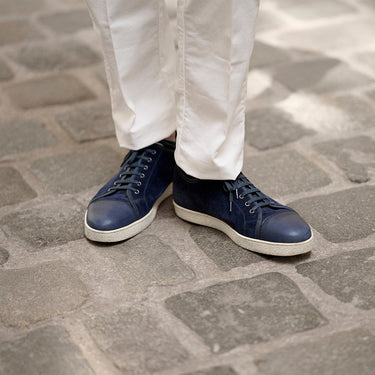
A pair of leather shoes is easier to choose when you know where it will be worn. The shape that looks elegant with a dark suit may not be the pair you want for a long day in relaxed trousers. With John Lobb, start with the model, leather and fit, then decide how it will work in your own wardrobe.
Choose the role before the model
Think about your most frequent setting. A polished black leather shoe can provide a quiet foundation for dark tailoring. Brown leather or suede may suit a less formal wardrobe, depending on the model and dress code. Loafers offer a different visual balance from lace-up shoes and deserve to be tried with the trousers you intend to wear.
The John Lobb collection at Sartale gives the model names and product details to compare. Check the information for the individual pair rather than assuming that every shoe from one maker has the same sole, construction or fit.
Try both shoes and walk
Wear socks of the thickness you expect to use. Try both shoes, stand normally and take a few steps. Notice the toe room, the pressure across the instep and whether the heel feels secure. Leather may soften with wear, but significant pain or an unsuitable shape should not be treated as a necessary stage of buying good shoes.
For loafers, fastening cannot compensate for a poor match at the instep. If the heel slips noticeably or the upper presses uncomfortably, compare another size or shape. Our loafer fit guide offers a more detailed fitting check.
Keep the daily routine simple
After wearing smooth leather shoes, remove loose dust with a suitable soft brush or cloth. Let the shoes air in a dry, ventilated place. Suitable shoe trees can help maintain their shape; they should support the shoe without forcing it wider.
Before using any cream, polish or protective product, identify the leather and read the maker's guidance. Smooth calf, suede and specialist finishes do not all accept the same treatment. A product that works on one brown shoe is not automatically appropriate for every brown leather.
What to do after rain
Remove surface moisture gently and allow the shoes to dry naturally, away from radiators and other direct heat. Avoid adding polish to leather that is still damp. Once dry, assess whether ordinary cleaning is enough or whether marks need specialist attention.
Do not experiment with food ingredients, strong household cleaners or improvised injections into the shoe. If a mark persists, ask a qualified repairer or the manufacturer before making the problem harder to correct.
Build a care kit around the actual leather
- A soft cleaning brush or suitable cloth for routine dust.
- Well-fitting shoe trees.
- A cream or polish specifically suitable for the leather and finish, when recommended.
- Separate tools for different colours to avoid accidental transfer.
Use small amounts and follow the product instructions. Test an unfamiliar treatment on an unobtrusive area where the maker permits it. Suede needs a different routine; read our guide to suede and rain before treating a suede pair like polished calf.
Make the trousers part of the decision
The same loafer can look different beneath a narrow hem and a fuller leg. Avoid buying shoes in isolation and then forcing every pair of trousers to match them. Compare the complete outline and check the hem while standing naturally.
If you want to compare other shapes before deciding, browse the loafer collection. For longer-term ownership, inspect soles and heels periodically and seek repair advice before wear becomes extensive. Whether a particular pair can be resoled depends on its construction and condition; it is not an unlimited guarantee.
Questions about leather shoes
Should new shoes hurt while they break in?
They may feel firmer than a worn pair, but pain and severe pressure are reasons to reassess the fit. Do not buy an unsuitable size on the promise that the leather will fix it.
Can I use the same care product on suede and smooth leather?
Only if the product is expressly suitable for both and the shoe maker's instructions allow it. Check the finish before applying anything.