


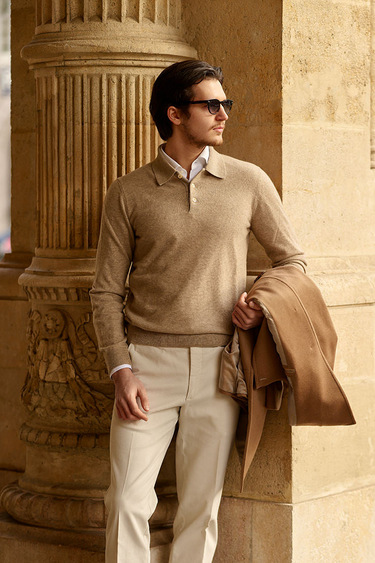
There is a moment every autumn when your light jacket stops making sense. The wind cuts through, the commute feels longer, and you suddenly realise: it’s time for a real city coat. Not a puffer you forget in the office, but a piece that frames your suit, works with denim, and will still look right five winters from now.
For most men, the choice quietly comes down to three classics: the car coat, the balmacaan, and the Ulster. They all keep you warm. They all have history. But they speak very different style languages and work in different kinds of cities and lifestyles. This guide will walk you through car coat vs balmacaan vs ulster in a practical way, so you can choose the one coat that actually fits your daily routine, not someone else’s Instagram.
Types of men’s overcoats: where car coat, balmacaan and Ulster fit in
Before we zoom in on each style, it helps to see the bigger picture of types of men’s overcoats. In classic menswear there are two broad families:
- Overcoats: long, substantial coats that usually fall below the knee and are designed for real winter.
- Topcoats: lighter, slightly shorter coats that tend to end around the knee or just above, better for milder climates or mid-season wear.
The car coat, balmacaan, and Ulster all sit on this spectrum:
- The car coat is a shorter, practical city topcoat, usually mid-thigh, designed to be comfortable while seated in a car or on a train.
- The balmacaan is a loose, single-breasted overcoat with raglan sleeves and a clean front, originally in rough Scottish tweed.
- The Ulster is the heavy hitter: a long, often double-breasted coat in robust tweed, born as a Victorian working overcoat with serious weather protection.
All three can be worn in the city. The trick is matching each coat’s personality to your climate, your commute, and your wardrobe.
What is a car coat and why city men still love it
The original car coat was created for early motorists, when cars were open and icy wind was a daily reality. Over time it evolved into a shorter, more agile coat that typically ends around mid-thigh: long enough to keep your hips and seat warm, short enough not to tangle around your knees when you drive or climb stairs.
Modern versions are usually:
- Straight or slightly A-line in silhouette
- Single-breasted, with a simple button or fly front
- Cut from sturdy wool, cashmere blends, or treated cottons
- Designed with practical pockets and a clean, minimal look
This is the coat you shrug on over everything from a flannel suit to a hoodie and chinos. Among all types of men’s overcoats, the car coat is often the easiest to live with: it looks intentional, but never fussy.
It also earns extra points as the best coat for commuting if you spend a lot of time sitting — in the car, on the metro, at your desk. The shorter length means less fabric to wrinkle, no bunching under you, and fewer dirty hems after a long rainy day in the city.
Car coat length and fit: your quick city coat length guide
Length is where many men hesitate. Too short and the coat feels like a jacket. Too long and you feel overdressed at the coffee shop.
A simple city coat length guide for a car coat looks like this:
- Mid-thigh (classic car coat): the most versatile option. Works for most heights and body types, and pairs with both tailoring and denim.
- Just above the knee: leans more “overcoat”, gives extra warmth, and looks smarter over suits.
- Seat-length or slightly longer jacket: more casual, better suited to technical fabrics and weekend wear.
Aim for a straight but not boxy silhouette. The shoulders should sit cleanly, and you should be able to button the coat over a chunky sweater without feeling squeezed. A good car coat skims the body rather than hugging it.
Balmacaan coat: relaxed raglan sleeve elegance
If the car coat is the pragmatic commuter, the balmacaan is the quiet intellectual of the group. It’s a loose, full overcoat with raglan sleeves, originally made from rough woollen cloth and named after a Scottish estate near Inverness.
Key characteristics of a classic balmacaan:
- Single-breasted front, often with a fly (hidden) placket
- Raglan sleeves that run directly into the collar, rather than set into a shoulder seam
- A high, often Prussian-style collar you can pop up against wind and rain
- Few seams and a clean body to keep water out and the line minimalist
Originally cut in tweed or gabardine for Scottish weather, the balmacaan today is often made from soft wools or wool-cashmere, sometimes even technical fabrics. It has become a favourite in modern menswear because it feels contemporary and slightly relaxed, yet still grown-up.
What makes a raglan sleeve balmacaan so easy to wear
The phrase raglan sleeve balmacaan matters. Raglan sleeves soften the line of the shoulder and blend the coat into your body instead of sitting on top of it. That means:
- More comfort when layering over tailoring or knitwear
- A forgiving fit if your shoulders or chest are broader
- A subtle, relaxed silhouette that looks natural with everything from chunky sneakers to polished oxfords
If you like the idea of a city coat that can go from office to gallery to Sunday grocery run without ever feeling “too formal”, a balmacaan is an excellent candidate. It’s also a brilliant option if you frequently wear scarves: the clean front and generous lapel area let wool and cashmere scarves drape beautifully.
Ulster coat: heritage armour for real winter
The Ulster is the most dramatic of the three. Born in the Victorian era as a working daytime overcoat for coachmen, it was originally made in rugged tweed and often featured a shoulder cape for extra protection from the elements.
Modern Ulster coat features usually include:
- Long length, typically at or below the knee
- Double-breasted 6x2 or 8x4 button configuration
- The distinctive “Ulster collar” with notched lapels that can button up high
- Patch pockets, sometimes with flaps, to reinforce the coat’s country heritage
- Turn-back cuffs and visible stitching for character
- A half belt at the back and rear pleats for shape and movement
If the balmacaan whispers, the Ulster quietly states: this man takes winter seriously. It sits closer to the greatcoat tradition, offering serious warmth without sacrificing style.
In a city context, an Ulster works best if:
- Your winters are genuinely cold and windy
- You wear tailoring often and want a coat that covers your suit jacket completely
- You appreciate heritage details and don’t mind standing out a little
Key Ulster coat features and how to style them
When people talk about “Ulster coat features”, they often mean the way form and function overlap:
- The long length blocks wind on platforms, bridges, and open streets
- The double-breasted front and thick cloth create a warm barrier on truly cold days
- The half belt can define the waist subtly, avoiding a boxy silhouette
- Patch pockets and cuffs add a casual note, so you can wear an Ulster with heavy knitwear and boots as easily as with flannel trousers
If you go for an Ulster as your main city coat, choose a versatile colour like dark brown, navy, or heathered grey. That way it still works with casual outfits on weekends, not only with formal suits.
Car coat vs Balmacaan vs Ulster: comparison at a glance
To make the car coat vs balmacaan vs ulster decision easier, here is a quick side-by-side overview:
|
Feature |
Car Coat |
Balmacaan |
Ulster |
|
Heritage |
Early 20th-century motoring coat |
Scottish estate near Inverness, 19th century |
Victorian working overcoat for coachmen |
|
Typical length |
Mid-thigh to just above knee |
Knee-length or slightly below |
At or below knee, often longer |
|
Construction |
Straight body, set-in sleeves, simple front |
Loose cut, raglan sleeves, minimal seams |
Structured, double-breasted, half belt, pleats |
|
Formality level |
Smart casual to business casual |
Relaxed smart, great over tailoring and denim |
Smart, slightly dramatic, ideal with tailoring |
|
Weather performance |
Good for cool to cold urban winters |
Strong for wind and rain with right fabric |
Excellent for severe cold and wind |
|
Best coat for commuting? |
Daily commuting, car, metro, office hopping |
Mixed schedule: office, creative work, weekends |
Longer walks in real winter, dressier commutes |
|
Works best with |
Chinos, denim, soft tailoring |
Knitwear, soft suits, casual trousers |
Flannel suits, heavy knitwear, leather boots |
Use this as a starting point rather than a rule book. The right coat is the one you will actually wear three or four days a week without thinking twice.
Single-breasted vs double-breasted coat in the city
Another way to look at these three coats is through the lens of single-breasted vs double-breasted coat design.
- Car coats are almost always single-breasted. That makes them easy to throw on and off, and visually lighter.
- Balmacaans are also typically single-breasted, sometimes with a hidden placket that emphasises the clean vertical line.
- Ulsters are traditionally double-breasted, which increases warmth and gives the coat its unmistakable presence.
For a modern city wardrobe:
- Choose single-breasted if you want a versatile coat that feels natural over a T-shirt, hoodie, or soft tailoring. A car coat or balmacaan will almost never feel “too much”.
- Choose double-breasted if you enjoy that extra sense of structure and formality and you live in a genuinely cold climate where the additional overlap of fabric is a practical advantage, not just a style statement.
If you are building your first serious outerwear piece, a single-breasted wool coat is usually the safest starting point. Once you understand how you move through your city in winter, you can add a double-breasted Ulster as a second, more expressive option.
How to choose the best coat for commuting and your lifestyle
You can look at all the details in the world, but in everyday life one question matters most: which of these is the best coat for commuting in your reality?
Think through three axes:
- Climate
- Commute
- Wardrobe
If your winters are damp and windy rather than brutally cold, a mid-thigh car coat or a mid-length balmacaan may be all you need. If you regularly deal with sub-zero temperatures, icy winds and long walks, an Ulster’s extra length and weight start to make sense.
For transport:
- Mostly car and short walks: car coat shines. It’s literally designed for being seated without bunching.
- Metro, tram, or bike plus walking: a balmacaan offers more coverage but stays light on the shoulders, especially in a raglan construction.
- Long outdoor walks, standing on platforms, and occasional travel to colder climates: the Ulster steps in as your wearable shelter.
And finally, wardrobe:
- Suit four or five days a week: lean towards a knee-length car coat or balmacaan, or invest straight into a tailored Ulster in tweed or wool-cashmere.
- Smart casual office, lots of knitwear and denim: a relaxed balmacaan or soft-structured car coat will probably see the most wear.
- Hybrid lifestyle, from business meetings to Sunday coffee: one well-cut wool car coat in navy or dark camel can cover more situations than you think.
Fabric, colour and styling tips for modern city coats
Once you’ve decided between car coat vs balmacaan vs ulster, the next question is how to make your coat feel like you.
For fabric, focus on:
- High-quality wool: the workhorse choice for most men. Durable, warm, and elegant.
- Wool-cashmere blends: softer hand, more luxury, slightly lighter but still warm.
- Tweed and herringbone: add texture and depth, especially beautiful on Ulsters and balmacaan coats.
- Technical blends: interesting for car coats if you live somewhere rainy and spend a lot of time outside.
In terms of colour, navy, dark grey, charcoal, and camel remain the most flexible options. They slide easily over both navy and grey tailoring and feel natural with washed denim or cream knitwear.
If you want a concrete starting point, explore luxury wool and cashmere coats in deep navy or charcoal from Sartale’s coats selection — these tones make a perfect base for a modern city wardrobe.
How many city coats does a modern man really need?
If you are building a considered wardrobe rather than chasing trends, think in layers:
- First coat: a single-breasted wool car coat or balmacaan in navy or dark charcoal. This is your everyday city coat.
- Second coat: an Ulster in textured tweed if your climate is serious about winter, or a lighter raglan balmacaan in beige or olive if you want something more casual.
- Third coat (optional): a more expressive colour or fabric — camel, herringbone, even a reversible cashmere piece — once your basics are covered.
For most men, two well-chosen coats quietly outperform a wardrobe full of forgettable outerwear.
City style examples: how to wear each coat
To make this more concrete, imagine a week in the city.
- Monday: You wear a navy suit and brown oxfords. A dark grey car coat frames the suit without competing with it and keeps the overall look sharp but modern.
- Wednesday: Smart casual day. Cream roll-neck, charcoal flannel trousers, suede boots. A raglan balmacaan in soft brown tweed adds movement and texture.
- Friday evening: Dinner date in a black roll-neck and tailored wool trousers. A deep camel Ulster in herringbone tweed brings drama without shouting.
On weekends, you might throw the same coats over jeans, a hoodie and sneakers. The key is choosing cuts and colours that feel as natural at the office as they do at your favourite café.
For inspiration, see how Sartale styles men’s coats and jackets across brands like De Petrillo, Kiton, Sealup and others in their outerwear selection — note how the same coat appears with denim, knitwear and tailoring.
FAQ: car coat vs balmacaan vs Ulster
Which coat is most versatile for everyday city life?
If you want one coat to do almost everything, start with a single-breasted car coat in wool or wool-cashmere, mid-thigh to just above the knee. It works with suits, casual trousers and denim, and feels natural on commutes, business trips and weekends. A balmacaan is a close second if you prefer a slightly looser, more contemporary silhouette.
Is a balmacaan formal enough to wear over a suit?
Yes, a well-cut balmacaan in a sober fabric like navy wool, dark camel or subtle herringbone easily works over a suit. The raglan sleeves create a softer line than a structured overcoat, but that’s an advantage in modern cities where dress codes are more relaxed. Just avoid overly sporty fabrics or loud patterns if you plan to wear it to the office.
When is an Ulster coat a better choice than a car coat?
An Ulster becomes the smarter choice when your winters are genuinely cold and you spend a lot of time outdoors — long walks, open platforms, windy streets. The extra length, heavy cloth and double-breasted front provide more warmth and protection than a typical car coat. If you wear tailoring most days and enjoy a slightly dramatic, heritage look, the Ulster will feel very natural.
Do I need both a single-breasted and a double-breasted coat?
You don’t need both, but they serve slightly different purposes. A single-breasted coat (car coat or balmacaan) is the easiest everyday option: quick to button, visually lighter, and highly versatile. A double-breasted Ulster adds an extra level of warmth and presence. Many men start with a single-breasted coat and add a double-breasted piece later, once they know how often they’ll wear it.
What is the best coat for commuting by car?
The classic answer is the car coat itself. Its length is designed so you can sit comfortably without sitting on too much fabric, and you can get in and out of the vehicle easily. If your commute mixes car and walking, a slightly longer car coat or a balmacaan in a weather-resistant fabric is a strong alternative.
Can I wear sneakers with an Ulster or balmacaan?
Absolutely. Modern men’s style is less rigid than it used to be, and pairing an Ulster or balmacaan with clean leather or high-quality suede sneakers can look very contemporary. The key is keeping the rest of the outfit coherent: think good knitwear, well-cut trousers and quality accessories, not gym clothes.
Which coat works best in a rainy city?
For persistent rain and wind, a balmacaan in tightly woven wool, gabardine or a technical blend is hard to beat. Its reduced seams and high collar were originally designed to keep out Scottish rain, and that logic still applies in modern cities. A car coat in treated cotton or a wool blend with a good lining also works well for rainy commutes.
How should a city coat fit over a suit jacket?
You should be able to button the coat comfortably over your suit without pulling at the buttons or feeling tight across the back. The shoulders should sit cleanly with the suit underneath, and the sleeve length should show a hint of shirt cuff once you remove the coat, but not while you wear it. If you’re between sizes, it’s often better to size slightly up for outerwear so you can layer freely.
If I already own a puffer, do I still need a wool coat?
A puffer is great for pure function, but in a city it rarely feels as refined as a wool coat. A good car coat, balmacaan or Ulster adds structure to your outfits, works better with tailoring, and instantly elevates simple combinations like jeans and a knit. Think of a wool coat as not only warmth, but as the frame that pulls your whole winter wardrobe together.
A well-chosen city coat is one of the rare pieces that can quietly transform your winter style. Whether you end up in a pragmatic car coat, a relaxed raglan balmacaan or a heritage Ulster, focus on fabric, length and how the coat fits your real life. Then wear it relentlessly — through commutes, dinners, trips and slow Sunday walks. That is how a coat stops being “outerwear” and becomes part of your signature.