


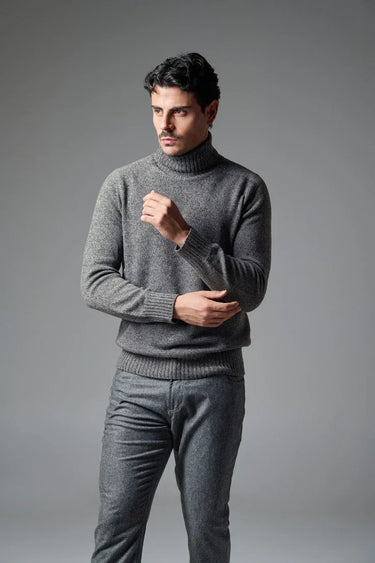
Think about the best thing in your closet. The piece you grab without thinking. Chances are, it’s not the loudest item. It’s the one that just… works. It fits like it was made for you, even if it’s a simple crewneck. That feeling isn’t an accident. It’s the result of cut, construction, and knowing what to look for.
When it comes to looking put-together, few things are as forgiving—or as unforgiving—as a sweater. A well-fitting sweater can make a five-minute outfit look intentional. It skims your frame, moves with you, and whispers quiet confidence. But a poor fit? It can throw off your entire silhouette, making you look sloppy or like you’re wearing borrowed clothes. This isn't about rigid rules. It's about understanding the subtle details—the fall of the shoulder seam, the break of the sleeve, the drape of the fabric—that separate a sweater you wear from a sweater that wears you.
The Architecture of a Great Fit: Beyond Size Tags
Forget the letter on the label for a moment—Small, Medium, Large. Those are just suggestions. The real story of how should a sweater fit men is told in three key areas: the shoulders, the sleeves, and the body. Get these right, and you’ve won 90% of the battle. Let's look at each one.
1. The Shoulder Seam: Your Anchor Point
This is the single most important checkpoint. The shoulder seam sweater fit should sit exactly where your shoulder ends and your arm begins. You can find this spot by feeling the bony point of your shoulder (the acromion process).
- If the seam creeps up towards your neck: The sweater is too small. You’ll feel restricted, and the fabric will pull unattractively across your upper back.
- If the seam hangs down past your shoulder point: The sweater is too big. That strong, sharp line of your shoulder gets lost, and the whole garment droops, making you look softer and less defined.
- The Goal: The seam should land flush with that corner. This creates a clean, strong line and ensures the rest of the sweater hangs correctly.
2. The Sleeve: Finding Your Wrist Bone
Next, drop your arms to your sides naturally. Where does the sleeve end? The ideal sleeve length sweater fit is a topic of much debate, but here’s the simple truth: you want a clean break.
The cuff should just graze the base of your thumb (where your hand meets your wrist) when your arm is down. When you bend your elbow, the sleeve should ride up enough to show a bit of shirt cuff—about half an inch is the sweet spot. This shows you have a shirt on underneath without looking like you’re expecting a flood. If the sleeve bunches up around your elbow when your arm is straight, it’s too long. If it feels tight when you reach for a coffee cup, it’s too short.
3. The Body: Drape, Not Bag
This is where personal preference meets physics. The body of the sweater should skim your torso. It should follow your lines without clinging to them. You’re aiming for a subtle "V" shape from your chest down to your hips.
- Slim vs Regular Fit Sweater: This is the core decision. A slim vs regular fit sweater choice depends on your build and style. A slim fit will have less excess fabric, tapering in at the waist. It works well if you’re lean. A regular fit offers a bit more room through the chest and waist, providing comfort and a classic silhouette. Neither is "right" or "wrong," but the sweater should never pull at the buttons (if it's a cardigan) or create horizontal wrinkles across your midsection.
- The Hem: The bottom hem should hit around the middle of your belt line or just below your hip bone. It should be long enough to tuck in (if that’s your style) but short enough that it doesn't bunch up over your jeans.
A Tale of Two Silhouettes: Finding Your Fit
To make this even clearer, let’s visualize the two most common fit profiles in luxury knitwear. Understanding this helps you shop with intention, especially when browsing collections like our men's classic knitwear, where quality construction makes these subtle differences shine.
|
Feature |
The Streamlined Silhouette (Trim Fit) |
The Classic Silhouette (Regular Fit) |
|
Shoulder Seam |
Exactly at the shoulder bone |
At or just slightly past the shoulder bone |
|
Chest & Body |
Skims the body; follows your natural shape |
Subtle drape; offers easy movement without being baggy |
|
Sleeve |
Narrower, follows the arm's line |
Straight cut, comfortable through the elbow |
|
Overall Vibe |
Modern, sharp, works well under a tailored jacket |
Timeless, relaxed, perfect as a standalone piece |
|
Best For |
Layering, leaner builds, a sleek aesthetic |
Comfort, broader builds, a casual yet refined look |
The Material Factor: Cashmere, Wool, and You
Here’s where it gets interesting. The material of your sweater affects how it fits and how you should shop for it. This is the crucial question: should you size up in cashmere?
The answer is nuanced. Cashmere, especially high-quality cashmere, is a living fiber. A brand new cashmere sweater might feel perfectly snug. However, because the fibers are delicate, they will relax and give slightly with wear. The weight of the fabric itself will cause it to drape and settle. If you buy a trim-fit cashmere sweater that feels like a second skin in the store, it might become the perfect, body-skimming layer after a few wears.
Conversely, if you buy a 100% cotton or a sturdy Merino wool sweater with the same snugness, it's less likely to give. Wool has more "memory" and resilience.
The Golden Rule: Always prioritize shoulder fit. If the shoulders are perfect, the rest will likely fall into place, especially with natural fibers that will mold to you over time. Don't buy a size up to fix a sleeve that's too short or a body that's too tight; that will just throw off the shoulders.
Five Common Knitwear Fit Mistakes (And How to Fix Them)
Even the most stylish guys can fall into these traps. Being aware of them is half the battle. Avoiding common knitwear fit mistakes men make is simple once you know what to look for.
- The Stretched-Out Neckline: This usually happens from hanging heavy knits. Fix it: Always fold your sweaters and store them on a shelf. For lightweight knits, use a wide, padded hanger.
- The Baggy Bum: A sweater that's too long in the body covers your entire rear and makes your legs look shorter. Fix it: Look for sweaters with a hem that hits at or just below the belt line. If you love a longer one, try a front tuck.
- The Mushroom Shoulder: When the shoulder seam is two inches down your arm, it creates a droopy, rounded line. Fix it: Tailoring a sweater is tricky. This is best avoided at the purchase stage. Stick to the shoulder seam rule.
- The Restricted Reach: If raising your arms to the sky makes the whole sweater lift to your chin, it’s either too tight in the shoulders or too short in the body. Fix it: Look for sweaters with a bit of room in the chest and raglan sleeves, which are designed for more movement.
- The Collar Gap: With V-necks or cardigans, the collar should lie flat against your shirt. If it gapes or curls outwards, the neckline is too big or the construction is poor. Fix it: Check this by moving around in the dressing room. A well-made sweater will have a collar that stays put.
The Sartorial Conclusion: Trust Your Eyes (and Your Hands)
At the end of the day, fit is a personal conversation between you and your clothes. You can read all the guides in the world (and we hope this one helps!), but the final test is in the dressing room. How does it feel when you move? When you sit down? When you stand with your hands in your pockets?
A great sweater should feel like an extension of you. It should offer comfort without sacrificing shape, and style without demanding attention. Pay attention to the shoulders, find your perfect sleeve length, and understand how the fabric behaves. Whether you prefer the sharp line of a slim fit or the easy drape of a classic cut, the goal is the same: to look like the best version of yourself, effortlessly.
Ready to find that perfect piece? Explore our collection and feel the difference true quality makes.
Frequently Asked Questions About Sweater Fit
1. I have broad shoulders and a narrow waist. Finding a sweater that fits both is a nightmare. Any advice?
You're describing the classic "athletic build" challenge. Look for sweaters described as having a "trim" or "tailored" fit. These are designed to accommodate a broader chest and shoulders while tapering in at the waist. Also, consider a regular fit in a finer gauge (lighter weight) fabric, as it will drape over your shoulders without adding bulk and follow your torso's line more easily.
2. My sweater sleeves are always too long. Is it worth getting them shortened?
It can be, but proceed with caution and find an expert tailor. Shortening a sleeve from the cuff end is complex because it disrupts the ribbing and any detailing. A good tailor may need to shorten it from the shoulder, which is a more involved and expensive job. For a truly cherished, high-investment piece, it can be worth it.
3. What about sweater collar fit? How should a crewneck sit?
Great question. A crewneck should hug the base of your neck comfortably. It shouldn't be so tight that it feels constricting, nor so loose that it gapes and shows your collarbone. You should be able to slip a couple of fingers between the neck and your throat.
4. Does Italian knitwear sizing run smaller than American brands?
Often, yes. Italian knitwear sizing tends to have a more "sartorial" cut—meaning it's generally more fitted through the chest and shoulders, with a slightly shorter body length. This creates a very clean, elegant silhouette. Always check the specific size measurements, as "Medium" can vary significantly between brands and countries.
5. I'm between sizes. Should I size up or down in a wool sweater?
Consider the fabric and your intended use. For a chunkier, heavy-gauge wool you plan to wear as a statement piece over just a t-shirt, sizing down might lead to a cleaner look. For a fine-gauge merino you want to layer over a shirt, if you're between sizes, go with the larger one for comfort, ensuring the shoulder seam isn't drastically off.
6. How can I tell if a sweater fits well when I'm shopping online?
Become best friends with the measuring tape. Find a sweater you own that fits perfectly. Lay it flat and measure the chest (from armpit to armpit), the shoulder width (from seam to seam), and the sleeve length (from the shoulder seam to the cuff). Compare these numbers to the size chart on the website. It's the most reliable method.
7. What's the biggest mistake men make with knitwear fit?
Without a doubt, ignoring the shoulder seam. You can have everything else perfect, but if the shoulder seam is off, the whole sweater is off. It's the foundation upon which good fit is built.
8. Should a cardigan fit tighter than a pullover sweater?
A cardigan can be approached a little differently. Because it opens in the front, it acts almost like a light jacket. You can allow for a slightly more relaxed fit through the body, especially if you plan to layer a shirt or even a thin sweater underneath. The shoulder rule still applies, but the body can have a bit more drape.