


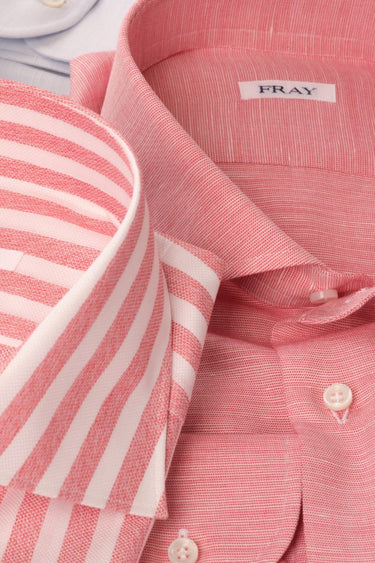
A great shirt does more than fit; it frames your face, anchors your jacket, and quietly decides whether the whole look reads polished or improvised. Most men feel the difference but can’t explain it. That’s what this shirt cuffs and collars guide is for: clear rules, quick comparisons, and practical styling so you can build shirts that work across meetings, flights, and dinners without second-guessing.
Below you’ll find collar shapes explained in plain language, the truth about French cuff vs barrel cuff, when to choose spread vs button-down collar, how to match tie knot to collar, and what separates formal vs casual cuffs. We’ll also map the best collar for face shape, share fabric and fusing tips, and finish with a compact table that makes choosing easy. When you’re ready to put the knowledge to work, explore Sartale’s selection of refined shirting and build the rotation that fits your life.
Why collars and cuffs matter more than you think
Collars and cuffs are the most visible pieces of a shirt. They’re the parts people see in every setting: on a Zoom call, at a café table, or under a blazer. A well-chosen collar quietly fixes proportion—suddenly your jawline looks stronger, your tie knot sits neatly, and the jacket lapel has a clear partner. The right cuff gives the sleeve structure, sets how much shirt peeks from the jacket, and decides whether a watch slides under smoothly or fights for space.
Get those two right and even simple fabrics feel intentional. Get them wrong and the most expensive cloth can look out of place.
Collar shapes explained without the jargon
Think of collar geometry like a toolkit. Each shape controls three things: how open the collar stands, how the points frame your jaw, and how it plays with a tie.
Classic spread collar
A modern default with points that sit apart and angle slightly outward. It balances most faces, pairs with suits and sport coats, and accepts medium to wide tie knots. If you want one collar that works everywhere, start here.
Semi-spread (moderate spread)
A touch narrower than a classic spread. It’s discreet under knitwear, sharp with soft tailoring, and ideal if you rarely wear large knots but still want a collar that looks smart open at the neck.
Button-down collar
The points fasten to the shirt with small buttons, creating a gentle “roll” along the front edge. It’s the most relaxed option—perfect with sport coats, casual suits, and smart denim. The charm fades if the roll is stiff or the points are too short; look for a soft interlining and points long enough to arc naturally.
Point collar
Narrow spread, longer points. It minimizes the space between collar tips and suits simple, compact tie knots. Best if you prefer a conservative, Anglo-leaning look or have a wider face you want to visually slim.
Cutaway (wide spread)
Very open—points can angle back toward the shoulders. It makes a strong statement, works best with structured tailoring, and loves a substantial knot or a tieless, deliberate opening with a firm placket. Choose this when you want presence.
One-piece “camp” or Capri style
Collar and stand are cut as one, producing a soft roll and open neck that thrives in linen and open-weave cotton. Pure leisure when worn without a tie; perfect for summer jackets and travel days.
Spread vs button-down collar: which one wins your week?
Ask yourself two questions: do you wear ties often, and how relaxed is your office? If you live in tailoring and ties, go with a spread or semi-spread for symmetry and knot support. If your week leans to knit polos, unstructured blazers, and off-duty dinners, the button-down’s roll adds personality and keeps the open neck from looking empty. Many men keep both: spreads for formal days and button-downs for texture days.
The invisible details that separate good collars from great ones
-
Point length: 7.0–8.0 cm gives most faces balance. Shorter points can look timid; overly long ones feel period-costume.
-
Spread angle: semi-spreads live around 60–70°, classic spreads 70–90°, cutaways 100°+.
-
Band height: a 3.5–4.0 cm collar band supports the neck without biting under a tie.
-
Interlining: fused interlinings feel crisper; unfused stay softer and roll more naturally. Choose fused for boardrooms, unfused for casual elegance.
-
Top-button stance: a fraction lower placement (paired with a taller band) makes the open-neck line more flattering on casual days.
These micro-choices decide whether the collar sits up all day or collapses by lunch.
French cuff vs barrel cuff: clarity at a glance
The cuff is your shirt’s handshake. It controls sleeve discipline, watch clearance, and formality.
Barrel cuff (single cuff)
The most common, with one layer and one or two buttons. It’s quick, versatile, and ideal for workdays and travel. A two-button barrel tightens or loosens on demand, useful if you wear a larger watch. Rounded corners read casual-smart; mitered corners add a sharper edge.
French cuff (double cuff)
A longer cuff folded back on itself and secured with cufflinks. This is evening and formal territory, also appropriate for high-impact days when you want polish. The fold adds structure under a jacket sleeve and shows a touch more cuff beyond the sleeve hem.
Cocktail/turnback cuff
A rakish hybrid: a single piece that folds back like a French cuff but fastens with buttons. It’s elegant with soft suits and dinners, less common in strict offices but perfect when you want personality without cufflinks.
Convertible cuff
Button-ready holes plus link-friendly slots. Ideal for men who own cufflinks but don’t want dedicated French cuffs. Quietly practical.
Formal vs casual cuffs: when to wear what
-
Formal: French cuffs, clean plackets, crisp fusing, and smooth poplin or twill fabrics. These shine with suits, polished shoes, and structured ties.
-
Casual: barrel cuffs (rounded), soft or unfused interlinings, and textured fabrics (Oxford, chambray, linen). Pair with unstructured blazers, knit ties, or no tie at all.
-
Hybrid: cocktail cuffs or double-button barrels in refined Oxford or end-on-end; they handle boardroom mornings and dinner nights without a change.
If you wear a watch, measure the case thickness. A compact case slides under any cuff; larger divers appreciate a two-button barrel fastened on the outer hole.
Match tie knot to collar: the no-stress formula
-
Button-down or point collar: small, compact knots (Four-in-Hand) sit neatly without crowding.
-
Semi-spread: Four-in-Hand or Pratt/Shelby for a balanced triangle.
-
Classic spread: Half-Windsor builds presence without bulk; Four-in-Hand still works for a relaxed line.
-
Cutaway: Half-Windsor or a well-tied Full Windsor if your tie is thin enough; tieless also works with a firm placket.
The tie fabric matters as much as the knot. Thick knits or heavy silk grenadine build bulk; fine twills form tighter, crisper knots. Adjust accordingly.
Best collar for face shape: proportion is everything
-
Round or fuller face: choose point or semi-spread to narrow and elongate. Avoid extreme cutaways that widen the frame.
-
Angular or long face: classic spread adds balance and softens sharp lines.
-
Narrow jaw, prominent cheekbones: button-down roll adds curve and warmth.
-
Beards: aim for a slightly taller band and longer points so the collar stands proud against facial hair.
-
Short neck: keep the band modest and the spread moderate; a low top-button stance improves comfort and looks.
These are guide rails, not handcuffs. Your preferred jacket lapel width, tie style, and hairstyle also shift the equation—test in a mirror with natural light.
Fabric and fusing: how the cloth changes the message
-
Poplin: smooth, cool, and crisp; magnifies collar sharpness and loves formal cuffs.
-
Oxford cloth: textured and sturdy; soft collars, rounded barrel cuffs, and button-downs feel at home here.
-
End-on-end: visual interest without bulk; a great daily driver with semi-spreads and single cuffs.
-
Linen and linen-cotton: airy and matte; collars should be softer and slightly longer to sit well open-necked.
-
Brushed twill and flannel: autumn/winter comfort; pair with soft collars and rounded cuffs to keep the vibe relaxed.
A stiffer fused collar on a slubby summer fabric can look confused; match the interlining to the cloth’s personality.
Sleeve etiquette: the one rule that fixes most outfits
Aim for 1–1.5 cm of shirt cuff showing beyond your jacket sleeve when your arms hang naturally. That small stripe of cuff frames the hand, keeps the jacket from swallowing your shirt, and signals a clean fit. If your cuffs vanish, shorten the jacket sleeve or choose a slightly longer shirt sleeve. If the cuff floods your wrist, move the button in by a few millimeters.
The watch question: getting cuff clearance right
If you wear a watch regularly, decide your cuff strategy first. A two-button barrel lets you choose the looser setting on the watch wrist. French cuffs can work with watches if the fold sits higher on the forearm and the sleeve is cut with honest circumference. Oversized, tall cases fight any cuff—consider slimmer pieces for tailoring days, and wear the diver on knitwear weekends.
Maintenance that keeps collars and cuffs sharp
-
Press with steam, not heat alone. Steam relaxes fibers; heavy heat flattens collars and creates shine.
-
Support the collar while drying. A simple collar stay or hanger pad keeps the stand crisp after washing.
-
Rotate your shirts. Resting the interlining extends life and helps collars hold shape.
-
Clean edges and inside cuffs. A quick spot-clean prevents sweat darkening and keeps whites bright.
-
Mind the stays. Removable stays out before washing; stiff permanent stays appreciate gentler cycles.
Small habits compound—your shirts will look newer for longer.
The fast decision table
Use this as a two-minute chooser before a busy week.
|
Situation |
Collar choice |
Cuff choice |
Tie guidance |
Why it works |
|
Boardroom meeting |
Classic spread |
French or two-button barrel |
Half-Windsor or crisp Four-in-Hand |
Balanced frame, presence without flash |
|
Creative office |
Button-down |
Rounded barrel |
Knit tie or open neck |
Roll adds character, stays relaxed |
|
Black-tie optional dinner |
Cutaway |
French |
Full Windsor with fine silk |
Formal lines, confident scale |
|
Travel day |
Semi-spread |
Single barrel |
Open neck |
Versatile, comfortable under knitwear |
|
Smart-casual weekend |
One-piece/Capri |
Rounded barrel |
Open neck |
Natural drape, effortless ease |
Building a versatile shirt capsule
Start with three workhorses: a white poplin spread collar with French cuffs for formal days, a pale blue end-on-end semi-spread with single cuffs for meetings and travel, and a blue or white Oxford button-down with rounded barrel cuffs for off-duty jackets and denim. Add seasonal pieces—linen with soft semi-spreads for summer, brushed twill with soft collars for winter. With those, you can dress for nearly any room without panic.
When you’re ready to put structure behind your choices, explore Sartale’s curated shirting to refine fit, fabrics, and finishing touches. Your next shirt should work harder than the last.
Where to start at Sartale
If this shirt cuffs and collars guide sparked ideas, try them in real life. Compare collar shapes, cuff types, and fabrics side by side and build a rotation that matches your calendar. Explore men’s shirts at Sartale to find spreads, button-downs, and cuffs that feel right the moment you put them on.
Conclusion: frame the face, finish the sleeve, enjoy the day
Great shirts are quiet architecture. Choose a collar that flatters your face and your tie habits; pick cuffs that suit the room and your watch; match interlining to fabric so the shirt behaves from breakfast to last call. Once those pieces click, outfits get easier. You’ll spend less time guessing and more time enjoying the day—precisely what good style should do.
FAQ
What’s the simplest everyday collar if I don’t wear ties often?
A semi-spread. It sits clean open-necked, still supports a tie on formal days, and flatters most faces.
French cuff vs barrel cuff—when should I choose each?
French cuffs for formal events, black-tie-optional dinners, or days you want polish. Barrel cuffs for daily office wear, travel, and smart-casual outfits.
Spread vs button-down collar: which is more versatile?
A classic spread is more formal and tie-friendly; a button-down is more relaxed and charming without a tie. Most men benefit from owning both.
How do I match tie knot to collar without overthinking?
Compact knots (Four-in-Hand) for point and button-down; Half-Windsor for semi-spread and spread; Full Windsor only with thin ties and wide collars.
What’s the best collar for my face shape?
Round faces benefit from point or semi-spread; long or angular faces look balanced in a classic spread; button-down adds warmth to narrow jaws.
Can I wear a French cuff shirt without a jacket?
You can, but it looks most at home under tailoring. For shirt-only days choose a barrel cuff or cocktail cuff.
Do soft, unfused collars look sloppy?
Not if the pattern and fabric match. In linen, Oxford, and casual cottons, a soft collar reads intentional and relaxed. Keep point length honest and the band supportive.
How much cuff should show past the jacket sleeve?
Aim for about 1–1.5 cm. That slim line frames the hand and keeps the jacket sleeve visually sharp.
Are cutaway collars too bold for the office?
They’re statement-leaning. In conservative offices pick classic spreads; in modern or creative settings a cutaway can look confident, especially with fine ties.