


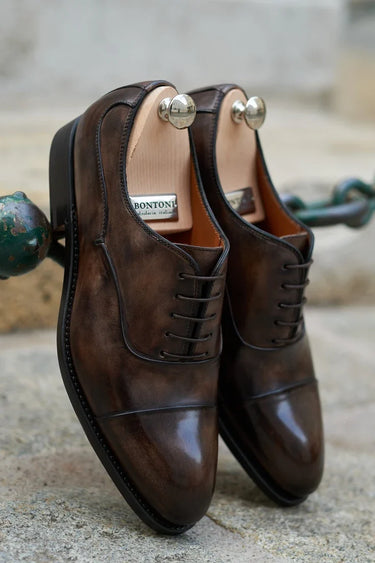
Some shoes complete an outfit. Others change the way the entire wardrobe feels.
Bontoni belongs to the second category. Made in Montegranaro in Italy's Marche region, the brand combines traditional shoemaking with unusually expressive hand-colored leather, distinctive lasts and meticulous finishing. Its small workshop produces only a limited number of pairs, with the brand stating that nine master artisans make around seven to nine pairs a day.
That approach makes Bontoni particularly interesting for fall. The season naturally brings richer colors, heavier fabrics and more texture. A beautifully patinated pair of Italian shoes can connect all of those elements without making an outfit feel overly formal.
What Makes Bontoni Shoes Different?
The first thing you notice is usually the color.
Bontoni is known for hand-colored patinas created by applying successive layers of pigments, oils, creams and waxes. The process can take several days, and the resulting surface has variations in depth and tone that are difficult to reproduce industrially. The brand's palette includes shades such as tobacco, black cherry, dark chocolate, olive and chestnut.
But the color is only part of the story.
Bontoni shoes are handmade from beginning to end, with attention paid to both visible details and construction elements that remain hidden inside the shoe. Hand-sewn seams, punched details and carefully assembled uppers are part of the process.
This is why a Bontoni shoe can look distinctive without relying on an unusual silhouette.
Montegranaro and the Italian Shoemaking Tradition
Bontoni's identity is closely connected to Montegranaro, a town in the Marche region with a long shoemaking tradition.
The company describes its workshop as a modern continuation of the Italian "casa e bottega" tradition, in which craftsmanship and family life were historically closely connected. Bontoni still maintains part of its operation in a family workshop and continues to emphasize small-scale production rather than industrial expansion.
The result is a very different philosophy from mass-market footwear.
A Bontoni shoe is not simply produced in a particular color and size and then stored in large quantities. Limited production means the process remains focused on the individual pair.
The brand states that a typical pair takes approximately 12–14 weeks to complete and nearly 26 working hours.
Bontoni Oxford Shoes: When Formal Footwear Gets More Character
The Oxford is traditionally one of the most formal men's shoes.
Bontoni takes that familiar silhouette and gives it more personality through color, finishing and construction details.
A dark brown or deep burgundy Oxford can work beautifully with a navy suit. A tobacco or antique brown version can be more versatile, especially with grey tailoring.
For fall, consider:
Dark brown Bontoni Oxfords + navy suit + pale blue shirt
Or:
Burgundy-patina Oxfords + charcoal trousers + navy jacket
The shoe remains elegant, but the patina prevents the outfit from becoming anonymous.
Bontoni also produces more distinctive wholecut Oxford styles. The Vittorio, for example, combines a wholecut upper with hand-sewn reverse details.
Bontoni Derby Shoes: A More Relaxed Italian Option
If Oxfords feel too formal for your wardrobe, Derbies are often the better starting point.
The open lacing gives the shoe a more relaxed character, which makes it particularly useful with fall tailoring.
Try a patinated Derby with:
- grey flannel trousers
- brown or olive tailoring
- dark denim
- corduroy trousers
- cashmere knitwear
This is where Bontoni's color work becomes especially useful.
A Derby in olive, tobacco or dark chocolate can become the visual link between traditional tailoring and a more relaxed Italian wardrobe.
Bontoni Monk Straps: For Something Less Conventional
Monk straps occupy an interesting position between classic and distinctive.
They are formal enough for tailoring but have a stronger visual identity than a conventional lace-up.
Bontoni is particularly associated with expressive buckle designs. Its three-buckle Excelsior became one of the brand's signature styles, reflecting the company's willingness to reinterpret classic footwear rather than simply reproduce it.
A monk strap works particularly well when the rest of the outfit remains restrained.
Think:
Brown monk straps + grey trousers + navy jacket + white shirt
Or:
Dark burgundy monk straps + charcoal trousers + fine-gauge navy knit
The shoe becomes the detail that people notice without dominating the outfit.
Why Italian Shoe Patina Matters
Patina is not simply a decorative finish.
On a well-made shoe, variations in color emphasize the shape of the last, the curves of the toe and the construction of the upper.
Bontoni's colorists work on undyed leather, building the final tone gradually rather than starting with a uniform factory color. Different layers create light and dark nuances across the surface.
This is particularly effective in autumn because deeper colors work naturally with wool, cashmere, suede and brushed cotton.
A dark chocolate shoe can look almost black in one light and warm brown in another. Tobacco can move between golden and earthy tones. Burgundy can reveal red, brown and purple nuances.
That subtle variation is part of the appeal.
How to Wear Bontoni Shoes With Fall Tailoring
The easiest rule is to match the depth of the shoe to the formality of the outfit.
A dark brown Oxford works naturally with a navy or charcoal suit.
A medium-brown Derby is more relaxed and can be paired with grey flannel trousers and a textured jacket.
A tobacco monk strap can work with beige, brown or olive tailoring.
For example:
Navy jacket + grey flannel trousers + pale blue shirt + dark brown Bontoni Oxfords
This is a classic business combination.
For the weekend:
Brown Bontoni Derbies + cream cashmere + dark denim + brown suede jacket
The shoes provide enough polish to keep the denim from looking too casual.
Bontoni Shoes With Jeans
Handmade Italian shoes do not need to be reserved for suits.
In fact, dark denim can be one of the best ways to show off a distinctive patina.
Choose jeans with a clean fit and minimal fading. Then add a fine-gauge sweater or casual shirt and a structured jacket.
Dark blue denim with tobacco or chocolate Derbies is particularly effective.
Avoid overly distressed jeans. When the shoes have a strong artisanal character, the rest of the outfit benefits from simplicity.
Bontoni Shoes and Cashmere
Fall is where this combination really works.
Cashmere brings softness. Patinated leather brings depth and structure.
A cream cashmere sweater with grey trousers and dark brown Oxfords is understated and elegant. A camel sweater with dark denim and tobacco Derbies is more relaxed.
For an evening look, try a charcoal roll-neck with tailored trousers and dark burgundy monk straps.
The textures do most of the work.
Can Handmade Shoes Be Part of a Smart-Casual Wardrobe?
Absolutely.
The key is choosing the right model.
A highly polished Oxford naturally pushes an outfit toward formal dressing. A Derby, loafer or less formal monk strap can move much more easily into smart casual.
The same applies to color.
Black and very dark brown usually feel more formal. Tobacco, olive, chestnut and warmer brown patinas can be more relaxed.
This gives you plenty of options beyond the traditional suit-and-shoes combination.
What Makes Bontoni Shoes Worth Considering?
The answer is not simply that they are handmade.
Handmade construction matters, but the real distinction comes from the combination of craftsmanship, limited production and visual individuality.
Bontoni's current made-to-order program illustrates this philosophy particularly well. Clients can select from different lasts, styles, materials, colors, constructions, soles and finishing details. The available styles include Oxfords, Derbies, buckles, loafers, boots and other footwear.
That degree of choice turns the shoe into something much closer to a personal object than a generic accessory.
How to Choose Your First Pair of Bontoni Shoes
If you are buying your first pair, start with versatility rather than the most unusual design.
A dark brown Oxford is an excellent choice if you regularly wear suits and tailored trousers.
A medium or dark brown Derby is more flexible if your wardrobe includes denim, flannel, knitwear and unstructured jackets.
A monk strap makes sense when you already have the basics and want something with more personality.
Then consider the patina.
Dark chocolate is extremely versatile. Tobacco is warmer and more relaxed. Burgundy creates more contrast. Olive is distinctive but surprisingly easy to wear with autumn colors.
The right choice depends less on trends and more on what you already wear.
How to Build a Fall Outfit Around Bontoni Shoes
Start with the shoes and work upward.
For a classic look:
Dark brown Oxfords → grey trousers → pale blue shirt → navy jacket
For relaxed Italian dressing:
Tobacco Derbies → dark denim → cream knit → brown suede jacket
For evening:
Burgundy monk straps → charcoal trousers → dark roll-neck → navy or brown jacket
This approach makes the shoes part of the architecture of the outfit rather than an afterthought.
How to Care for Handmade Italian Shoes
Fine leather needs regular but restrained care.
Use shoe trees to help maintain the shape between wears. Brush away surface dust before conditioning the leather, and use a suitable cream polish rather than repeatedly applying heavy layers of wax.
Bontoni itself recommends keeping shoes on shoe trees during polishing and using a quality horsehair brush to remove surface dirt.
Patinated leather should not be treated as if it were a uniform black shoe.
The objective is to maintain the leather and preserve its variations, not cover the patina with excessive polish.
The Bottom Line
Bontoni shoes show why handmade Italian footwear can have such a strong place in a modern fall wardrobe.
The appeal goes beyond the fact that each pair is made by hand. It is the combination of Montegranaro craftsmanship, limited production, expressive patinas, elegant lasts and details that reveal themselves gradually.
Oxfords bring character to formal tailoring. Derbies make handmade footwear easier to wear with denim and textured trousers. Monk straps offer a more distinctive alternative when a conventional lace-up feels too predictable.
And then there is the patina.
It gives the shoe a depth that changes with light and develops a visual relationship with the rich fabrics of autumn.
A good pair of Bontoni shoes does not simply finish a fall outfit.
It gives the outfit a point of view.
Frequently Asked Questions
Where are Bontoni shoes made?
Bontoni shoes are handmade in Italy, with the brand's workshop based in Montegranaro in the Marche region.
What makes Bontoni shoes different?
Bontoni combines traditional handmade shoemaking with hand-colored leather patinas, distinctive lasts and detailed hand finishing. Production is intentionally limited.
Are Bontoni shoes handmade?
Yes. Bontoni states that its shoes are handmade from start to finish, with a small team of master artisans involved in the process.
What are Bontoni shoes known for?
They are particularly known for rich hand-colored patinas, artisanal construction and distinctive interpretations of classic men's footwear, including Oxfords, Derbies and monk straps.
Are Bontoni Oxfords suitable for business wear?
Yes. Dark brown, black or burgundy Oxfords can work very well with classic business tailoring. A distinctive patina adds character without necessarily making the shoe less formal.
Are Bontoni Derbies more casual than Oxfords?
Generally, yes. The Derby's open-lacing construction gives it a more relaxed character, making it particularly versatile with flannel, textured tailoring and dark denim.
What is the best Bontoni shoe for fall?
A dark brown or tobacco Derby is one of the most versatile choices for fall because it works with tailoring, knitwear, denim and other seasonal textures.
How should men style patinated Italian shoes?
Keep the rest of the outfit relatively restrained. Grey flannel, navy tailoring, dark denim, cashmere and suede allow the patina to become the focal point without making the outfit feel busy.
How should handmade leather shoes be cared for?
Use shoe trees, brush away dust regularly and condition the leather with appropriate products. Avoid excessive polishing, especially on shoes with a distinctive hand-applied patina.
Are Bontoni shoes suitable for smart casual outfits?
Yes. Derbies, loafers and monk straps in warmer brown, tobacco, olive or chestnut tones can work particularly well with tailored trousers, dark denim, knitwear and relaxed Italian jackets.