


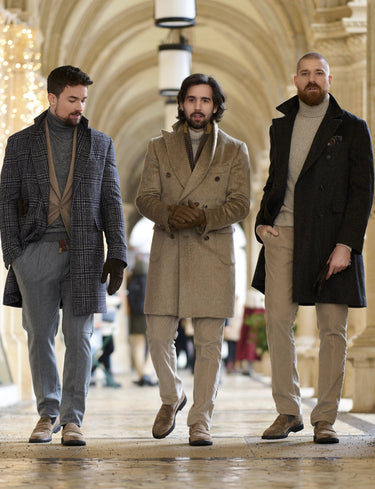
There comes a point every year when sneakers are no longer enough. The pavements get darker, the air turns sharp and suddenly the shoes that worked in September feel flimsy in November. That’s when the hunt for the best winter boots for men really begins.
The challenge is simple to describe and tricky to solve: you want boots that can handle cold, wet streets, but you also want them to work with tailored coats, flannel trousers and denim on a Thursday night out. At Sartale, winter footwear is built around exactly that balance — from English-made Chelsea boots by Tricker’s to waxed suede hikers and Italian ankle boots that feel as good as they look.
In this guide, we’ll walk through the main styles — Chelsea, lace-up and chukka — and help you decide which are the best winter boots men should choose for their lifestyle, their wardrobe and their climate.
What Makes the Best Winter Boots for Men Today
Before we compare Chelsea vs lace-up boots or talk about chukka boots in winter, it helps to know what “good” actually means in 2025. Winter boots are no longer just heavy leather blocks with thick rubber on the bottom. Modern pairs combine heritage shoemaking with smart materials and thoughtful design.
The Four Pillars of a Great Winter Boot
When you look at any pair, check these four points first:
- Warmth: lined interiors, insulated leather boots or the option to wear thicker socks without crushing your toes.
- Grip: lug sole boots with real traction on wet stone, metal stairs and light snow.
- Weather resistance: treated leather or waterproof suede boots that shrug off slush and light rain.
- Versatility: a silhouette that works with jeans, chinos and tailored trousers, not only with technical outerwear.
On Sartale, you’ll find exactly this mix: English benchmade Chelsea boots on Dainite soles, suede hiking styles by Edward Green and Common Projects, and Italian ankle boots that take a city outfit through winter without drama.
Once these basics are in place, you can choose between the main families of winter boots.
Chelsea vs Lace-Up Boots: Which Winter Style Fits Your Life?
The biggest question in men’s winter footwear is often Chelsea vs lace-up boots. Both can be the “best winter boots men” reach for daily — but they play slightly different roles.
When Chelsea Boots Win
Chelsea boots are the definition of quiet confidence. Slip-on, close to the ankle and cleaner than almost any other boot, they slide under tailored trousers without breaking the line. Tricker’s “Stephen” suede slip-on Chelsea boots or Common Projects waxed suede Chelsea styles are great examples of this modern-classic shape.
Choose Chelsea boots if you:
- Spend most of winter in the city
- Wear wool trousers, denim and coats more often than down parkas
- Want one pair that can move from office to dinner without changing shoes
For real winter, look for versions with:
- Rubber or Dainite-style soles
- Slightly higher shafts that cover the ankle fully
- Suede or grain leather that’s been waxed or treated for extra protection
In other words, Chelsea boots are ideal when style comes first but function cannot be ignored.
When Lace-Up Boots Are the Smarter Choice
Lace-up boots — whether derby styles, hikers or more rugged ankle boots — put function in the foreground. They lock your foot in place, add ankle support and usually offer the most aggressive lug sole boots grip.
Go for lace-up boots if you:
- Walk a lot on wet cobblestones or uneven pavements
- Travel to colder, snowier places during the season
- Prefer a slightly more rugged, masculine edge to your outfits
On Sartale’s boots page you’ll see examples like Edward Green “Connemara” suede hiking boots or Common Projects “Track Hiker” boots, which take the grip and comfort of outdoor footwear and refine the shape for city life.
Chelsea vs Lace-Up Boots: Quick Comparison
Here’s a simple way to think about it:
|
Aspect |
Chelsea boots |
Lace-up boots |
|
Overall vibe |
Clean, sleek, minimal |
Rugged, secure, utilitarian |
|
Best setting |
City streets, office, dinners |
Mixed weather, travel, long walks |
|
Typical sole |
Slim rubber / Dainite |
Chunky rubber, pronounced lugs |
|
Styling |
Works seamlessly with tailoring |
Works best with denim, chinos, flannel |
|
Ease |
Slip-on convenience |
Precise adjustment with laces |
If you only buy one pair this season and your life is mostly urban, a robust Chelsea might be the best winter boots men can own. If you split your time between city and country, or tend to treat sidewalks like hiking trails, lean toward lace-up boots.
Chukka Boots in Winter: The Underestimated All-Rounders
Chukka boots sit somewhere between dress and casual, and they deserve more love in winter. On Sartale, the classic Tricker’s “Polo” two-eyelet suede chukka boots in dark browns are a perfect example: slim enough to feel refined, but grounded on sturdy soles.
Why Chukka Boots Work in Cold Weather
When people think “chukka boots winter”, they often worry about warmth or water resistance. In reality, with the right outsole and treatment, chukkas can be surprisingly capable cold-weather partners:
- The mid-ankle height gives more coverage than a shoe but less bulk than a heavy boot.
- Paired with lug soles or chunkier rubber, you get solid grip without an exaggerated profile.
- In darker suede or grain leather, they dress up or down easily — from jeans to flannel trousers.
Think of chukka boots as the most versatile middle ground: easy to wear in autumn, strong enough to continue into winter, especially if you live in a city where salt and slush are occasional guests rather than daily enemies.
When to Choose Chukka Over Chelsea or Lace-Up
Pick chukkas if:
- You want something more relaxed than a Chelsea boot but more refined than a heavy hiker.
- You like cuffed denim, chinos and soft tailoring.
- You want boots that feel right in October and still make sense in February with a proper coat.
For many wardrobes, the real best winter boots men end up wearing most often are not the most rugged pair, but the ones that feel effortless Monday to Sunday — and often, that’s a chukka.
Lug Sole Boots Grip, Leather and Suede: Getting Technical
Style is important. But a winter boot also has a job to do. Let’s look at the details that separate good from frustrating when streets turn slick.
Understanding Lug Sole Boots Grip
Lug soles are those rubber outsoles with deep grooves and blocks. They do three things for winter boots:
- Improve traction on wet pavements and light snow
- Add a bit of shock absorption underfoot
- Visually “ground” the boot, giving it more presence
You’ll see different versions on Sartale, from sleek Dainite-style soles on Chelsea boots to more pronounced patterns on hiking-inspired styles by Edward Green or Common Projects.
For everyday city wear, you don’t necessarily need the most aggressive sole. A medium-depth tread is often enough to balance grip and elegance.
Insulated Leather Boots vs Lined Socks
Insulated leather boots trap more warmth around your foot using linings, padded insoles or both. They shine when:
- You spend long periods outside
- Your feet run cold
- You live in regions with real winters rather than light chills
If your climate is milder or you slip in and out of heated spaces all day, you may prefer unlined boots with room for a thicker sock. Many of the best winter boots men buy today aim for this “modular warmth” approach — robust leather uppers, quality soles and a fit that accommodates different sock weights.
Waterproof Suede Boots: Myth vs Reality
It’s easy to think suede and winter don’t mix. But modern treatments and waxed finishes prove otherwise. Sartale’s selection includes waxed suede leather Chelsea boots and suede hiking boots that are designed for real-world use, not just sunny days.
A few practical points:
- “Waterproof suede boots” usually mean treated uppers plus sealed seams and a robust sole.
- They’re built for light rain, slush and day-to-day city wear — not for standing in deep puddles.
- Regular brushing and occasional reproofing spray will keep them looking sharp for years.
If you love the richness of suede, don’t rule it out for winter. Just choose the right construction and treat them with the same care you’d give a good coat.
Winter Boot Sizing Guide: Getting the Fit Exactly Right
Even the best winter boots for men won’t earn much wear if the sizing is off. Too tight, and your toes freeze. Too loose, and your heel lifts with every step.
Principles of Sizing Winter Boots
Keep these cold-weather rules in mind:
- Your toes should have a little extra room — warm air is a better insulator than compressed wool.
- The heel should stay secure; any significant lift will turn into friction and blisters.
- Consider the socks you actually wear in winter, not thin summer socks.
Many of the brands on Sartale, from Tricker’s to Common Projects and Edward Green, follow traditional sizing scales, so checking each product’s size guidance is essential before you commit.
Quick Winter Boot Sizing Guide
Use this as a starting point (not a substitute for each brand’s specific chart):
|
Type of fit |
What it feels like |
Best use |
Tip |
|
Snug with thin sock |
Almost like a dress shoe |
Office, smart city wear |
Great for Chelsea boots under tailoring |
|
Regular with mid-weight sock |
Comfortable, slight wiggle room |
Everyday wear, commuting |
Ideal for chukka boots winter outfits |
|
Roomy with thick sock |
Noticeably more space |
Very cold days, travel |
Best for insulated leather boots and hikers |
If you’re between sizes and planning to wear heavier socks, going up half a size is often safer than squeezing into a smaller pair.
Trying Boots at Home the Right Way
When your boots arrive, don’t just stand in front of the mirror:
- Try them on in the afternoon when feet are slightly larger.
- Walk around your home for at least 15–20 minutes.
- Test them with the socks you’ll wear most often in winter.
If they still feel comfortable and secure after that, you’ve likely found your personal best winter boots men’s wardrobe will reliably rotate.
Styling the Best Winter Boots Men Own with Sartale Essentials
A well-chosen boot is half the story. The other half is how you wear it.
Chelsea Boots with Tailoring and Denim
Chelsea boots shine when paired with:
- Slim, slightly cropped wool trousers and a single-breasted coat
- Dark denim and a cashmere crewneck under a tailored overcoat
- Flannel trousers and a fine-gauge roll-neck
A pair of suede or waxed leather Chelsea boots from the Sartale boots collection sits perfectly under the “Outerwear” selection of wool and cashmere coats, giving you an easy route from Monday to Saturday.
Lace-Up Boots with Weekend and Travel Looks
Lace-up derby boots, hikers and more rugged styles work beautifully with:
- Heavy selvedge denim, chambray shirt and a wool peacoat
- Flannel trousers, knitwear and a technical parka for winter city breaks
- Chinos, a roll-neck and a padded parka from Sartale’s outerwear edit
Look for colour harmony: dark brown boots with navy or olive outerwear, black boots with charcoal and deep blue.
Chukka Boots from Office to Off-Duty
Chukkas are your easiest transition boots:
- At the office: dark suede chukka boots with pressed chinos and a soft-shouldered blazer.
- After hours: the same boots with jeans, a merino crew and a casual coat from the coats & jackets selection.
Because the profile is slim, chukka boots keep outfits feeling sharp even when the weather suggests you’ll need something more substantial.
Making Winter Boots a Long-Term Investment, Not a One-Season Fix
The beauty of choosing carefully is that your boots start to feel less like “winter gear” and more like part of your signature style. The best winter boots men own are often the pairs that quietly do everything:
- Enough grip and insulation for cold days
- Enough refinement for good restaurants and meetings
- Enough quality to age well instead of falling apart after one season
Sartale’s philosophy — excelling in “exciting classics” for men who prefer craft and quiet confidence over loud logos — fits winter boots perfectly.
Buy once, choose carefully and let your boots work as hard as your coat and knitwear.
FAQ: Best Winter Boots for Men
How many pairs of winter boots does a man really need?
If your life is mostly urban, two pairs are enough: one smarter pair (usually Chelsea boots) and one more rugged lace-up or hiker-style boot. Add a chukka if you like having a relaxed middle option.
Are Chelsea boots warm enough to be the best winter boots for men?
Yes — if you choose versions with solid rubber soles and quality leather or suede, and wear them with proper socks. For extreme cold or heavy snow, keep a lace-up or insulated leather boot as a backup.
Can I wear suede boots in winter without ruining them?
Absolutely. Waterproof suede boots that have been treated and built on robust soles are designed for real-world wear. Just avoid deep puddles, brush them regularly and use a good protective spray.
What’s the most versatile colour for winter boots?
Dark brown is usually the sweet spot. It works with navy, grey, olive and denim, and feels softer than black while still looking sharp. Black boots lean dressier; lighter browns feel more casual.
Are chukka boots okay for winter, or only for autumn?
With the right sole and material, chukka boots winter outfits work very well — especially in cities with milder winters. Pair them with wool socks, flannel trousers and a proper coat and they’ll carry you through most cold days.
Should I size up in winter boots to fit thick socks?
If you often wear heavy socks, going up half a size can make sense, but don’t overdo it. Your heel still needs to stay secure. The winter boot sizing guide above is a good place to start, but each brand’s chart should have the final word.
Which are more comfortable for long walks: Chelsea vs lace-up boots?
For very long walks, lace-up boots usually win because you can fine-tune the tension across your foot and ankle. That said, a well-made Chelsea boot with a cushioned rubber sole can be surprisingly comfortable for all-day city wear.
How do I keep leather boots looking good after a wet winter?
Let them dry naturally (never on a radiator), use cedar shoe trees, brush off dirt and treat the leather periodically with a suitable cream or wax. Done regularly, this routine keeps even hard-working winter boots looking sharp for years.