


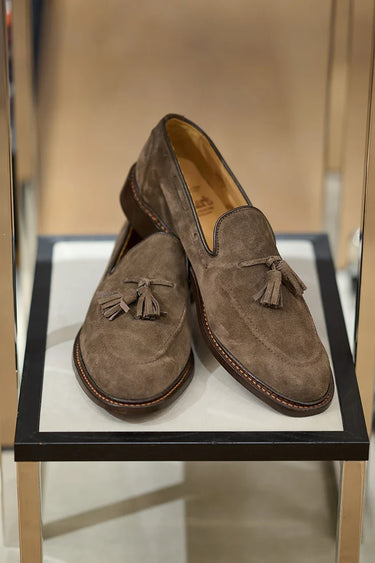
You’ve finally done it. You’ve picked out the perfect pair of loafers—beautiful leather, elegant silhouette, exactly the shade of brown you’ve been searching for. You slip them on at home, and they feel… promising. A little snug, maybe, but that’s normal, right? You head out for the day, and by mid-afternoon, something has gone wrong. Your heel is slipping with every step. Or the top of your foot is aching where the leather presses down. Or they’ve stretched just enough that they no longer feel secure.
The truth is, the fit of a loafer is one of the most misunderstood aspects of classic menswear. It’s a delicate balance. A loafer that’s too tight will leave you counting the hours until you can take them off. One that’s too loose will ruin the clean, elegant line that makes loafers so appealing—and worse, it will have you gripping with your toes to keep them on. Getting it right isn’t complicated, but it does require understanding a few key principles. Let’s walk through exactly how a loafer should fit, so you can wear yours all day in complete comfort, looking as sharp at sunset as you did at breakfast.
The Philosophy of Loafer Fit: Snug, Not Tight
Before we get into measurements and heel slip, let’s establish a baseline philosophy. A well-fitting loafer should feel like a firm handshake—secure and supportive, but not crushing. Because loafers are laceless, they rely on the natural contours of your foot to stay in place. This means the fit needs to be precise in a few specific areas.
Unlike lace-up shoes, where you can adjust tension throughout the day, a loafer’s fit is fixed from the moment you put it on. This is why it’s so important to get it right at the outset. The goal is a fit that feels snug in the right places—across the instep and around the heel—without any pinching or pressure points that will become unbearable after a few hours.
The Three Pillars of Loafer Fit
When evaluating how a loafer fits, there are three critical areas to focus on: the heel, the instep (the top of your foot), and the width. Get these right, and you’ve solved 90% of the fit equation.
-
Heel Fit: Minimal Slip
This is the most common point of confusion. A small amount of heel slip—a millimetre or two—is actually normal in a new pair of loafers, especially if they’re made of leather. As the sole flexes and the leather molds to your foot, that initial slip often disappears. The key word is minimal.
If your heel is lifting more than a quarter of an inch with every step, the fit is too loose. You’ll find yourself clenching your toes to keep the shoe on, which leads to fatigue and discomfort. On the other hand, if there’s absolutely no movement at all, the shoe may be too tight across the instep, and you’ll feel pressure with every step.
-
Instep Fit: Secure Without Pressure
The instep—the highest part of the top of your foot—is where a loafer does most of its holding. Because there are no laces, the shoe’s vamp (the front part) needs to fit snugly across this area to keep your foot in place.
When you first try on a loafer, you should feel firm, even contact across the instep. It should not feel like it’s cutting into your foot or creating a painful pressure point. A common mistake is choosing a size that feels comfortable across the toes but is too loose across the instep. Over time, as the leather stretches, this looseness will only increase, and you’ll end up with a shoe that feels sloppy.
-
Width and Toe Box: Room to Move
Your toes should never feel cramped. A loafer’s toe box should offer enough room for you to wiggle your toes slightly. If your toes are pressed against the sides or the end of the shoe, the fit is too narrow or too short.
That said, a loafer should not be so wide that your foot slides side to side. The goal is a secure cradle for your foot. Many high-quality loafers are available in different width fittings—a detail worth seeking out for a truly custom-like fit.
The Break-In Period: What to Expect
Leather is a natural material. It will stretch and mold to your foot over time. This is both a feature and a potential pitfall. Understanding the break-in process is essential to getting the fit right.
What Will Stretch?
Leather will stretch most where it experiences the most tension. The vamp across the instep will give over time. The width of the shoe will also relax slightly. What will not stretch significantly is the length. If a loafer is too short, no amount of wear will fix it.
The Break-In Timeline
A quality pair of leather loafers will typically take about 10 to 20 wears to fully break in. During this period, the leather will soften and begin to conform to the unique shape of your foot. You may experience some initial snugness across the instep—this is normal, as long as it’s not painful. Similarly, a touch of heel slip may persist for the first few wears before settling.
A Word on Pain
There’s a difference between the mild discomfort of a new shoe molding to your foot and outright pain. Sharp pressure points, pinching at the toe, or a feeling that the shoe is cutting into your instep are signs that the fit is wrong. A good fit should feel like a firm, supportive embrace, not a vice.
Loafer Sizing: Not What You’re Used To
One of the most common mistakes men make is assuming their loafer size is the same as their sneaker size or their dress shoe size. This is often not the case.
Loafers Often Fit Differently
Because of their laceless construction, many loafer styles are designed to fit slightly snugger than lace-up shoes. It’s not uncommon to go down a half size from your usual dress shoe size, or even a full size from your sneaker size. This varies by brand and by the last (the foot-shaped mold) used to create the shoe.
Try On at the End of the Day
Your feet swell throughout the day. To get the most accurate fit, try on loafers in the late afternoon or evening when your feet are at their largest. This will ensure that the shoes you buy will be comfortable after a long day, not just in the morning.
Socks Matter
Are you planning to wear your loafers with socks or without? This decision affects sizing. If you intend to wear them sockless (or with no-show socks), you may need a slightly snugger fit than if you plan to wear them with dress socks. Always try on loafers with the type of socks you’ll actually wear with them.
A Quick Fit Reference: What to Look For
|
Fit Area |
What You Want |
What to Avoid |
|
Heel |
Minimal slip (1-2 mm), heel feels cupped |
Excessive slip, heel lifting more than 1/4 inch with each step |
|
Instep (Top of Foot) |
Firm, even contact; secure feeling |
Painful pressure, cutting sensation, or excessive looseness |
|
Width |
Snug cradle, toes can wiggle slightly |
Toes cramped against sides, foot sliding side to side |
|
Length |
1/4 to 1/2 inch beyond longest toe |
Toe pressing against front, shoe too short |
|
Overall |
A secure handshake feel |
Pain, pinching, or feeling like the shoe will come off |
Different Loafer Styles, Different Fit Considerations
Not all loafers fit the same way. The style of loafer you choose can influence how it should feel on your foot.
Penny Loafers
The classic penny loafer typically has a slightly lower instep and a more structured shape. It should fit snugly across the top of the foot. Because of the leather strap across the vamp, these can feel a bit tighter initially but will mold beautifully over time.
Bit Loafers
Often featuring a sleeker silhouette, bit loafers may have a slightly more tapered toe box. Pay close attention to width and toe room with these styles. The metal bit detail adds structure to the vamp, so the fit across the instep should be secure but not oppressive.
Suede Loafers
Suede is generally more forgiving than smooth leather. It will stretch and mold more quickly, and it’s often more comfortable right out of the box. If you’re between sizes, many men opt for a slightly snugger fit in suede, knowing it will relax faster.
Venetian Loafers
With a lower vamp and no strap or bit, Venetian loafers rely heavily on a precise instep fit. They should feel almost like slippers—secure but incredibly comfortable. Because they have less structure, getting the size exactly right is particularly important.
Common Fit Problems and How to Solve Them
Even with careful sizing, you might encounter a few common issues. Here’s how to address them.
Heel Slip That Won’t Quit
If you’ve worn your loafers a dozen times and your heel still slips, the fit may be too large. Sometimes, a thin adhesive heel grip placed inside the back of the shoe can take up the extra space. But if the shoe is significantly too long or too wide, this is a sign that you need a different size.
Tightness Across the Instep
This is the most common break-in issue. A good cobbler can stretch the vamp slightly to relieve pressure. You can also accelerate the process by wearing your loafers around the house with thick socks. If the pressure is sharp and painful from the first wear, however, the fit may be too small.
Toes Hitting the End
As mentioned, length does not stretch. If your toes are consistently hitting the front of the shoe, the loafers are too short. This is a sizing issue that will not resolve with wear.
Width Issues
If the sides of your foot are spilling over the edge of the shoe’s sole, the fit is too narrow. If your foot slides side to side, it’s too wide. Many quality loafer brands offer multiple width options—it’s worth seeking these out for a truly comfortable fit.
The Payoff: All-Day Comfort in a Timeless Style
When you get the fit right, a pair of loafers becomes one of the most versatile and comfortable shoes in your wardrobe. They transition seamlessly from a day at the office to a weekend stroll. They work with jeans, chinos, and tailored trousers. And because they’re laceless, they offer an ease of wear that few other shoes can match.
The effort you put into finding the perfect fit pays dividends in comfort and confidence. You’ll walk without thinking about your shoes. You’ll stand taller. And you’ll experience the quiet satisfaction of owning a pair of shoes that feel as good as they look.
Frequently Asked Questions (FAQ)
1. Is it normal for new loafers to feel tight across the top of my foot?
Yes, within reason. The vamp of a new leather loafer is often snug across the instep. This is normal and will ease as the leather stretches and molds to your foot over the first 10 to 20 wears. If the tightness is sharp, painful, or leaves deep marks, the fit may be too small.
2. How much heel slip is acceptable in loafers?
A tiny amount—about a millimetre or two—is normal in a new pair. The heel should feel cupped and secure. If your heel is lifting more than a quarter of an inch with each step, the fit is too loose, and you’ll likely find yourself gripping with your toes to keep the shoes on.
3. Do loafers stretch over time?
Yes, leather loafers will stretch and mold to your feet, particularly across the width and the instep. What does not stretch significantly is the length. This is why it’s critical to ensure the length is correct from the start.
4. Should I size down in loafers compared to my sneakers?
Often, yes. Many men find they need to go down a half size (or even a full size) from their sneaker size for loafers. Loafer sizing varies by brand and by the last used. Always try on the specific pair with the socks you intend to wear.
5. Can I wear loafers without socks? How does that affect fit?
Absolutely. Wearing loafers without socks (or with no-show socks) is a classic spring and summer look. If you plan to wear them this way, try them on without socks. You may find you need a slightly snugger fit than if you were wearing dress socks, as the leather will be directly against your skin.
6. What if my loafers are too loose across the instep but fit everywhere else?
This is a common issue. A slightly loose instep can often be remedied with a thin, adhesive tongue pad placed inside the shoe under the vamp. This takes up space and creates a snugger fit without changing the length or width. If the looseness is significant, however, the size may be wrong.
7. How do I know if my loafers are too narrow?
If the sides of your foot are spilling over the edge of the sole, or if the shoe feels like it’s compressing the sides of your foot, the fit is too narrow. You should be able to wiggle your toes slightly without feeling cramped.
8. Can a cobbler help with loafer fit issues?
Yes. A good cobbler can stretch the vamp for instep tightness, add heel grips for minor slip, and sometimes even stretch the width slightly. For significant sizing issues, however, exchanging for a different size is the best solution.
9. How should the back of the loafer fit against my heel?
The heel counter (the back part of the shoe) should cup your heel comfortably without digging in. There should be no sharp edges or pressure points. A well-fitted heel counter holds your foot in place and contributes significantly to overall comfort.
Finding the perfect loafer fit is an investment in your comfort and your style. When you slip into a pair that fits just right—secure across the instep, gentle around the heel, with room for your toes to breathe—you’ll understand why loafers have remained a menswear essential for generations. Explore the loafer collection at Sartale and discover the pair that will carry you through spring and beyond, in complete comfort and timeless style.