


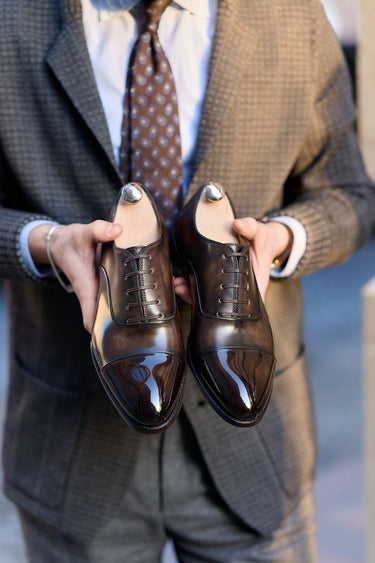
A good pair of leather shoes can outlast trends by a decade—but only if their color ages well. Scuffs aren’t the enemy; dullness is. When pigment fades or turns patchy, even the best last and the finest stitching look tired. Mastering how to maintain leather color isn’t about hoarding products or performing museum-grade rituals. It’s a calm routine: clean lightly, feed the leather, top up color when needed, and seal the finish so dirt slides off instead of grinding in.
This guide breaks the process into simple actions you can remember at the door. You’ll learn white leather sneaker cleaning that actually works, tan leather patina care without blotches, a black leather polish guide for that ink-rich depth, when to use a color-matched shoe cream (and when not to), and how to prevent color transfer on leather from denim and bags. Along the way, you’ll find a routine you can run in minutes—one that keeps your footwear looking intentional season after season.
Why Color Fades (and How You Stay Ahead of It)
Leather color shifts for four main reasons: embedded dirt, dehydration, UV exposure, and abrasion. Dirt dulls; dehydration opens tiny cracks that scatter light; UV bleaches dye; abrasion thins pigment and pulls waxes from the surface. You don’t need a chemistry set to fight this. You just need the right order of operations:
- Lift the dirt (no harsh scrubbing).
- Replace the oils the leather lost.
- Re-tint with a color-matched cream if the shade needs topping up.
- Seal with polish or finish so your work survives rain and sidewalks.
Do that consistently and color won’t just last—it will develop the kind of depth that makes even simple outfits feel complete.
The Core Leather-Color Routine
Daily (or after each wear)
- Wipe surfaces with a barely damp cloth, then dry microfiber. Dust is sandpaper; remove it before it polishes away pigment.
- Insert cedar shoe trees. They draw moisture out and keep vamp creases honest (deep creases look patchy faster).
Weekly
- Foam-clean or lotion-clean high-wear pairs. Think of this as a mini reset that lifts surface grime before it stains.
- Condition lightly if leather feels dry to the touch. A pea-sized amount per shoe goes further than you think.
Monthly
- Use color-matched shoe cream to restore uniform tone, especially on toes and heels. Buff to a low glow.
- If you want more gloss or protection, add a thin wax polish over the cream—thin is the operative word.
Seasonally
- Deep clean and condition; rotate rubber taps or topy if needed; re-seal edges. UV-hit colors (tan, cognac) may need an extra cream application.
White Leather Sneaker Cleaning (That Stays White)
White leather rewards process over force. Scrubbing just pushes dirt into grain pores.
- Dry prep: knock off dust with a soft brush and remove the laces.
Black Leather Polish Guide: Saturation First, Shine Second
Black is deceptively simple. You think “polish and go,” but the richest black is built in thin, disciplined layers.
- Clean and condition lightly (black shows salt and dust instantly).
- Apply black cream in whisper-thin streaks with a soft cloth, using small circles. Let it set for a few minutes, then buff to even the tone.
- Add a touch of wax only where you want sharper reflection: usually toe and heel. Use a drop of water on the cloth for a controlled mirror—never on the whole shoe.
- Edge dressing along the welt and heel can be the difference between “clean” and “ink-deep.” Wipe any excess immediately.
Remember: rich black is about saturation, not thickness. Thick wax cracks; thin layers flex and glow.
Color-Matched Shoe Cream: When and How to Use It
A color-matched cream is the single most efficient way to maintain color fast. But it’s a tint, not a paint, and that matters.
- Test first on the inside heel or tongue. Leather warms up with creams; choose the closest shade, not a darker one.
- Work in sparse amounts. A pea-sized dab per shoe can restore an entire vamp if the leather is clean and hydrated.
- Blend to edges. Don’t stop the cream abruptly—feather it so there’s no visible “line.”
- Alternate with neutral cream. Color restores; neutral preserves. Alternation prevents color creep and keeps grain definition clear.
- Skip color on antique finishes with high burnish. Use neutral instead or you’ll flatten the contrast that makes them special.
Prevent Color Transfer on Leather (From Denim, Bags, and Seats)
Few things deflate new shoes like blue dye streaks from raw denim or black rub-off from a tote’s strap. You can avoid most of it.
- Pre-treat with a water-based leather protector that dries invisible. It creates a sacrificial barrier between dye and grain.
- Seal high-contact zones. Rub a little neutral wax at the counter (heel area) and along the quarters where jeans touch.
- Watch the cuff height. Set denim hems so they break above the shoe counter instead of dragging color across it.
- Rotate pairs. Give leather a day to rest so surface oils re-settle; this reduces dye “grab.”
- Wipe transfers immediately. Fresh crocking lifts with a damp cloth and a drop of mild cleanser; old crocking bonds and stains.
For daily style that’s friendlier to leather color, classic loafers keep the vamp cleaner than bulky high-tops and pair well with everything from tailored trousers to washed denim.
Common Mistakes That Drain Color Fast
-
- Scrubbing dirt “clean.” You’re sanding pigment. Lift, don’t grind.
- Over-conditioning. Too much oil can float pigments and blur the finish. Thin layers win.
- Heavy wax everywhere. It cracks at flex points and turns color cloudy.
- Skipping edge care. The welt and heel edges frame the color; when they’re gray, the whole shoe looks tired.
- Sunbathing leather. UV is ruthless on tan and cognac; store away from windows.
Quick Reference Table — Color Care by Leather & Finish
|
Leather/Finish |
What Keeps Color True |
What to Avoid |
Pro Move |
|
White smooth leather (sneakers) |
Foam clean + neutral cream; clear cream-wax on panels |
Abrasive scrubbing; bleach; soaking |
Magic eraser only on rubber, not uppers |
|
Tan/cognac calf |
Lotion clean; alternate color-matched and neutral cream; minimal wax |
Strong soaps; aggressive burnishing |
Feather color at toe/heel; leave quarters lighter for depth |
|
Black calf |
Thin black cream; targeted toe/heel wax; edge dressing |
Thick wax layers; dry leather |
Buff after each cream pass—saturation before shine |
|
Antique burnish |
Neutral cream; gentle dusting; micro-wax at high wear points |
Color creams that flatten contrast |
Condition before events; leave the dark edges to do the talking |
|
Pebble-grain calf |
Lotion clean; cream worked into valleys; brush buff |
Over-polish that clogs grain |
Horsehair brush in multiple directions to lift color evenly |
Storage and Travel: Where Color Is Won (or Lost)
- Shoe trees in every leather pair after wear—color clarity follows shape.
- Breathable bags only. Plastic traps moisture that bruises pigment.
- Keep a mini kit when you travel: soft cloth, tiny bottle of lotion cleaner, neutral cream, travel brush.
- If shoes get soaked, dry with paper inside, away from heat, then condition once fully dry. Color recovers after moisture—not during it.
Buying With Color in Mind
You can make maintenance easier before you ever leave the store.
- Look for dyed-through calf where the cut edge shows similar tone. Surface-only finishes chip faster.
- Prefer subtle, even grain. Deep, random scars reflect light unevenly and read as blotchiness.
- Choose welt and edge shading that matches the upper; mismatches draw attention when edges scuff.
- For white sneakers, pick smooth leather panels over micro-perforation if you want simpler cleaning.
A Practical Conditioning Routine (That You’ll Actually Keep)
- Five-minute wipe-down after each wear.
- Ten-minute mini reset on Sundays: quick clean, light condition, gentle buff.
- Once a month: color-matched cream where needed; neutral elsewhere; optional toe/heel wax.
- Each season: full clean and condition; inspect edges; swap worn laces—fresh laces brighten color without touching pigment.
This is the low-friction path to shoes that keep their shade, their shape, and their authority.
Troubleshooting: When Color Already Looks Off
- Gray haze on black leather? You’ve built too much wax. Strip lightly with lotion cleaner, then black cream, then a tiny wax touch.
- Oily dark spot on tan? You over-conditioned in one place. Blot with cornstarch overnight in a sock, then brush and even out with neutral cream.
- Stubborn denim crocking? Work a dab of cream over the mark, let it sit, then wipe and re-cream in the shoe’s color. Seal with a clear wax.
- Toe looks lighter than quarters? It’s abrasion. Load a soft cloth with color cream, tap off excess, and tip-tint just the toe in tiny circles.
Conclusion: Keep Color Alive, and the Rest Follows
Great leather doesn’t shout; it glows. If you clean gently, feed sparingly, re-tint with intention, and seal selectively, your shoes will keep the hue that made you choose them in the first place. You’ll rotate pairs with confidence, dress faster in the morning, and step into rooms with footwear that looks fresh without looking new. Build your routine once, and your color will repay you every time you lace up.
FAQ
How often should I use color-matched cream?
Only when tone looks uneven or faded—typically once a month on high-wear pairs. Alternate with neutral cream to preserve depth and avoid darkening.
Can I use the same routine on boots and dress shoes?
Yes, but boots see more grit. Clean more often, use slightly more neutral cream, and keep wax minimal at flex points to prevent cracking.
What’s the fastest way to freshen white leather sneakers before dinner?
Foam the upper, wipe, dry, then a tiny dab of neutral cream to restore sheen. If scuffs remain, touch with white cream and buff. Laces matter—swap or wash them.
Will wax polish change my shoe’s color?
Clear wax won’t, but heavy colored wax can. Treat wax as a protective topcoat, not a paint. Build color with cream first; use wax to lock it in.
How do I prevent denim dye on tan leather?
Pre-treat with an invisible protector, keep hems off the counter, and add a whisper of neutral wax where jeans touch. Wipe any transfer immediately.
My black shoes look dusty by midday—why?
They’re catching micro-dust on a dry surface. A morning buff with a brush and a thin layer of cream (not just wax) keeps black saturated longer.
Is conditioning necessary if the leather already looks shiny?
Shine isn’t moisture. If leather feels dry or squeaks at flex, condition lightly. It takes minutes and keeps pigment from flaking.
Can I mix brands of cream and wax?
You can, but test first. Some formulas don’t layer cleanly. As a rule, stick to thin coats and let each step dry before the next.
What’s the simplest starter kit I need?
Soft cloths, a horsehair brush, mild lotion cleaner, neutral cream, one color-matched cream per leather color, and a small neutral wax for toe/heel.