


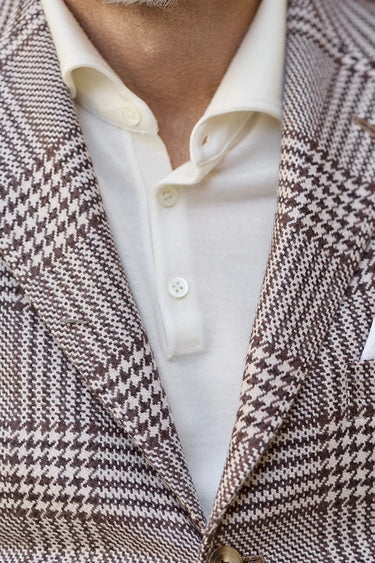
There’s a specific kind of anxiety that creeps in on the first warm day of spring when you have to wear a suit. You stand in front of your closet, and the heavy flannels and worsteds of winter suddenly feel like a punishment. You know that by midday, you'll be tugging at your collar, feeling the heat pool in the thick fabric. But a suit isn't optional—it's the uniform.
Now, imagine a different feeling. You step outside into the bright sun, and instead of an insulating layer, your suit feels like a second skin. It moves with you. There's air between the wool and your shirt. You feel polished, put-together, but utterly comfortable. This isn't a fantasy. This is the magic of a suit built for the season, and no one understands this magic quite like Kiton.
Kiton, the legendary Neapolitan tailor, has spent decades perfecting the art of the lightweight suit. Their philosophy isn't just about using thinner fabric; it's about a holistic approach that marries the world's finest materials with a construction technique that prioritizes breathability and fluid movement. A Kiton spring suit doesn't just look good—it breathes, it drapes, and it refuses to wrinkle into a mess by 3 PM. Let's pull back the curtain on the fabrics and craftsmanship that make a Kiton suit the ultimate choice for spring.
The Kiton Philosophy: Handwork That Lets You Breathe
Before we dive into specific weaves, you have to understand the canvas beneath the cloth—literally. A suit's construction is just as important as its fabric for spring comfort.
Most conventional suits use a heavy, glued (fused) interlining to give the chest its shape. This layer acts like a barrier, trapping heat. Kiton does the opposite. They use a traditional full canvas construction, but in spring suits, that canvas is often hand-stitched and incredibly light. Thousands of tiny, hand-placed stitches attach the canvas to the wool without glue, creating a chest piece that is flexible and breathable. It moves with your body, and more importantly, air can circulate through the layers. The soft, unconstructed shoulder—a Kiton hallmark—eliminates heavy padding, another heat trap. This foundation of handwork is what allows the special spring fabrics to perform their magic.
The Fabric Hall of Fame: Kiton's Spring Arsenal
Kiton sources its fabrics from the best mills in Italy and the UK, including the legendary Carlo Barbera mill in Biella, which they own. This gives them access to exclusive weaves and yarns you simply can't find anywhere else. For spring, they pull from a library of cloths designed to beat the heat.
-
Tropical Wool: The Master of All Trades
Let's clear up a misconception: "Tropical" wool isn't a type of sheep. It's a description of the weave. It's a high-twist yarn woven in a way that creates tiny air pockets. Think of it as a precision-engineered fabric with built-in micro-ventilation.
- Why it works: The high twist in the yarn gives the fabric a natural resilience—it wants to snap back into place, which means it resists wrinkling incredibly well. It's the perfect travel companion and a boardroom hero.
- The Kiton Difference: Kiton's tropical wools often use extremely fine yarns, like a Super 150s, but the high-twist weave gives them the durability of a much heartier cloth. It feels substantial in the hand but floats on the body.
-
Fresco and High-Twist Wools: The Original Air Conditioning
Made famous by mills like Smith Woolens (a favorite of the best tailors), "Fresco" is a specific type of high-twist, open-weave fabric. It's the granddaddy of breathable suitings.
- Why it works: The weave is porous. Hold a Fresco fabric up to the light, and you'll see tiny pinpricks of light coming through. That's where the air flows. It's crisp,它 has a great "hand," and it's virtually indestructible.
- The Kiton Difference: When Kiton uses a high-twist wool, they often source or commission it in exclusive colors and finishes, ensuring the cloth has a softer, more luxurious feel than the sometimes rugged off-the-peg versions.
-
Hopsack: The Textured Icon
Hopsack is a basket-weave fabric that you can spot from across the room. It has a distinct, slightly rough texture that gives it a beautiful, casual elegance. It's the quintessential fabric for a spring blazer or an unconstructed suit jacket.
- Why it works: The basket weave is naturally open and airy. It's also incredibly strong for its weight. A hopsack blazer is a spring wardrobe cornerstone—it dresses up or down with equal ease.
- The Kiton Difference: Kiton's hopsack feels like no other. Because they use the finest yarns, their hopsack fabric has a softness and drape that belies its sturdy construction. It doesn't look or feel like a stiff "jacket"; it feels like a luxurious sweater that happens to have lapels.
A Quick Guide to Kiton's Spring Fabric Weights
|
Fabric Type |
Key Characteristic |
Best For |
The Kiton Touch |
|
Tropical Wool |
High-twist, tightly woven |
The versatile spring suit |
Featherlight Super 150s with incredible recovery |
|
Fresco / High-Twist |
Open, porous weave |
High heat, high humidity |
Exclusive colors with a surprisingly soft hand |
|
Hopsack |
Distinct basket weave |
The iconic blazer or sport coat |
Unmatched softness and fluid drape |
|
Lightweight Worsted |
Smooth, fine, tightly twisted |
A sharp, professional look |
Often blended with silk for a subtle lustre |
Super Numbers: What 120s, 150s, and 17 Microns Really Mean
You'll see numbers like Super 120s or references to 13-micron wool on Kiton suit labels. These aren't just marketing jargon. They tell a story about the fineness of the wool fibers.
- Super Numbers (120s, 150s, etc.): This refers to the quality and fineness of the wool. A Super 150s yarn is finer than a Super 120s. Finer yarns can be woven into softer, more luxurious-feeling fabrics. They drape beautifully.
- The Micron Count: This is an even more precise measure of the fiber's diameter. The wool from the Carlo Barbera mill that Kiton owns has produced wool as thin as 12.8 microns—incredibly fine.
- The Trade-Off: The common belief is that very high Super numbers (like 180s or 200s) are too delicate for a practical suit. Kiton navigates this by using their mastery of high-twist weaves. They might take a fine Super 150s yarn and spin it with a high twist, giving you the softness of a high-quality wool with the resilience of a tougher cloth. This is where their expertise shines.
The Silhouette: How Fabric Drapes in a Kiton Suit
The fabric is only half the story. A Kiton suit is cut with the "spalla camicia" (shirt sleeve) and a soft, unstructured shoulder. This cut demands a fabric that can cooperate.
A stiff fabric would fight against this soft construction, creating a bulky, awkward line. But a fluid, lightweight Kiton wool drapes over the shoulders and torso like water. It follows your body's lines without pulling or sagging. When you lift your arm, the jacket lifts with you, thanks to the combination of the fabric's give and the hand-attached sleeve. This is why a Kiton suit feels less like armor and more like an upgrade to your own skin.
Building Your Spring Kiton Wardrobe
So, how do you apply this? You don't need five new suits. Start with one piece that will become the workhorse of your spring.
- The Grey Fresco Suit: A mid-grey suit in a Fresco or high-twist wool is perhaps the most versatile piece a man can own. It's formal enough for a wedding or important meeting, but the texture and breathability make it perfect for a nice dinner or a spring date. It pairs beautifully with brown suede shoes and a knitted tie.
- The Navy Hopsack Blazer: If you're more of a jacket-and-trousers man, a navy hopsack blazer is non-negotiable. It can be worn with grey flannels for a smarter look or with cream cotton trousers for a weekend stroll. The texture of the hopsack keeps it from looking too stiff or "boardroom."
- The Brown or Tan Lightweight Suit: For the warmer days, a suit in a light brown, tan, or even a subtle glen plaid in a lightweight worsted is a power move. It announces that you understand style on a deeper level. Keep the shirt white or blue, skip the tie, and you're ready for any spring social event.
When you invest in a Kiton suit, you're not just buying a garment; you're buying into a philosophy of comfort and elegance. It's the knowledge that you can face a long, warm day looking your absolute best without sacrificing an ounce of comfort. That’s not just clothing. That’s freedom.
Frequently Asked Questions (FAQ)
1. Isn't wool too hot for spring? I always thought linen was the only option.
This is the most common myth about spring suiting. Linen is great, but it wrinkles almost instantly. A lightweight, high-twist wool like tropical or Fresco is actually one of the coolest fabrics you can wear. The open weave allows for constant airflow, and wool is a natural fiber that wicks moisture away from your body, helping you regulate your temperature. You get the breathability without the "just slept in this" look.
2. What exactly is "Super" wool, and is higher always better?
"Super" is a rating system that indicates the fineness of the wool fiber. Super 120s is finer than Super 100s. While a higher Super number generally means a softer, more luxurious feel, it can also be more delicate. The true mastery of a brand like Kiton is taking a high Super number yarn and weaving it in a way that is both soft and durable, often using a high-twist technique.
3. Can I wear a Kiton hopsack blazer with jeans?
Absolutely. In fact, that's one of its primary purposes. The textured weave and soft construction of a Kiton hopsack jacket make it the perfect partner for a pair of dark, well-fitted jeans. It elevates the denim instantly, creating a look that's both refined and relaxed. Add a simple white shirt and suede loafers, and you have a quintessential spring outfit.
4. How do I care for a lightweight wool suit? Does it need special treatment?
The good news is that high-twist wools are often quite resilient. The most important rule is: don't dry clean it after every wear. Dry cleaning is harsh on any fabric. Instead, hang your Kiton suit on a wide, shaped hanger immediately after wearing it. This allows the wool fibers to relax and any wrinkles to fall out naturally. Use a clothes brush to remove any surface dust. Only take it to the dry cleaner when it's truly soiled, maybe 3-4 times a year depending on wear.
5. What does "spalla camicia" mean, and why does it matter for a spring suit?
"Spalla camicia" translates to "shirt sleeve." It's a signature of Neapolitan tailoring where the sleeve head is gathered slightly and attached to the jacket with a soft, informal roll, mimicking the way a shirt sleeve is set. This creates a very natural, flexible shoulder line with no heavy padding. For a spring suit, this is crucial because it eliminates the bulk and heat-trapping padding of a structured shoulder, enhancing both comfort and breathability.
6. I love the look of a suit but find them restrictive. Will a Kiton feel different?
Yes, and that's by design. The combination of lightweight, fluid fabric and the soft, unstructured construction (minimal padding, full canvas) means a Kiton suit moves with you. It's designed to feel like a more elevated version of a cardigan, not a straitjacket. You should be able to reach, gesture, and sit comfortably without the jacket pulling or feeling tight.
7. What's the deal with the Carlo Barbera mill? Is it really that special?
Carlo Barbera is one of the most revered woolen mills in the world, located in the Biella region of Italy. When Kiton acquired it, they ensured the preservation of its traditional machinery and techniques while infusing it with their own passion for quality. The fabrics produced there, using vintage looms and the finest raw materials, are exclusive to Kiton and represent the pinnacle of textile artistry. Wearing a Kiton suit from Carlo Barbera wool is like wearing a piece of history.
8. Can I wear a lightweight wool suit for a summer evening wedding?
It's the perfect choice. For a spring or early summer wedding, a light grey or tan suit in a tropical or high-twist wool is ideal. You'll look sharp and polished in the photos, stay comfortable during the ceremony and reception, and the fabric's resilience means you won't look like a wrinkled mess after the first dance.
9. Is a Kiton suit worth the investment?
A Kiton suit is an investment in a feeling—the feeling of confidence that comes from knowing you look impeccable and feel comfortable, no matter the occasion. It's also an investment in craftsmanship that is becoming increasingly rare. The handwork, the exclusive fabrics, the timeless design—these elements combine to create a garment that, with proper care, can last for decades and never go out of style. It's not just a suit; it's a companion for life's most important moments.
When you choose a Kiton suit for spring, you're not just picking fabric; you're choosing a legacy of craftsmanship designed to let you breathe easy while looking your absolute best. Explore the unmatched quality and timeless style of the Kiton collection at Sartale and experience the difference true tailoring can make.