


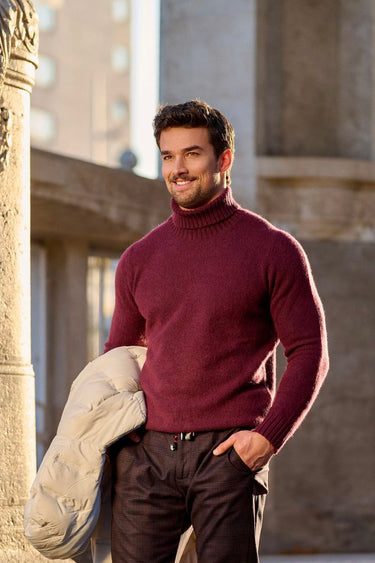
You pull on your favorite cashmere and expect instant polish—then the thermometer says thirty degrees and the commute is humid. Do you shelve knitwear until October? Not if you understand fabric weight, gauge, and how to layer with intention. This guide turns boutique-floor know-how into a simple system for lightweight cashmere styling: pieces that breathe in summer, add just-right warmth in early fall, and survive travel days with zero fuss.
We’ll decode “summer-weight cashmere,” compare 1-ply vs 2-ply, show how to pair cashmere with shirts and tees, and walk through a care routine that keeps fine yarns fresh. You’ll also see when a travel cashmere sweater beats a jacket, how to dress for AC-heavy offices, and what to expect if you’ve read a Colombo cashmere review and want a similar feel from other makers. One table, a few easy formulas, and you’ll wear cashmere more months of the year—without breaking a sweat.
Why lightweight cashmere feels cooler than you expect
It’s not just the fiber; it’s gauge (stitches per inch), ply (how many yarns twisted together), and knit structure.
- Gauge: Higher gauge = thinner loops = smoother, more breathable fabric with a dry hand.
- Ply:1-ply can feel like silk in motion—light, airy, quick to balance temperature. 2-ply remains light but adds drape and resilience.
- Knit structure: Compact jersey reads sleek under tailoring; Milano or links-links adds shape without bulk.
- Finish: Light de-pilling and a soft wash create a matte surface that disappears under office light and doesn’t trap heat.
Cashmere’s superfine fibers move moisture as vapor, so you feel dry before sweat beads. That’s the secret to wearing it beyond winter.
The simple wardrobe logic: one knit, three climates
- Warm days (18–28°C): 1-ply crew or polo over a breathable tee; open the collar, roll the sleeves once, let the knit do micro-insulation only.
- Early fall (10–18°C): 2-ply crew or light zip-through over an Oxford or denim shirt; add a scarf at dawn and remove at lunch.
- Cold offices (any season): Higher gauge V-neck over a crisp shirt—looks tailored, functions like a discreet climate shield.
This is lightweight cashmere styling at its core: matching gauge and ply to the environment, then using layers to fine-tune.
The go-to silhouettes (and when to wear each)
Crew neck
Cleanest canvas for business-casual. With a cutaway or semi-spread shirt, the crew frames the collar; with a tee, it reads modern minimal.
V-neck
A natural partner for ties and dress shirts. The V opens space for the knot and adds verticality—great for broader builds.
Polo (knit collar)
Smart when you want authority without a jacket. Soft collar stands under blazers, and mother-of-pearl buttons add polish.
Zip-through or cardigan
The traveler’s friend: on/off in seconds through security or when AC kicks in. Choose flat links for a jacket-like edge.
Lightweight cashmere with shirts and tees: foolproof pairings
- With a white Oxford: 2-ply mid-gauge V-neck in navy or stone; cuffs showing 1–1.5 cm; trousers in high-twist wool or refined chinos.
- With a denim shirt: 1-ply crew in oatmeal or tobacco; subtle texture on texture; dark five-pocket or tailored drawstring trouser.
- With a tee: High-gauge polo in charcoal; collar open; minimal sneakers or loafers for “Friday sharp.”
- With a band-collar shirt: Zip-through cardigan; keep the zip at sternum height to create a jacket-like V.
The feel is tailored without the fuss—exactly the point of summer-weight cashmere.
Table: choose by temperature, texture, and agenda
|
Situation |
Gauge & Ply |
Style |
Underlayer |
Color notes |
Why it works |
|
Humid commute |
High gauge, 1-ply |
Crew |
Lightweight tee |
Heather grey, stone |
Vapor transport + matte surface hides lines |
|
AC-cold office |
High gauge, 2-ply |
V-neck |
Dress shirt |
Navy, charcoal |
Looks tailored; regulates temperature |
|
Early fall drinks |
Mid gauge, 2-ply |
Polo |
Tee or nothing |
Tobacco, olive |
Collar structure; evening-ready |
|
Red-eye flight |
High gauge, 2-ply |
Zip-through |
Jersey tee |
Oatmeal, camel |
On/off easy; pockets for boarding pass |
|
Weekend city heat |
High gauge, 1-ply |
Crew |
Linen tee |
Ecru, pale blue |
Breathes; pairs with light trousers |
Early fall layering: smarter than a jacket
In September and October, mornings bite and afternoons soften. A travel cashmere sweater solves this without committing to outerwear:
- Over a tee at sunrise, under a light blazer by noon.
- Draped over shoulders when you enter warm rooms—no bag, no locker.
- Zipped half-way to frame a shirt collar, then opened when the sun returns.
A mid-tone (smoke, stone, sea blue) reads polished in daylight and after dark, so one knit carries the whole day.
Colombo cashmere review—what to expect in the “feel”
If you’ve handled high-end pieces and read a Colombo cashmere review, you know the markers: long staple, high gauge, dry-matte touch. You can feel the difference even blindfolded—the yarn springs back, the surface is quiet (not shiny), and the knit doesn’t collapse. Those are the tells to seek, regardless of label: a tight, even stitch, well-balanced ribs, and clean seams that hug the shoulder without rolling.
How to size (and what to pin at the tailor)
- Shoulder: seam should kiss the acromion; too wide looks slouchy, too narrow strains and overheats.
- Body: a gentle V from chest to waist. Extra fabric traps heat; too tight reduces airflow.
- Length: mid-fly in front; a hair longer in back if you sit often.
- Sleeve: wrist bone length with a shirt; half-thumb with a tee.
- Collar height (polo): 3.5–4 cm stands under a blazer without flopping.
Need a minor nip at the waist? A good alterations tailor can take in side seams 5–10 mm without disturbing the ribs.
Color strategy: cooler by shade, not only by weight
Light catches knit differently than worsted. If you want pieces that look calm in summer glare, choose matte mid-tones:
- Stone, silver, sky: keep you cool visually and pair with navy and tan.
- Oatmeal, camel: warmer but still matte; ideal with white denim or natural linen.
- Tobacco, olive: evening-friendly; take you through September dinners without a jacket.
Rotating between a light, a mid, and a dark tone lets one blazer anchor multiple looks.
Business-casual formulas that never fail
- Meeting-ready (no tie): High-gauge V-neck, crisp spread-collar shirt, pleated trousers, loafers.
- Creative office: 1-ply crew over a tee, unstructured blazer, drawstring wool trousers, minimal sneakers.
- Desk to dinner: Knit polo, braided belt, lightweight cavalry twill, tassel loafers.
- Friday flight: Zip-through cardigan, long tee, jersey pants, slip-on shoes; everything stretches, nothing sloppy.
These are lightweight cashmere styling moves you can repeat weekly without feeling like a uniform.
Caring for light cashmere: the advanced, easy routine
Wash less, air more
Odor lives in moisture; most days, cashmere only needs a night on a broad hanger. Steam briefly to reset the stitches.
When washing
Use cool water and a cashmere-safe liquid. Gently press (never wring) and lay flat on a towel. Reshape ribs and measure once so you can keep your preferred dimensions.
De-pilling, not defuzzing
A handheld sweater shaver is fine when used sparingly; better yet, a pumice comb. Tackle high-friction spots (side seams, under arms) after 2–3 wears, not every wear.
Storage
Fold (never hang long-term). If you stack, alternate fold directions to avoid a permanent center crease. Cedar blocks help; vacuum bags don’t—fine yarns need to breathe.
Do this, and your summer-weight pieces will look sharp for seasons, not weeks.
Travel cashmere sweater: small weight, big return
On the road, one high-gauge zip-through earns space in your carry-on:
- Plane: functions as a soft shell with pockets for boarding pass and earbuds.
- Hotel AC: layers over a tee without overheating.
- Meetings: with a shirt, it reads as a lightweight jacket—quiet authority.
- Evening: unzipped over a polo or tee, it frames the face like a cardigan.
If you travel heavy on weekdays, this is the knit that stops you packing two jackets.
Pro tips from the fitting room
- The sleeve test: cross arms; fabric should glide, not bind.
- The shoulder roll check: press the seam forward; if it flips back cleanly, the rib and tension are right.
- Shine alert: tilt under light—true luxury cashmere stays matte; glare means overtumbling or synthetic blends.
- Weight honesty: if a “lightweight” feels dense on the hanger, it will feel hot on the street.
Light cashmere with tailoring: jacket-friendly habits
- Keep tees matte; shiny cotton makes knitwear look cheap.
- If your blazer is textured (hopsack, linen blend), choose a smoother knit; if the jacket is sleek, a micro-texture crew adds depth.
- Shirts with soft interlinings pair best—rigid collars can scrape delicate yarn at the neck line.
Common mistakes (and how to avoid them)
- Too much fabric: a baggy body turns breathable cashmere into a sauna—size for a light drape.
- Over-washing: water relaxes stitches; cleanse when truly needed, air the rest of the time.
- Hanging on thin hangers: shoulder horns are permanent; fold or use wide cedar.
- Harsh deodorant: let antiperspirant dry before dressing; alcohol can matte-burn the yarn.
- Hard backpacks: strap abrasion pills sleeves; switch shoulders or use a tote on knit days.
Build a three-piece summer set (then add one for fall)
- High-gauge 1-ply crew in stone—over tees, with denim, under blazers.
- High-gauge V-neck in navy—over shirts for AC offices.
- Zip-through cardigan in oatmeal—your flight and weekend layer.
- For early fall:knit polo in tobacco—dinners, dates, after-work events.
With this core, any trouser rotation (chino, drawstring wool, white denim) clicks without thought.
Sartale edit: where to begin
If you’re curating a modern knit stack, start with labels known for refined handfeel and precise finishing. Two smart entry points on Sartale are malo—renowned for airy, luxurious hand and elegant colorwork—and fioroni, celebrated for featherlight knits with discreet, jacket-friendly silhouettes. Pick a neutral first, then add one seasonal tone to multiply outfits.
Conclusion: wear cashmere more months of the year
Lightweight cashmere styling isn’t about suffering in heat—it’s about choosing the right gauge, the right ply, and simple layers that breathe. Keep colors matte, fits honest, and care minimal but consistent. Do that, and one knit bridges seasons, solves office AC, smooths travel days, and makes everything else in your wardrobe read more intentional.
FAQ
What makes summer-weight cashmere different from winter knits?
Mainly gauge and ply. High-gauge 1–2-ply pieces trap less air, move moisture faster, and feel dry to the touch—perfect for warm days and cold offices.
Is a polo or crew neck cooler in heat?
For movement and airflow, a high-gauge crew over a breathable tee is marginally cooler. A polo wins when you want collar structure under a blazer.
How do I keep cashmere from pilling?
Choose tighter knits, rotate wears, and de-pill lightly after every few uses—especially where bags and jacket seams rub.
Can I wear cashmere directly on skin in summer?
Yes—if it’s high gauge and matte. If you run hot, add a thin tee underneath to buffer sweat and reduce wash frequency.
What’s the best color for office AC and outdoor lunches?
Mid-tones (stone, smoke, sea blue) handle glare at noon and still read sharp at 6 pm. Navy is the most forgiving if you dress more formally.
How does lightweight cashmere compare to merino for travel?
Cashmere is softer and more luxurious to the touch; ultrafine merino can edge it on odor control. If you pack one knit for planes and meetings, a high-gauge zip-through cashmere is the most versatile.
Any quick test to spot quality in-store?
Hold the knit to bright light: stitches should look even, surface matte, seams flat. Pull the collar gently and watch it rebound without ripples.
Does a deep V look dated?
Not when the gauge is high and the V is moderate. It’s still the smartest way to frame a dress-shirt collar in AC-cold offices.
How often should I wash lightweight cashmere?
Every 5–8 wears, unless there’s a spill. Airing overnight on a wide hanger and a quick steam handle most days better than a full bath.