


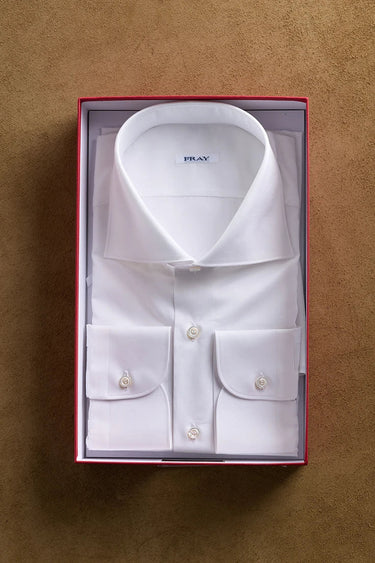
There’s a quiet confidence that settles on your shoulders the moment you put on a perfectly pressed shirt. You know the feeling. You catch your reflection in a shop window, and for a split second, you don’t just see yourself—you see a man who has his act together. The collar stands with purpose, framing your face without a single wave. The cuffs peek out from your jacket sleeves with a sharp, clean line.
But that feeling is fleeting, isn’t it? By midday, that proud collar can start to look a little tired, a little soft. The cuffs, after a few hours of typing or writing, begin to lose their definition. It’s a small detail, but in the world of classic style, these details are everything. A crisp shirt isn't just about cleanliness; it's about attitude. It's the difference between looking like you just threw something on and looking like you made a deliberate choice to present your best self.
Spring is the perfect time to refresh not just your wardrobe, but your habits. The heavier fabrics of winter give way to lighter cottons and linens, which bring their own set of challenges. But with a few insider techniques and a shift in mindset, you can keep your shirts looking as sharp at 5 PM as they did at 8 AM. Let’s get into the nitty-gritty of how to keep your shirt collar and cuffs in that sweet spot of perfection.
Why Collars and Cuffs Wilt First
Before we fix the problem, it helps to understand it. Your collar and cuffs are the most manipulated parts of your shirt. They constantly rub against your neck and jacket, they get tugged on when you put the shirt on and take it off, and they’re the first to absorb sweat and natural body oils. Think of them as the front line of your outfit—they take the most hits. Combine that with the fact they are often constructed with multiple layers of fabric and interfacing, and you have a recipe for inevitable softening. But “inevitable” doesn’t mean we have to accept it.
The Foundation Starts in the Laundry Room
You can’t build a house on a shaky foundation, and you can’t build a crisp shirt without the right prep. The battle for a sharp collar is often won or lost before the iron ever comes out.
-
Don't Overcrowd the Machine
This is the most common mistake. When you cram your washer full of shirts, they don’t have room to move. Dirt and detergent get trapped in the fibres, and the agitation can cause excessive wrinkling that sets in for the long haul. Wash your dress shirts in a smaller load, or even better, wash them alone or with other lightweight items. -
The Spin Cycle Showdown
The high-speed spin cycle is convenient for drying time, but it’s brutal on your clothes. The violent spinning twists the fabric, creating deep creases that are a nightmare to iron out. If your machine allows it, reduce the final spin speed. Your shirts will come out wetter, but far less wrinkled. -
The Drying Debate: Tumble vs. Line
A dryer is a fast track to a limp collar. The constant tumbling beats the fibres and breaks down the stiff interfacing inside the collar and cuffs.
- The Best Method: Hang your shirt on a wide, non-slip hanger immediately after the wash. Smooth out the major wrinkles with your hands while it’s wet. This is the single most effective way to reduce ironing time and preserve fabric integrity.
- If You Must Use a Dryer: Use the lowest heat setting possible and never let the cycle run until the shirt is completely dry. Remove it while it’s still slightly damp. This leaves enough moisture in the fibres for the iron to do its magic, a trick professional laundries have used for decades.
The Art of the Press: Giving Your Shirt Its Edge
Ironing a dress shirt is a skill, but mastering the collar and cuffs is an art. It’s the most critical part of the process. Here’s how to approach it like a pro.
Start with the Right Tools
Forget that travel iron you’ve had since college. A good steam iron with a burst of power is an investment in your appearance. You also need a sturdy ironing board. Ironing a cuff on a flimsy board is like trying to draw a straight line on a bumpy road.
The Collar: Top to Bottom
- Underside First: Always start with the underside of the collar. This pushes the majority of the wrinkles outward. Lay the collar flat, point away from you, and iron from the points towards the center.
- The Flip: Turn the collar over and iron the top side with the same motion.
- The Crucial Fold: Here’s where most men go wrong. Don't press a hard crease into the fold line. The collar should roll naturally. Instead, lightly press along the fold, or better yet, after ironing the collar flat, simply fold it over and give it a gentle press with the iron just to set the fold, not create a razor-sharp edge. A natural roll looks infinitely more elegant.
The Cuffs: Precision Work
The cuffs frame your hands and, thanks to your watch, are often a focal point.
- Open Them Up: Unbutton the cuff and lay it flat, inside facing up. Iron the entire inside surface.
- Flip and Finish: Turn it over and iron the outside. Pay special attention to the edges.
- The Fold: For a barrel cuff, fold it to the correct buttonhole and press lightly on the fold—again, no hard crease. For French cuffs, iron them completely flat. The fold will happen naturally when you put them on and insert the cufflinks. A crisp, flat French cuff is a thing of beauty.
A Quick Guide to Ironing Heat:
|
Fabric Type |
Iron Setting |
Key Tip |
|
Cotton |
High / Cotton |
Use plenty of steam. A spray bottle can help with stubborn wrinkles. |
|
Linen |
High / Linen |
Iron while very damp. Linen loves moisture and high heat. |
|
Cotton-Blend |
Medium-High |
Check the label, but these are usually forgiving. |
|
Oxford Cloth |
High |
The thicker weave can take the heat. Press from the inside first for a softer look. |
|
** pinpoint/ poplin** |
High |
The tight weave shows every crease. Pay extra attention to even pressure. |
The Secret Weapon: Collar Stays
Collar stays, or bones, are the unsung heroes of a sharp shirt. Those little plastic or metal strips that slide into the pockets on the underside of your collar? They aren't just packaging material. They are essential equipment.
- Are They Worth It? Absolutely. They provide structure, keeping the collar points lying flat against your chest or lapel instead of curling up like an old scroll.
- Upgrade Your Stays: Ditch the flimsy plastic ones that come with the shirt. Invest in a set of metal stays. They have a bit of weight to them, which helps the collar drape perfectly, and they won't snap when you sit down. You can find brass or stainless steel sets online for very little money.
- The Traveler's Trick: If you forget your stays, a paperclip bent to the right length or a stiff piece of cardstock can be a lifesaver.
Traveling with Dress Shirts: Keeping the Magic Alive
Spring often means travel, and travel is the sworn enemy of a crisp shirt. Stuffing a perfectly pressed shirt into a suitcase is a recipe for disaster. But you don't have to check into your hotel and immediately call for an iron.
- The Marie Kondo Fold (Roll): Instead of traditional folding, try this: Lay the shirt face down, smooth out the sleeves. Fold one sleeve back at a slight angle. Fold the other sleeve back symmetrically. Then, fold the shirt in half lengthwise, aligning the shoulders. Finally, starting at the collar, roll the shirt tightly but gently towards the tail. This method minimizes creasing and saves space.
- The Dryer Sheet Hack: Pack your rolled shirts in a plastic bag with a couple of dryer sheets. It helps keep them fresh and can reduce static, which attracts wrinkles.
- Steam is Your Hotel Friend: As soon as you arrive, hang your shirts in the bathroom while you take a hot shower. The steam will relax the fibres and release many of the travel wrinkles. For stubborn ones, a quick pass with a travel steamer or even a hair dryer (on a low setting, held a few inches away) can work wonders.
Keeping the Look Alive All Day
You’ve done the hard work. Now, how do you make sure it lasts through a commute, a business lunch, and an afternoon of meetings?
- The Undershirt Factor: A good undershirt isn't just for modesty. It absorbs sweat and oils that would otherwise transfer directly to your dress shirt's collar and underarms, keeping the fabric fresher and crisper for longer. Go for a V-neck so it stays hidden.
- Give It a Break: If you wear a jacket, take it off when you're sitting at your desk. This relieves pressure on the collar and sleeves.
- The Evening Hang: At the end of the day, don't throw your shirt on a chair or the floor. Hang it on a wide hanger immediately. This allows the fabric to relax and any moisture to evaporate, prepping it for another wear or for the laundry pile.
Your dress shirt is more than just a piece of clothing. It’s a canvas for your personal style, a signal to the world that you pay attention. And nothing ruins the elegance of a fine shirt faster than a drooping collar or a wrinkled cuff. By adopting these simple habits, you’re not just maintaining your clothes—you’re cultivating an attitude of care and precision that will show in everything you do.
Frequently Asked Questions (FAQ)
1. How often should I really wash my dress shirt to keep it crisp?
It depends on how much you wear it. If you wore it for a full day and it touched your skin, wash it after one wear. Sweat and body oil are invisible but they break down fibres and attract dirt. If you only wore it for a couple of hours over a clean undershirt, you can air it out on a hanger and possibly get a second wear.
2. My collar always gets a dark ring. How do I prevent and remove it?
That ring is a mix of sweat, skin oils, and dirt. Prevention is key: always wear an undershirt. To remove existing rings, make a paste of baking soda and water, gently rub it into the damp collar, let it sit for 30 minutes, then wash as usual. You can also use a drop of gentle dish soap directly on the ring before washing.
3. Can I use starch? Is it bad for my shirts?
You can, and it will give you that ultra-crisp, almost cardboard-like finish. However, heavy starching can attract bugs (like silverfish) and, over time, can actually cut and damage cotton fibres, leading to premature wear and even small holes. If you love the look, use a light spray starch or opt for a fabric finishing spray for a more natural crispness.
4. What’s the difference between ironing and pressing?
Great question! Ironing involves moving the iron back and forth to remove wrinkles. Pressing is a lifting and placing motion—you set the iron down, lift it, and move it to the next spot. For collars and cuffs, you want to press to avoid distorting the shape.
5. How do I fix a curled collar point without an iron?
If you're at work or out and notice a curl, dampen your finger with water and run it along the underside of the collar point. Then, use a collar stay if you have it, or just smooth the point flat against the shirt with your hand. The moisture helps the fibres relax back into place.
6. Are non-iron shirts a good alternative?
They are incredibly convenient. The finish is achieved through a chemical treatment or a tight synthetic weave. However, many find they don't breathe as well as pure cotton, and over many washes, the "non-iron" effect can fade while the fabric can feel less soft. They're great for travel, but many classic style enthusiasts still prefer the natural feel of a pure cotton shirt that's been well-ironed.
7. How should I store my shirts to keep them crisp?
Always on a wide, shaped hanger that supports the shoulders. Wire hangers will create shoulder points and distort the shape. For longer-term storage, folding is fine, but avoid stacking too many shirts on top of each other, as the weight can cause creasing.
8. My cuffs always get dirty from my desk. Any tips?
This is the curse of the modern professional. A transparent desk mat can create a smooth, clean surface for your wrists. Alternatively, getting into the habit of resting your forearms rather than your cuffs on the desk can help. Keeping a soft cloth at your desk to wipe your wrist rest area can also make a difference.
9. What fabric is best for staying crisp all day in spring weather?
For spring's unpredictable mix of sun and showers, a high-quality, two-ply cotton poplin or pinpoint oxford is your best friend. The tighter weave resists wrinkles better than a loose weave linen, and the two-ply construction makes the fabric stronger and more resilient, helping the collar and cuffs hold their shape. You can find a fantastic selection of these timeless fabrics in our collection of classic shirts, designed to bring a polished look to any spring day.
A crisp shirt is a small detail that makes a massive difference. It’s the foundation of a confident look. This spring, pay a little extra attention to your collars and cuffs, and you’ll be amazed at the difference it makes. After all, true style lives in the details.