


The invitation arrives. The paper is thick, the typography elegant. You flip it open and there it is: a date in late spring, a garden venue, and a dress code that reads “formal” or “cocktail attire” or, sometimes, nothing at all. And just like that, a familiar question settles in: what am I actually supposed to wear?
It’s a good question. Spring weddings walk a fine line. You want to respect the occasion—it’s someone’s big day, after all—but you don’t want to show up looking like you’re heading to a boardroom or, worse, a costume party. The weather can be unpredictable. The setting might be a sun-drenched garden or an elegant city space. The solution isn’t to overthink it. It’s to return to the principles of classic menswear: quality fabrics, timeless silhouettes, and the confidence that comes from knowing you look appropriate without trying too hard. Let’s walk through how to build a spring wedding outfit that feels both celebratory and distinctly you.
The Suit: Your Foundation of Confidence
The suit is the starting point for most spring weddings. It sets the tone. And the good news is that spring offers a wider, more interesting palette than the dark navy and charcoal of winter. But with more options comes more questions.
Navy vs. Grey: The Eternal Spring Debate
These two are the heavyweights of the wedding guest world, and for good reason. They are timeless, versatile, and impossible to get wrong.
- Navy: A navy suit is the ultimate safe harbor. It works for a formal evening wedding, a daytime church ceremony, and everything in between. It’s authoritative without being severe. A lighter, mid-blue can feel even more spring-like.
- Grey: A mid-to-light grey suit is perhaps the most quintessentially spring option. It reflects the light beautifully and pairs effortlessly with a wider range of shirt and shoe colors. Charcoal, while handsome, leans a bit heavier—perfect for an evening affair, but for a daytime garden wedding, a lighter grey sings.
Beyond the Basics: When to Consider Other Colors
If you’re feeling a bit more adventurous—or if the wedding is particularly relaxed—spring opens the door to other sophisticated hues.
- Tan or Stone: A tan suit is a statement. It says you understand the season and you’re comfortable with a bit of flair. It works best for daytime, outdoor, or destination weddings. Keep the shirt white and the shoes light.
- Olive or Sage: Earthy greens have become a modern classic. They feel fresh, natural, and surprisingly versatile. An olive suit pairs beautifully with brown leather and a simple white or pale blue shirt.
Fabric Matters: Breathability Meets Structure
A spring wedding can swing from cool morning to warm afternoon. Your suit fabric needs to handle both. Lightweight worsted wools, high-twist weaves like fresco, and wool-silk-linen blends are your allies. They breathe, resist wrinkles, and hold their shape. A heavy flannel or a tightly-woven serge will leave you overheating before the vows are exchanged.
The Shirt and Tie: The Art of the Opening
Once the suit is chosen, the shirt and tie are where you introduce personality. This is the part of the outfit that people see up close, in conversation. It deserves attention.
The Shirt: Keep It Classic, Keep It Light
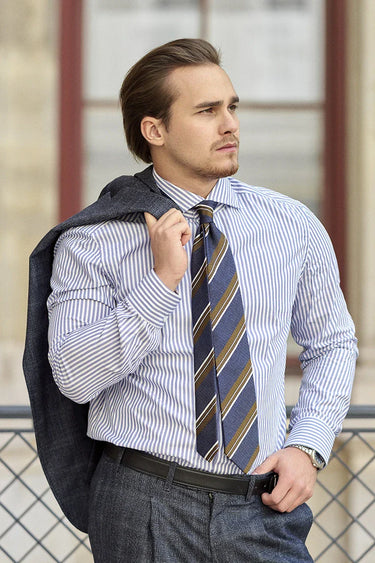
A crisp white shirt is never the wrong answer. It’s the canvas that lets everything else shine. For spring, a pale blue shirt is equally timeless and offers a subtle nod to the season. Consider the collar: a spread collar looks sharp with a tie, while a button-down collar offers a slightly more relaxed elegance, especially if you plan to lose the jacket later.
The Tie: Celebrate the Season
Spring is the time to step away from the deep burgundies and dark navies of winter. Embrace color and texture.
- Silk Knit Ties: These have a wonderful texture and a relaxed formality. A burgundy or forest green knit tie adds depth without stiffness.
- Woven Silks with Pattern: A classic repp stripe, a subtle foulard, or a soft paisley—these are the language of a well-dressed man. For spring, look for ties with lighter backgrounds or accents of seasonal color.
- The Linen Tie: If you want to fully embrace the spring aesthetic, a linen tie in a muted earth tone is a perfect choice. It’s textured, interesting, and unmistakably seasonal.
A Note on the Tie Knot: Keep it proportional to your collar. A four-in-hand knot has a slightly asymmetrical, relaxed quality that feels appropriate for a spring celebration. It’s less rigid than a full Windsor.
The Pocket Square: Your Signature Detail
This is where many men hesitate. They wonder if it’s too much, too fussy. The truth is, a pocket square is the mark of a man who pays attention to details. It’s not about being flashy; it’s about being complete.
The rule is simple: do not match your pocket square exactly to your tie. Instead, coordinate. If your tie is burgundy, a pocket square with a hint of burgundy in a pattern works beautifully. A classic white linen pocket square in a simple TV fold is timeless, elegant, and impossible to get wrong. For spring, consider a square with a soft floral motif or a light pastel edge—something that hints at the season without being literal.
The Footwear: Loafers and Beyond
Shoes can make or break a wedding outfit. They ground the look and speak to your understanding of occasion dressing.
Loafers: The Quintessential Spring Choice
A pair of well-polished loafers is perhaps the most versatile shoe for a spring wedding guest. They are dressy enough for a suit but inherently more relaxed than an Oxford. Suede loafers in a shade of brown (from tan to dark chocolate) are a particularly strong choice for daytime or garden weddings. For a more formal evening affair, a pair of leather penny loafers or bit loafers in dark brown or burgundy offers a refined elegance.
When to Wear Oxfords
If the wedding is black tie optional, formal evening, or taking place in a grand city venue, a classic cap-toe Oxford in black or dark brown is the appropriate choice. For any other setting, loafers are likely the more stylish and seasonally appropriate option.
The Sock Situation
With loafers and a spring suit, you have options. For a clean, modern look, wear no-show socks. For a touch of classic sprezzatura, choose a pair of socks that pick up a color from your tie or pocket square. Avoid white athletic socks at all costs—they will derail even the most carefully constructed outfit.
A Quick Reference: Spring Wedding Suit Combinations
|
Suit Color |
Shirt |
Tie |
Pocket Square |
Shoes |
|
Navy |
White or Pale Blue |
Navy knit, burgundy foulard |
White linen with a blue edge |
Brown suede loafers |
|
Light Grey |
White |
Forest green knit, classic repp |
White linen, light floral |
Tan leather loafers |
|
Tan |
White |
Brown or olive linen |
White linen |
Dark brown suede loafers |
|
Mid-Blue |
White or Pale Pink |
Navy with light pattern |
White linen with pink edge |
Burgundy leather loafers |
The Italian Approach: Sprezzatura at a Wedding
There is a particular elegance to the way Italian men dress for occasions. It’s not about following rules rigidly. It’s about wearing clothes with a sense of ease—what the Italians call sprezzatura. You can see this in the slightly unbuttoned collar, the jacket worn open, the pocket square that’s just slightly askew. It says, “I care about how I look, but I’m not a slave to it.”
At a spring wedding, you can channel this by ensuring your outfit fits impeccably (tailoring is non-negotiable) and then relaxing into it. The goal is to look like the best version of yourself, not a mannequin. If you’re comfortable, you’ll project confidence. And that’s the most attractive accessory you can wear.
The Final Details: Grooming and Etiquette
A great outfit is diminished by neglecting the details.
- Get the Fit Right: If you’re wearing a suit, take it to a tailor. The sleeve length, the trouser break, the jacket waist—these adjustments are what separate a good suit from a great one.
- Grooming: A fresh haircut a few days before, trimmed nails, and a subtle scent (not overpowering) show respect for the occasion and the couple.
- The Plus-One: If you’re bringing a date, coordinate in a way that feels complementary, not matchy-matchy. A similar color palette or formality level is enough.
- When in Doubt, Ask: If the invitation says “formal” and you’re unsure, a dark suit, white shirt, and a tie is always a safe, respectful choice. It’s better to be slightly overdressed than underdressed for someone’s wedding.
A spring wedding is a celebration. It’s a chance to witness two people begin a new chapter, surrounded by the people they love most. Your outfit is your way of honoring that moment—of showing up as your best self, ready to celebrate. When you dress with intention, you feel it. You stand a little taller. You move through the day with a quiet confidence that lets the focus stay where it belongs: on the happy couple.
Frequently Asked Questions (FAQ)
1. Can I wear a brown suit to a spring wedding?
Absolutely, but with a few considerations. A lighter brown or tan suit is a wonderful choice for a daytime, outdoor, or destination spring wedding. It’s less common than navy or grey, so it makes a confident statement. Keep the shirt white and the accessories (shoes, belt) in complementary shades of brown or tan. For a more formal evening wedding, a darker suit is likely more appropriate.
2. Is it okay to wear a blazer and dress trousers instead of a full suit?
Yes, particularly for weddings with a “cocktail” or “garden” dress code. A navy blazer paired with grey wool trousers is a classic combination that is both polished and slightly less formal than a suit. Ensure the blazer and trousers are of a similar weight and formality—don’t pair a structured, formal blazer with casual chinos.
3. What about patterns? Can I wear a checked or striped suit?
Patterns can work beautifully if done correctly. A subtle glen plaid, a soft windowpane, or a fine stripe in a spring-appropriate color (like blue or grey) adds visual interest without being overwhelming. The key is to keep the rest of the outfit simple—a solid shirt and a tie that pulls a color from the pattern. Avoid loud, contrasting checks or bold stripes that could feel distracting.
4. Are linen suits appropriate for a spring wedding?
Yes, but context matters. A linen suit is ideal for a daytime, warm-weather, or destination wedding. Its natural texture is part of its charm. However, linen wrinkles easily, so expect to embrace a slightly rumpled look. For a more formal evening wedding, a lightweight wool or wool-silk blend will hold a crisper line throughout the event.
5. Do I have to wear a tie if the dress code is “cocktail attire”?
Not necessarily, but it depends. Cocktail attire generally calls for a suit, but the tie can be optional. If you choose to skip the tie, ensure your shirt collar is one that works well open—a spread or button-down collar is ideal. You can add a pocket square to maintain a sense of polish. However, if you’re unsure, wearing a tie is the safer choice.
6. What’s the best shoe for a garden or outdoor spring wedding?
A suede loafer is a fantastic choice. Suede is elegant but less formal than polished leather, and it pairs beautifully with the natural setting. A light brown or tan suede loafer worn with no-show socks is both stylish and practical for walking on grass or uneven ground. Avoid black oxfords for daytime outdoor events—they can feel too heavy.
7. Can I wear a black suit to a spring wedding?
Generally, a black suit is best reserved for evening, black-tie, or very formal occasions. For a spring wedding—especially a daytime one—it can feel too severe. If the invitation specifies “black tie optional” and the wedding is in the evening, a well-cut black suit can work, but for most spring weddings, navy, grey, or a lighter color will feel more in tune with the season.
8. How do I handle a dress code that just says “formal”?
“Formal” can be ambiguous. In modern menswear, it typically means a suit and tie. Your safest approach is a well-fitted dark suit (navy or charcoal), a crisp white or pale blue dress shirt, a tie that’s not overly bold, and polished leather shoes (oxfords or loafers). A pocket square adds a refined touch. This combination will serve you well for nearly any “formal” event.
9. When should I take my jacket off, and is it okay to do so?
Traditionally, a gentleman removes his jacket only after the dinner has concluded and dancing has begun, or if the host suggests a more relaxed atmosphere. At a daytime or outdoor wedding, it’s perfectly acceptable to remove your jacket once the formal proceedings are over, especially if the weather is warm. The key is to read the room. When you do remove it, hang it properly—never drape it over a chair back in a way that will wrinkle it.
When you dress for a spring wedding, you’re not just picking clothes. You’re making a gesture of respect for the couple and the occasion. The goal is to look and feel like the best version of yourself—confident, comfortable, and ready to celebrate. For those who appreciate the finest in tailoring and timeless style, the Kiton collection at Sartale offers pieces that embody this philosophy: handcrafted elegance that feels as good as it looks. Whether you choose a suit, a blazer, or the perfect accessories, dressing with care is always in style.