


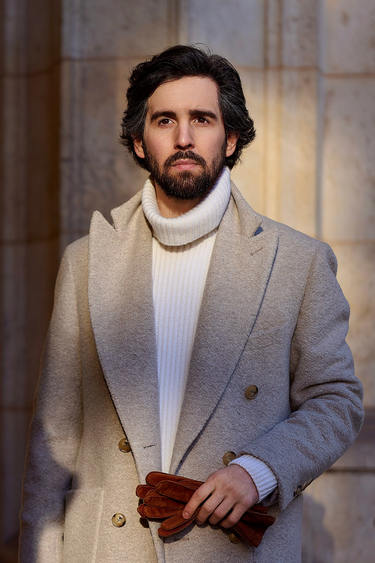
If you already know the names Colombo and Malo, you’re not a casual shopper. These are premium Italian cashmere brands for men who care how a sweater feels on bare skin, how it drapes under a jacket, and how it will look after a few winters, not just a few wears.
But “better” is not the right question here. Colombo vs Malo cashmere is less about good vs bad and more about which universe of knitwear you want to live in: ultra-refined noble fibres with a quiet, almost tailoring-like precision, or softly relaxed Italian knitwear with a very human, lived-in kind of luxury.
This guide walks you through feel, gauge, ply, durability, pilling and care, so you can decide which label deserves space in your wardrobe – and how to make it last.
Premium Italian cashmere brands at a glance
Before we dive into threads and gauges, it helps to understand what each house actually stands for.
Colombo: the noble fibre specialist
Lanificio Luigi Colombo is often described as the world’s largest producer of cashmere and noble-fibre fabrics. The company works not only with regular cashmere, but also with kid cashmere, kid wool 12.8, Yangir, guanaco, vicuña and camelhair – fibres that sit at the absolute top of the market in terms of rarity and fineness.
What that means for you:
- Very fine, carefully selected fibres (often from baby goats or ultra-fine wools)
- A strong focus on lightness, softness and thermoregulation
- A “textile engineer” mindset – Colombo develops fabrics and yarns, not just finished clothes
Malo: the knitwear atelier
Malo is pure Tuscan knitwear. Founded in Florence in 1972, the brand built its reputation on cashmere sweaters made entirely in Italy, with a lot of hand work and a clear focus on knitwear as a craft in itself.
Key points for Malo:
- Heritage in cashmere knitwear rather than fabric production
- Production in Italian workshops in Tuscany and Emilia-Romagna
- Emphasis on natural yarns, refined colours, and long-lasting construction
On Sartale, you can feel this difference even just by scrolling: Colombo knitwear often leans clean, minimal and quietly technical, while Malo sweaters play more with texture, subtle pattern and a slightly softer, more relaxed attitude.
Colombo vs Malo cashmere: what you feel on the body
When you pull on a Colombo or Malo sweater, you’re experiencing dozens of small decisions:
- Which region the fibre was sourced from
- How long and fine the individual fibres are
- How tightly the yarn was spun
- Which gauge and ply the brand chose
- How the knit was washed and finished
Colombo tends to push into the “noble fibres” space – kid cashmere, extra-fine cashmere, blends with silk – that often feel almost weightless for the warmth they offer. Malo, by contrast, often aims for that classic Italian cashmere hand: soft, enveloping, not flimsy, with enough body to hold a beautiful line over the shoulder.
If you’re the type who likes to wear cashmere directly on the skin, both brands deliver. Colombo may feel a touch more “technical” and airy in certain lines; Malo a bit more cozy and tactile. But to understand this properly, we have to talk about lightweight cashmere gauge and ply.
Lightweight cashmere gauge, ply and warmth
What “gauge” really means
Gauge is the number of stitches per inch in a knit. Higher gauge = more stitches = finer, lighter fabric. Lower gauge = fewer stitches = chunkier, heavier fabric.
For cashmere, typical gauges range roughly like this:
- 3–5 gauge: heavy, chunky, almost outerwear-level knits
- 7–9 gauge: mid-weight winter sweaters with visible texture
- 12–16 gauge: lightweight cashmere gauge for refined layering under tailoring
Both Colombo and Malo use higher gauges for many men’s crew-necks, polos and turtlenecks – that’s what allows you to slip a cashmere sweater under a blazer without feeling like the Michelin Man.
So if you love a neat, clean line under a jacket, look for mentions of 12-gauge or “fine-gauge” knits, especially in Colombo’s kid cashmere and Malo’s lighter crew-necks.
2-ply vs 4-ply cashmere: what changes
Ply refers to how many strands of yarn are twisted together to make a single thread.
- 1-ply: very light, but less durable and more prone to holes
- 2-ply: the everyday sweet spot – lighter and more fluid, ideal for layered looks
- 4-ply and up: denser, warmer, more substantial knits
Most experts agree that 2-ply or higher is the baseline for a good quality sweater. 4-ply cashmere usually feels richer and warmer, but ply alone doesn’t equal quality – fibre length, fineness and knitting density matter just as much.
In practice:
- For Colombo, a 2-ply fine-gauge crew-neck in kid cashmere can feel almost like a second skin – incredibly light but surprisingly warm.
- For Malo, a 4-ply mid-gauge turtleneck might give you that satisfying, cocoon-like warmth you want in deep winter.
If your wardrobe is mostly tailored and you live in a city, 2-ply fine-gauge pieces from either brand are incredibly versatile. If you spend real time in the cold, a 4-ply Malo rollneck or a heavier Colombo knit becomes a proper winter tool, not just a luxury indulgence.
Cashmere durability guide: what actually makes a sweater last
When people start comparing Colombo vs Malo cashmere, the conversation quickly turns to “which one will last longer?”. That’s where a real cashmere durability guide matters more than marketing slogans.
The lifespan of a cashmere sweater depends on:
- Fibre quality – longer, finer fibres are more resistant to breakage
- Spin – tightly spun yarn pills less and holds shape better
- Knit density – denser knits resist stretching and thinning
- Ply – higher plies add strength, but only if the fibres themselves are good
- Use and care – how often you wear it, and how you wash and store it
Both Colombo and Malo use high-grade fibres and serious knitting expertise. Colombo leans into rare fibres like kid cashmere and vicuña, engineered for extreme lightness and thermoregulation. Malo’s focus is on long-lasting knitwear with strong seams, carefully finished ribbing and a slightly more substantial hand in many styles.
In other words, either brand can easily become a ten-year sweater – if you treat it right.
Cashmere pilling explained (and why it’s not always “bad quality”)
Let’s clear up one of the most common frustrations: pilling.
Pilling happens when small, loose fibres on the surface of the sweater tangle together through friction and form little balls. It’s a natural process for wool and cashmere, and it appears even on very high-quality pieces, especially in high-friction zones like under the arms or where a jacket rubs.
Key things to remember from any serious cashmere pilling explained guide:
- First pills often appear in the first few wears as the shortest fibres work their way out
- Higher-quality cashmere tends to pill less over time, because the fibres are longer and stronger
- Regular, gentle de-pilling with a cashmere comb or fabric shaver is part of normal maintenance, not a sign that the sweater is “faulty”
So yes, even a Colombo or Malo sweater can pill. The real difference is what happens after you remove those first pills: a well-made piece will usually settle, stay dense and keep its shape for years.
How to care for a cashmere sweater from Colombo or Malo
You can spend four figures on the finest kid cashmere in the world – if you mistreat it, it will suffer. Fortunately, caring for cashmere is not complicated; it just requires gentleness and a bit of routine.
Think of this as your “how to care cashmere sweater” checklist, whether it’s Colombo, Malo or any other premium Italian cashmere brand.
Washing
- Wash less often – usually every 3–4 wears is enough
- Turn the sweater inside out before washing
- Use cool or lukewarm water and a specialist wool/cashmere detergent or a mild shampoo
- Hand wash or use a delicate/wool cycle if your machine is very gentle
- Never wring or twist – press water out gently or roll in a towel
Drying
- Always dry flat – never hang a wet cashmere sweater
- Reshape carefully, especially at shoulders and hems
- Keep away from direct heat sources like radiators
Storing
- Fold, don’t hang – hanging stretches the shoulders over time
- Store in breathable cotton bags, not plastic
- Add cedar balls or lavender sachets to keep moths away
- Always store clean sweaters; food traces and sweat attract moths
If you treat your Colombo vs Malo cashmere like a long-term investment instead of fast fashion, it will absolutely respond in kind.
Colombo vs Malo cashmere: which brand suits your wardrobe?
At this level, you’re not choosing between “good” and “bad”. You’re choosing a personality for your knitwear.
Colombo: when you want ultra-refined fabric
- For men who obsess over fibre stories, noble yarns and technical excellence
- Ideal if you like very light, breathable pieces that still handle serious cold
- Works beautifully under tailoring, especially in higher gauges and kid cashmere blends
Malo: when you want knitwear as your second skin
- For men who see knitwear as core wardrobe, not just an extra layer
- Perfect if you love a slightly more relaxed, tactile hand with strong Italian character
- Powerful as a solo piece with denim, flannel, or casual tailoring
On Sartale, the easiest move is to compare pieces side by side and see what speaks to you visually. If you want to go straight to the source, explore the Malo cashmere collection here: Malo cashmere sweaters. For another beautifully made option in the same universe of luxury knitwear, many style-conscious clients also look at Fioroni knitwear
Quick reference: Colombo vs Malo cashmere
Below is a simple snapshot to help you decide faster.
|
Aspect |
Colombo |
Malo |
|
Origin |
Biella-area textile mill, Italy |
Florence-origin knitwear house, Italy |
|
Core strength |
Noble fibres, fabric innovation |
Cashmere knitwear design and craftsmanship |
|
Fibre focus |
Cashmere, kid cashmere, kid wool 12.8, vicuña… |
Mongolian cashmere, natural yarns, cashmere blends |
|
Typical feel |
Very fine, airy, technical yet luxurious |
Soft, enveloping, classic Italian hand |
|
Best use-case |
Layering under tailoring, refined minimal looks |
Standalone winter knits, textured casual elegance |
|
Style vibe |
Quiet, understated, almost “tailored knitwear” |
Relaxed sophistication, colour and texture play |
|
Ideal buyer |
Fibre nerd, minimalist wardrobe builder |
Knitwear lover, “sweater-first” kind of dresser |
How to actually choose: a simple decision flow
If you’re still torn between Colombo vs Malo cashmere, ask yourself a few honest questions.
- Do you mostly wear tailoring or casual fits?
- Mostly tailoring: lean Colombo fine-gauge crew-necks, polos and turtlenecks.
- Mostly casual: Malo mid-gauge crews, hoodies, rollnecks with more presence.
- How cold does your winter actually get?
- Mild city winters: 2-ply, higher-gauge Colombo or Malo is enough.
- Real cold, lots of time outdoors: look for denser, 4-ply pieces, especially from Malo or heavier Colombo knits.
- What do you value more – the story or the feel?
- If you love the idea of rare fibres, kid cashmere and noble yarns, Colombo is a natural choice.
- If you care more about the everyday ritual of putting on a perfectly balanced sweater, Malo’s knitwear-first DNA will make sense.
In a perfect world, you don’t have to choose at all. A lean Colombo crew-neck under a navy blazer and a slightly heavier Malo rollneck for weekends is an incredibly strong two-sweater core.
Conclusion: a quiet luxury decision you’ll feel every winter
At the end of the day, Colombo vs Malo cashmere is not a battle. It’s a conversation between two visions of Italian luxury.
Colombo stands for the science and poetry of noble fibres – kid cashmere, vicuña, ultra-fine wools engineered into feather-light, high-performance knits. Malo represents the emotional side of knitwear – sweaters with soul, texture and a distinctly human touch that only decades of Italian craftsmanship can create.
If you choose well, commit to your style and care for your pieces, either label can become part of your winter routine for years: the sweater you reach for on cold mornings without thinking, because it simply feels right.
Take your time, compare different gauges and plies, try on a few silhouettes – and then let your hand, not just your head, decide. On Sartale, that decision is the pleasant kind of problem to have.
FAQ: Colombo vs Malo cashmere
-
Is Colombo cashmere “better” quality than Malo?
Not in a simple yes/no way. Colombo is a giant in noble fibres with incredible control over raw materials; Malo is a specialist in cashmere knitwear with deep craftsmanship. Both sit in the top tier. The difference is more about feel, weight and style than pure quality. -
Which is softer, Colombo or Malo?
Softness depends on the specific yarn, gauge and finish. A Colombo kid cashmere crew might feel softer and lighter than a heavier Malo rollneck, but a mid-gauge Malo crew can feel richer and plusher. If softness is your priority, compare similar gauges and plies from each brand. -
Do Colombo and Malo sweaters pill less than cheaper cashmere?
Generally, yes – high-quality, long-staple fibres and good knitting reduce excessive pilling. But some pilling is natural even on top pieces, especially at the beginning. The important thing is that after gentle de-pilling, the knit stays dense and smooth instead of thinning out. -
Are Colombo and Malo worth the price if I already own mid-range cashmere?
If you wear cashmere a lot, the difference is noticeable. You get better fibre selection, more precise knitting, superior colour and finishing, plus real longevity when you care for the piece. If you see knitwear as a core part of your wardrobe rather than an occasional extra, they are absolutely worth considering. -
Can I wear Colombo or Malo cashmere directly on the skin?
Yes. Both brands design many styles to be worn on bare skin – fine-gauge crews, polos and turtlenecks are perfect for that. If your skin is very sensitive, start with lighter colours and higher gauges, which often feel softer and cooler. -
Which brand is better for layering under a blazer?
Colombo’s fine-gauge, 2-ply knits and Malo’s higher-gauge lightweight sweaters are both excellent under tailoring. Focus less on the logo and more on the gauge: aim for fine knits that don’t add bulk at the shoulder and under the arm. -
Which brand should I choose for my first “serious” cashmere sweater?
If you like clean, minimal outfits and appreciate technical fibre stories, start with Colombo. If you want something that feels immediately cozy and a bit more relaxed in mood, start with Malo. In both cases, choose a versatile colour – navy, greige, camel, charcoal – so you actually wear it often. -
How many Colombo or Malo sweaters do I really need?
You can do a lot with just two: a fine-gauge crew-neck in a neutral colour for layering, and a heavier rollneck or mid-gauge crew for colder days and travel. If knitwear is your signature, you’ll probably end up building from there – but you don’t need a huge number of pieces to feel the difference these brands make.